

American actress Charlotte Cushman defied 19th-century gender norms on and off the stage. Audiences adored her in Shakespeare, especially her sensual Romeo. One critic argued that it was impossible to tell that Cushman’s Romeo was played by a woman—a testament to Cushman’s meticulous research.
In her personal life, Cushman dressed in masculine clothing and enjoyed numerous love affairs with women. Her ten-year relationship with Melinda Hays was publicly recognized and even described as a “female marriage” by the English poet Elizabeth Barret Browning. Attitudes towards lesbianism have changed since Cushman’s life, and scholars today approach Cushman as a queer performer.
After retiring from the stage in 1852, Cushman moved to Rome and set up a household of “jolly bachelor women” that included many notable female artists of the time, including the Black American sculptor Edmonia Lewis. But beginning in the 1860s, Cushman returned to the United States on multiple trips, engaging in the intersection between theater and politics through her work with the United States Sanitary Commission.
Benefit performances for the United States Sanitary Commission


On April 15, 1861, just one day after the attack on Fort Sumter that would mark the start of the American Civil War, President Abraham Lincoln issued a call for 75,000 volunteers to form a militia to suppress the Confederate force. 10 days later, about 50 women would gather in New York City to form the Women’s Central Association of Relief with a goal to unite all the country’s women in aid of the volunteers who answered Lincoln’s call. In early June, this group would be renamed the United States Sanitary Commission (USSC) and given federal approval. Although the USSC provided a variety of aids, including written guides for field surgeons, the Commission became best known for the collection and distribution of donations for the benefit of Union troops. Ultimately, the group would raise more than $25 million to support Union troops.
Women played a central role in the USSC, earning wages and organizing major fundraising events. Female volunteers collected donations, sewed uniforms, ran kitchens in army camps, and organized major fundraising fair. These came to be known as “Sanitary Fairs” and included exhibitions, art installations, and even parades. The first fair was held in 1863 in Lowell, Massachusetts, and raised $100,000 (about $2 million in today’s currency). Chapters of the USSC held fairs in Chicago, Philadelphia, and New York City.

At the Metropolitan Fair, Cushman performed Macbeth, despite having formally retired from the stage. She appeared opposite a fellow Shakespearean—and the only living actor as famous as her, Edwin Booth. Booth’s brother was to the soon-to-be-infamous John Wilkes Booth. Today, Edwin’s contributions to American theater history are largely overshadowed by his brother’s infamy.
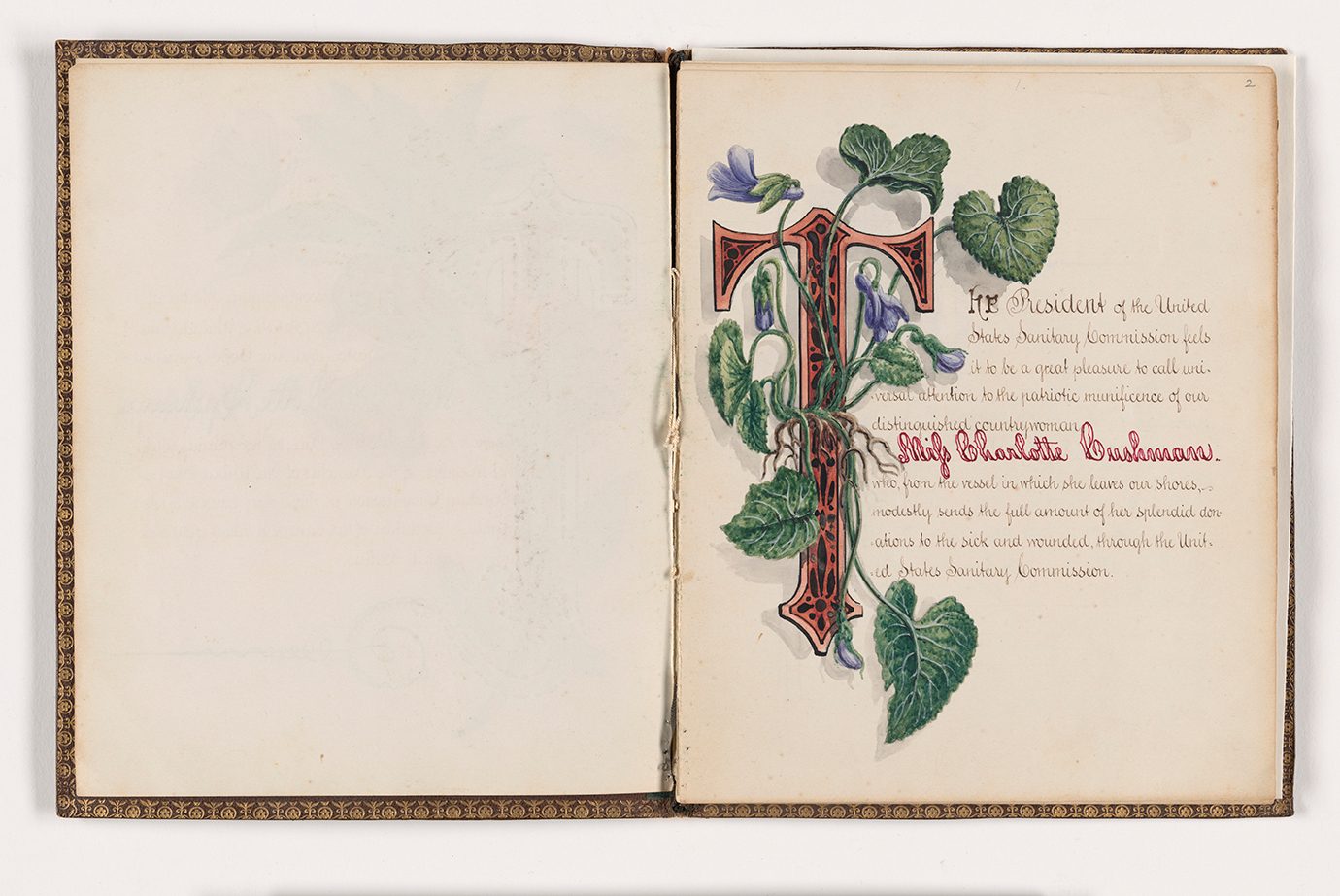
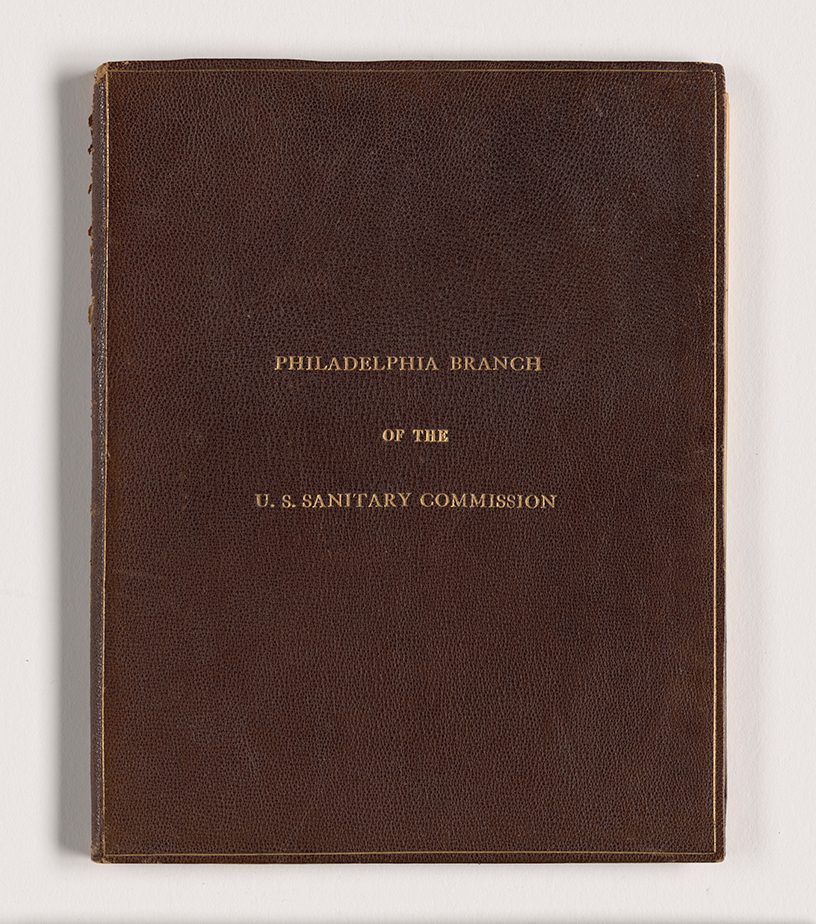
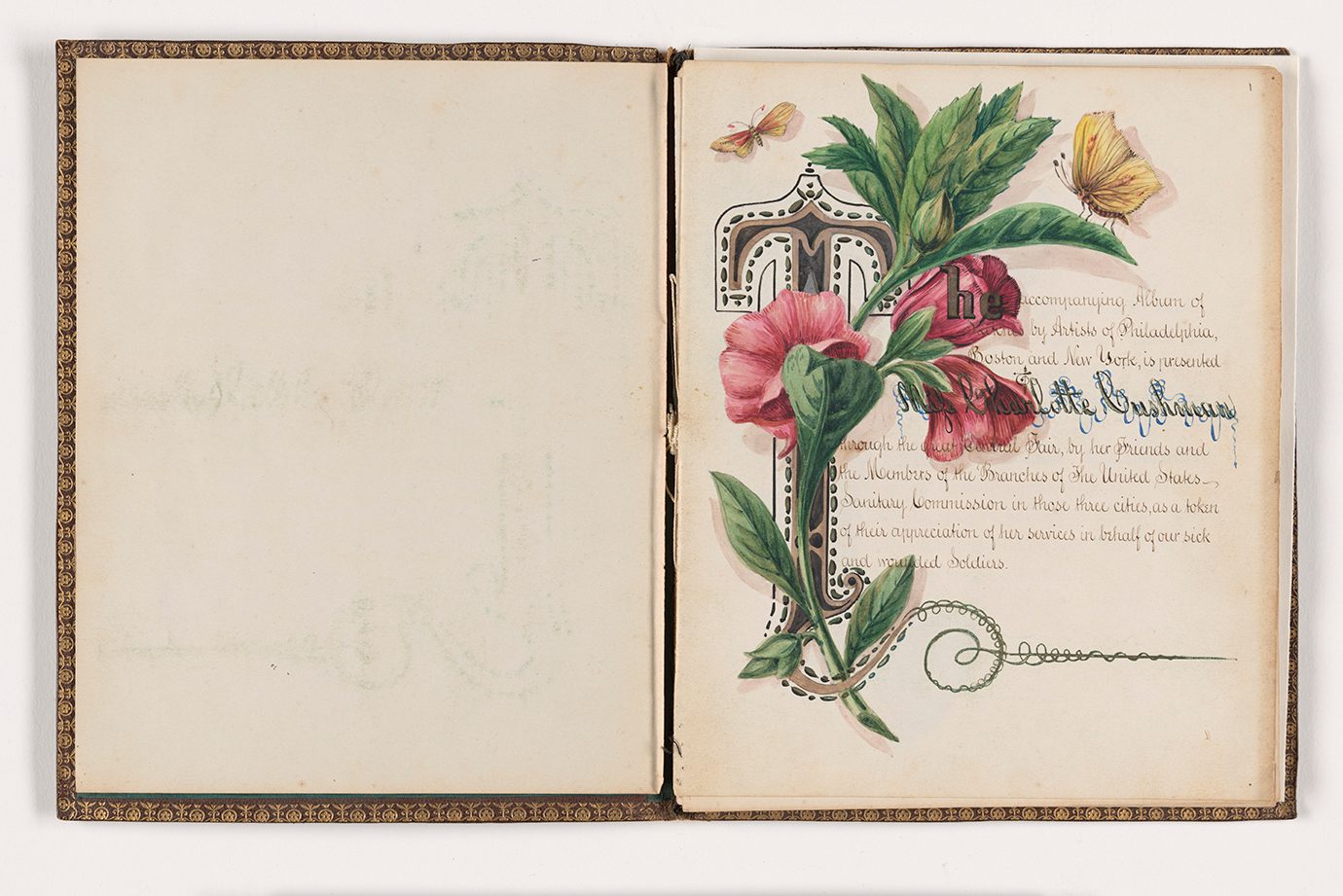
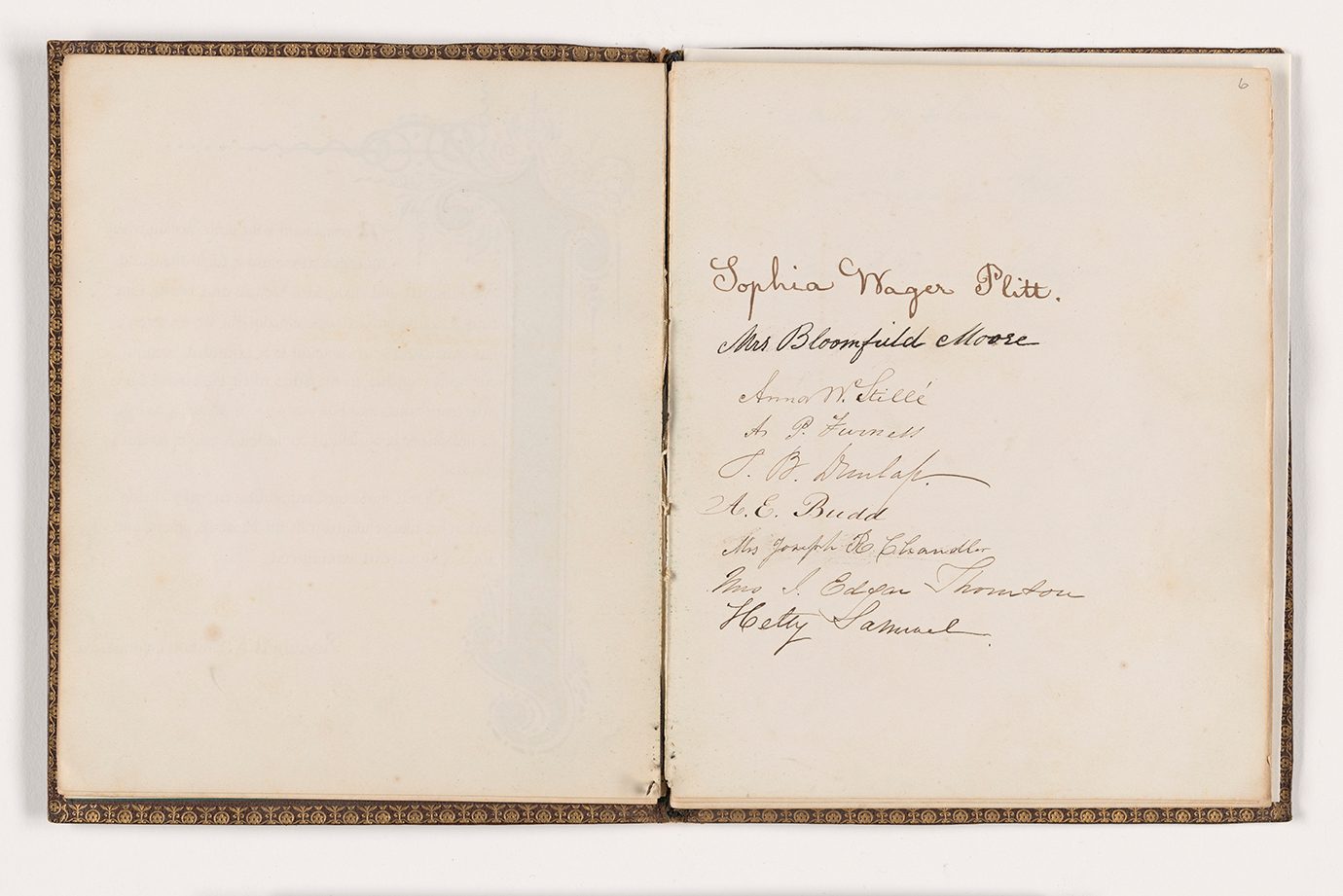
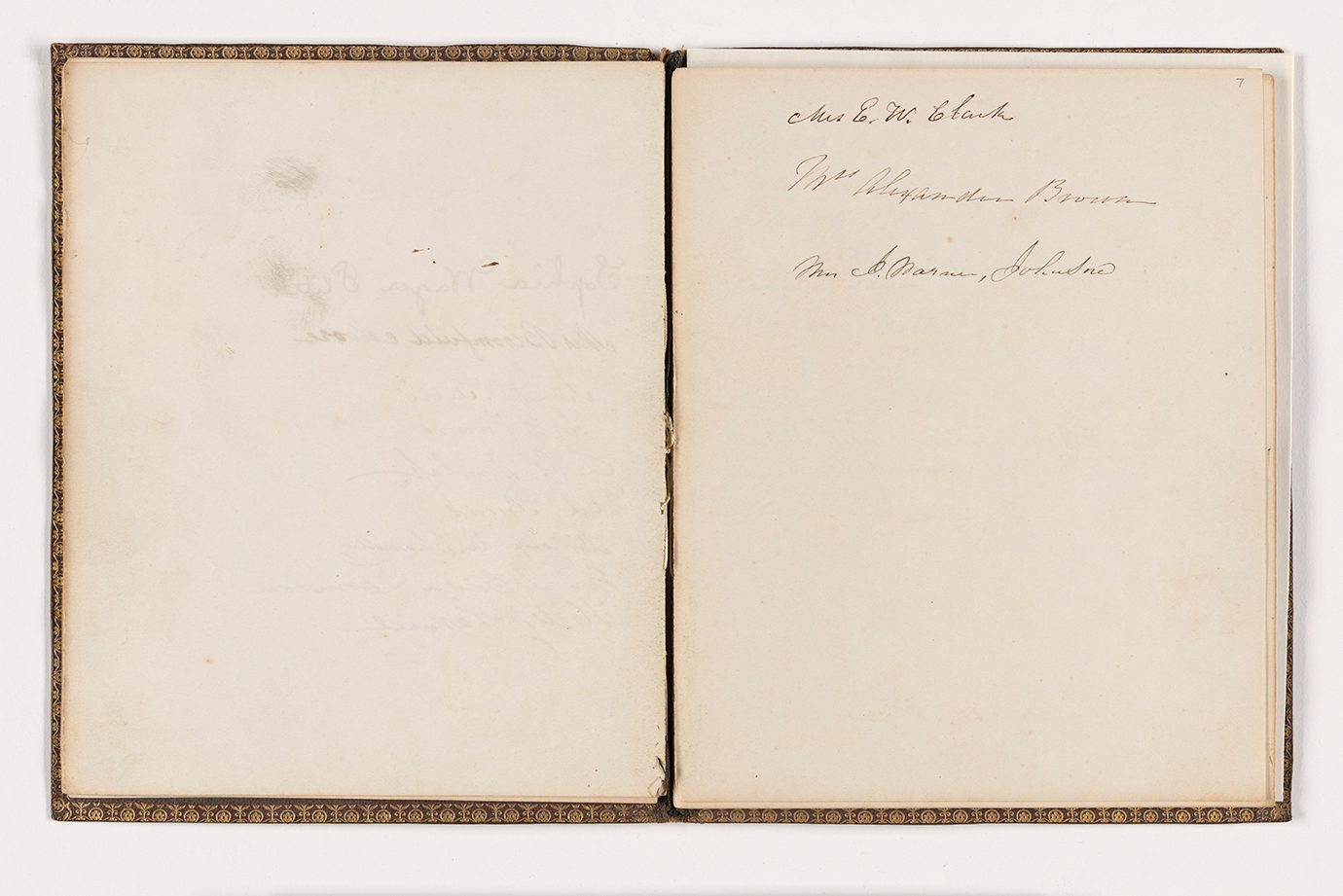
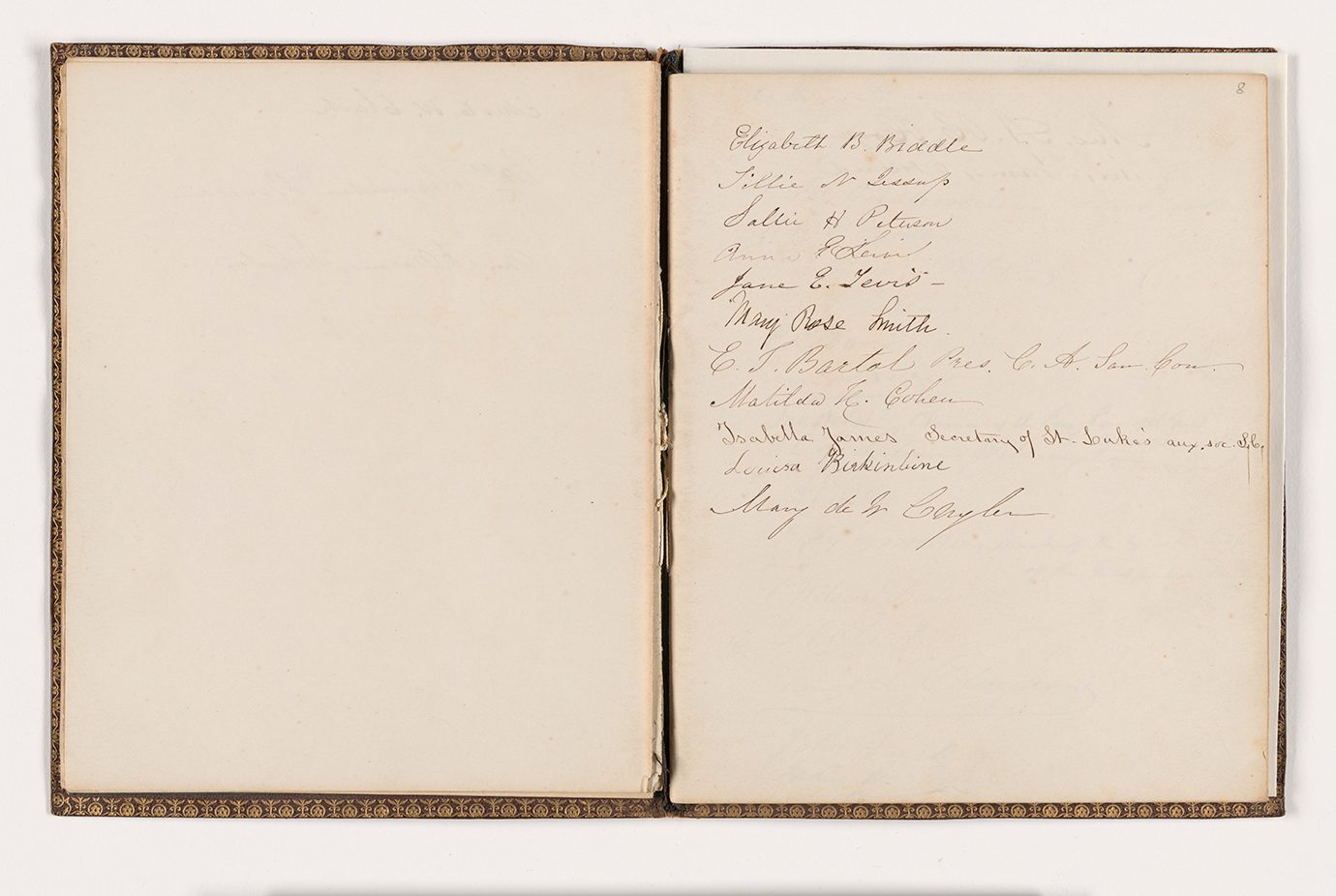
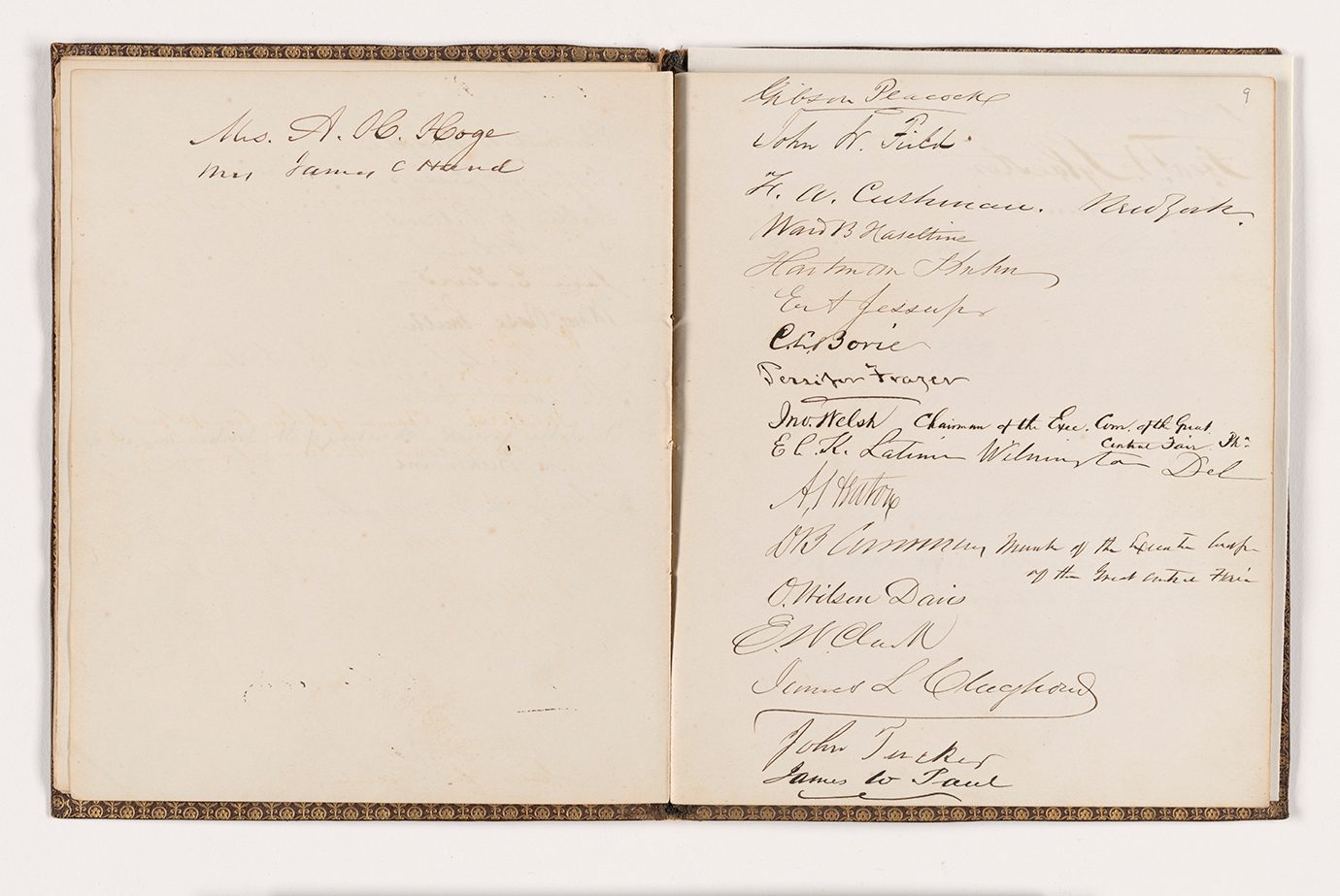
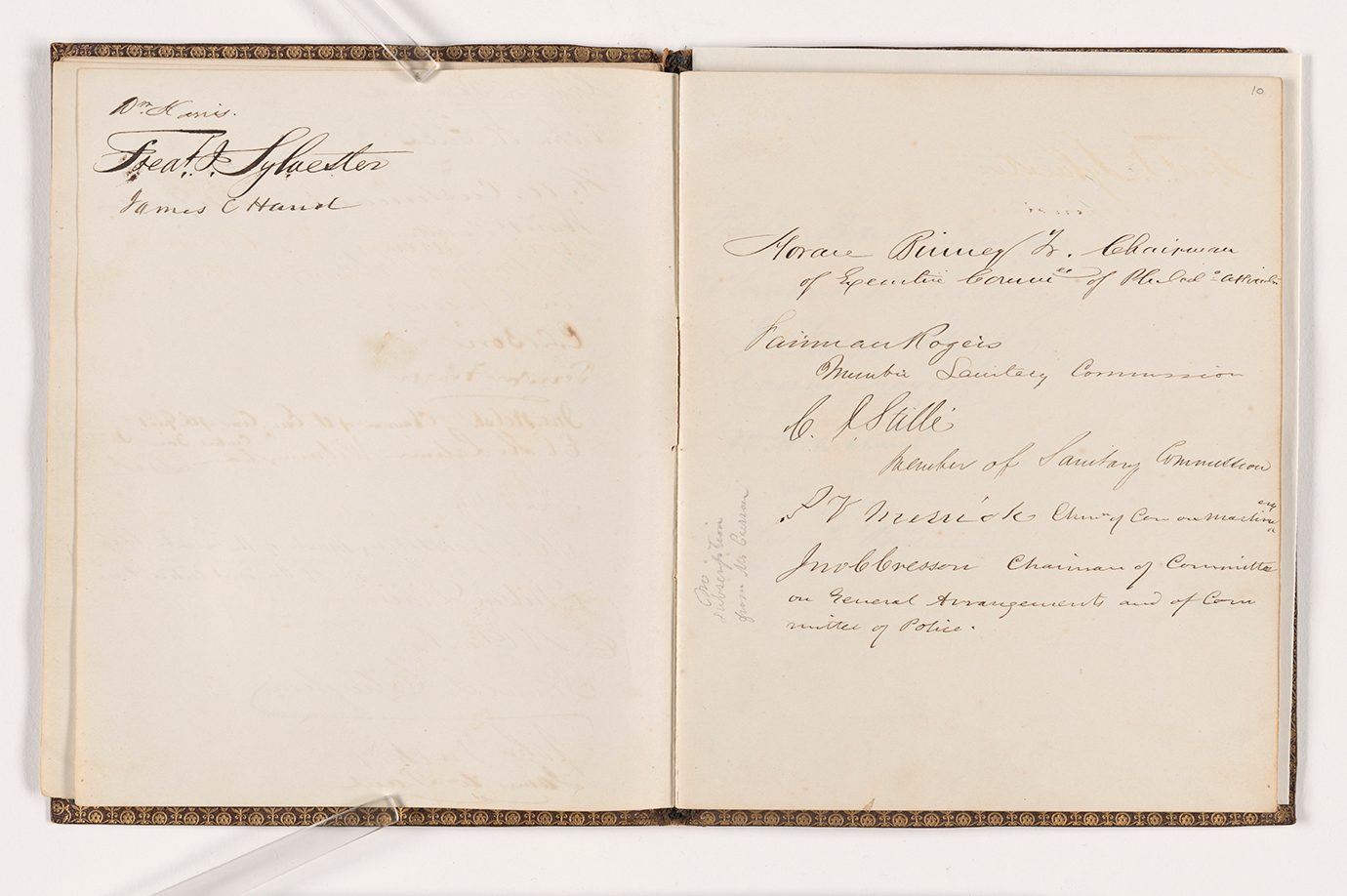
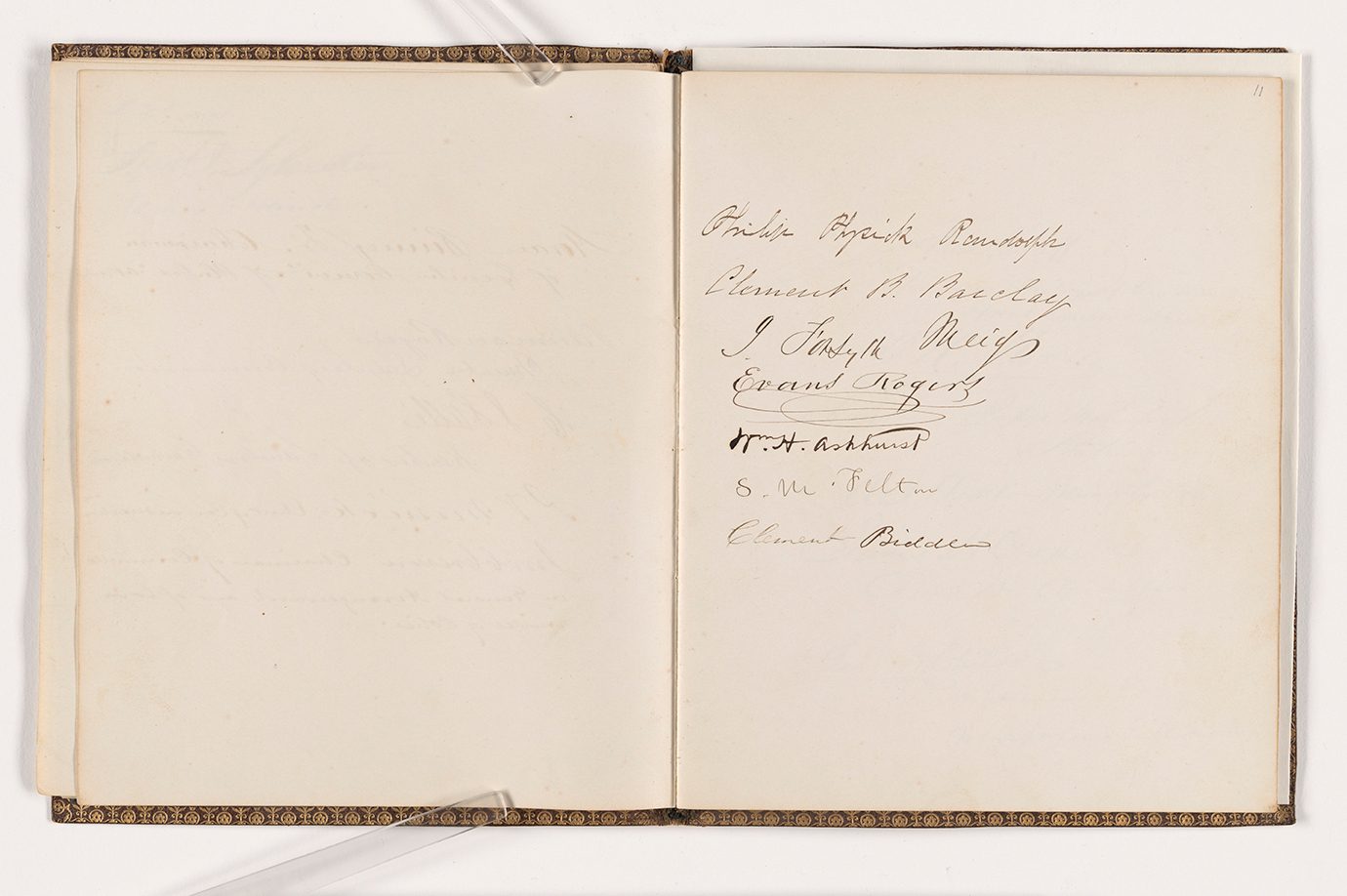
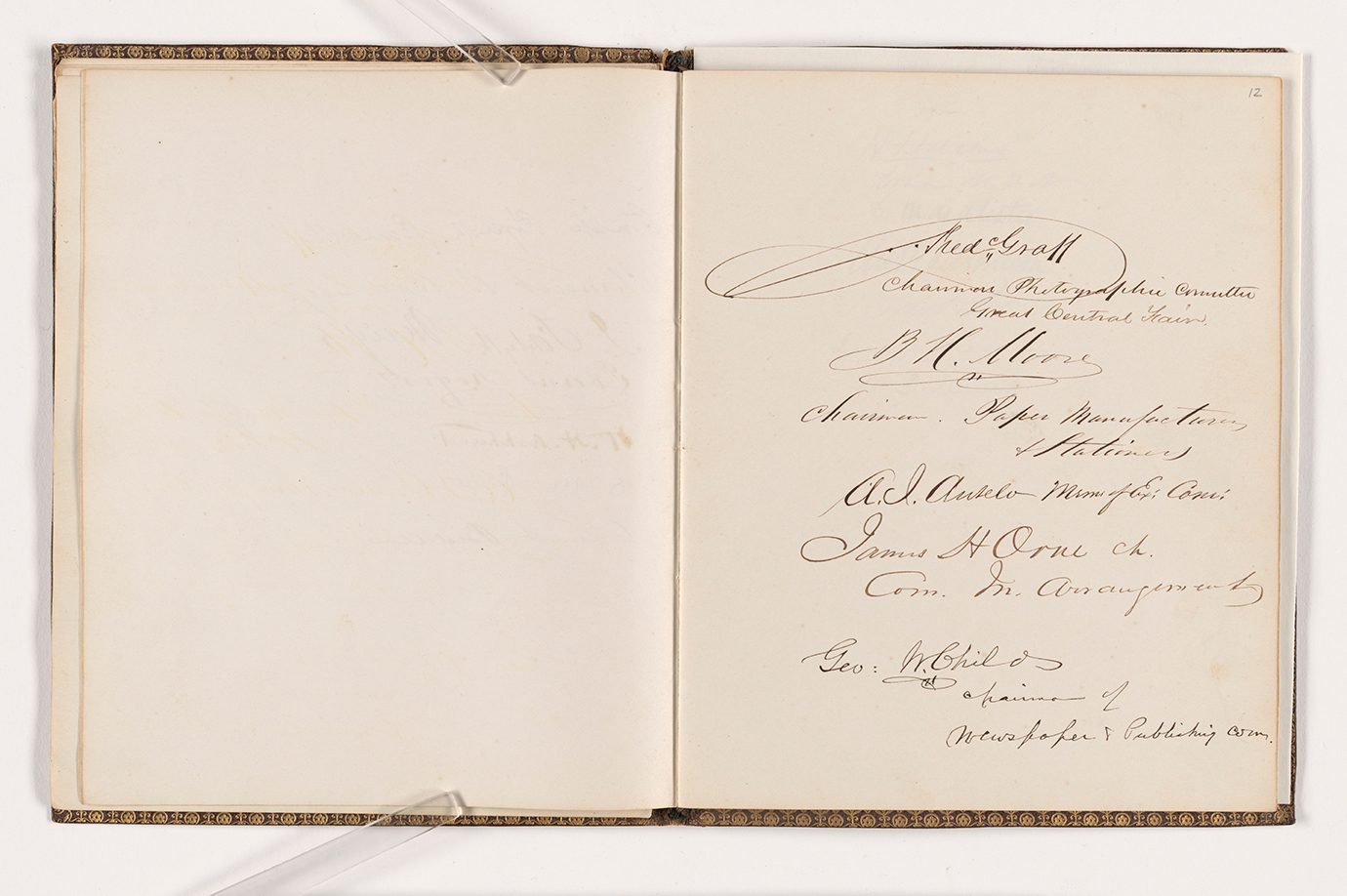
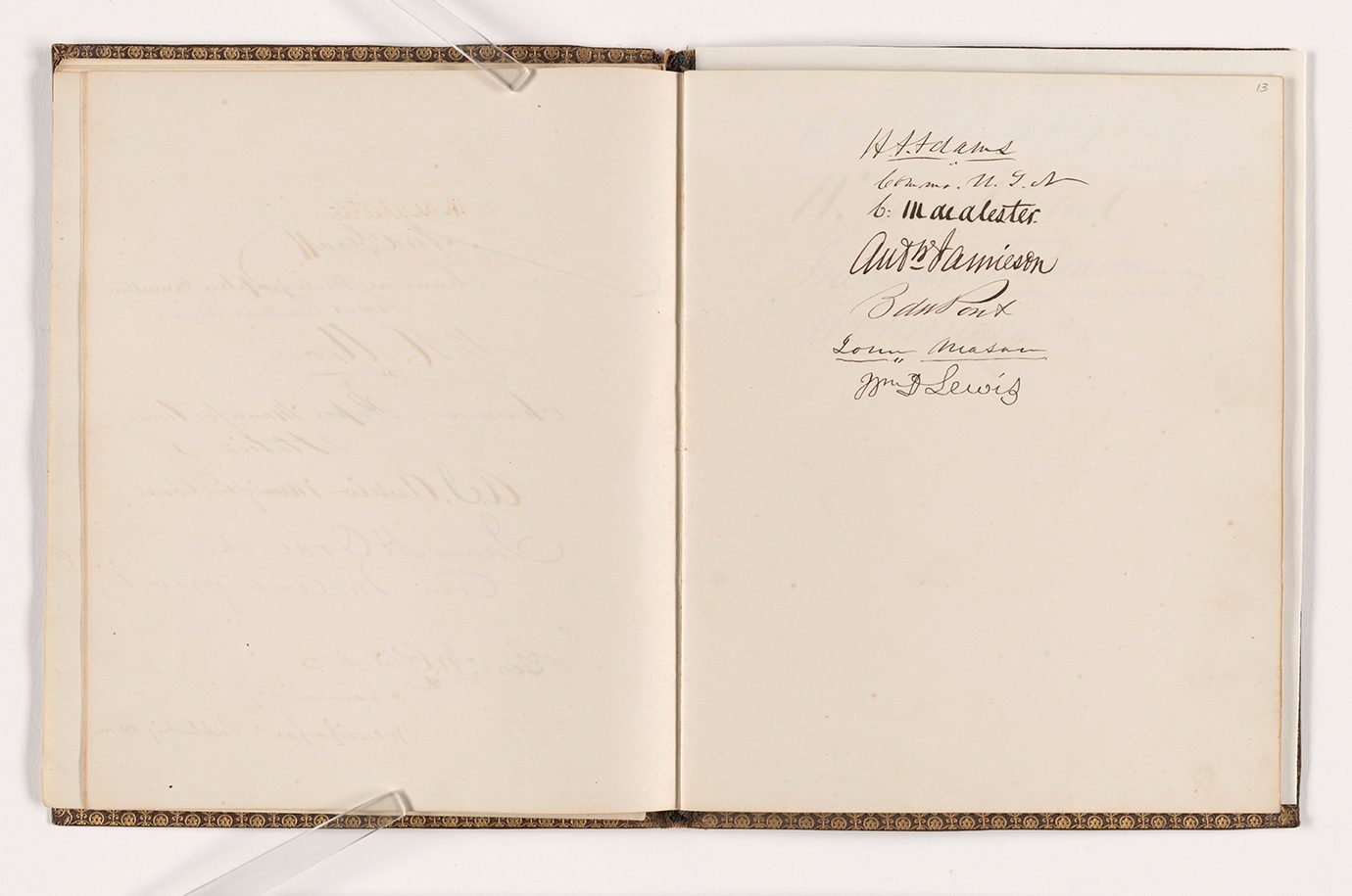
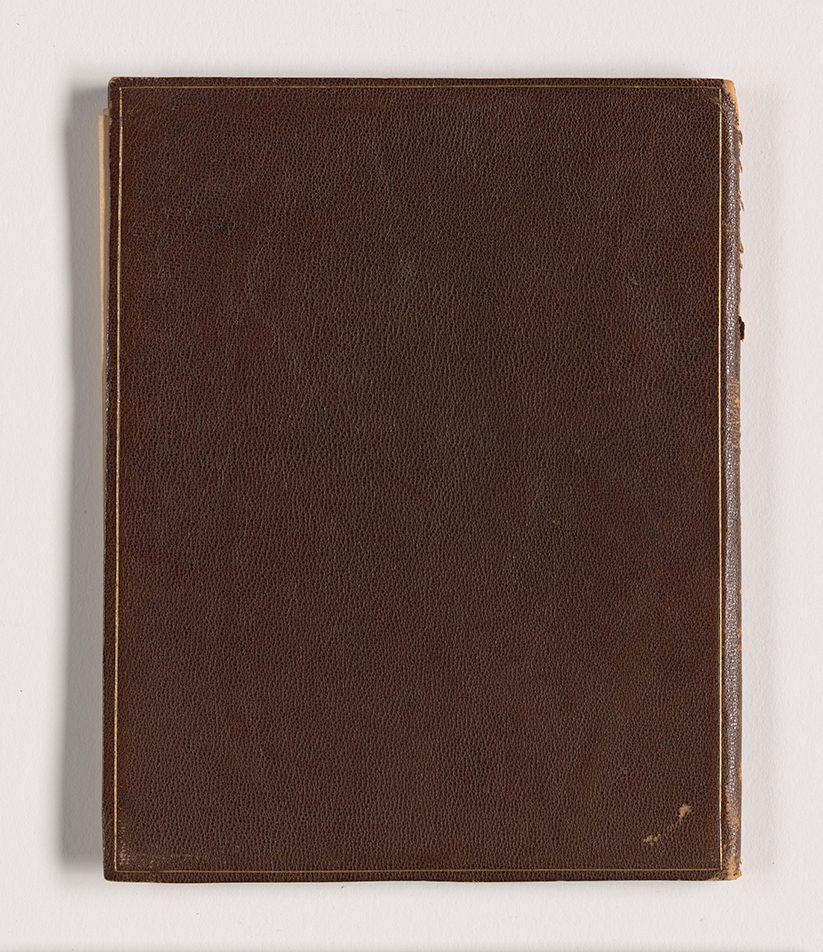
The Metropolitan Fair alone would raise $1 million, and Cushman’s volunteering surely helped the event achieve this staggering amount. In thanks, the chapters of the USSC from Boston, New York, and Philadelphia created these commemorative albums for the famous actress.
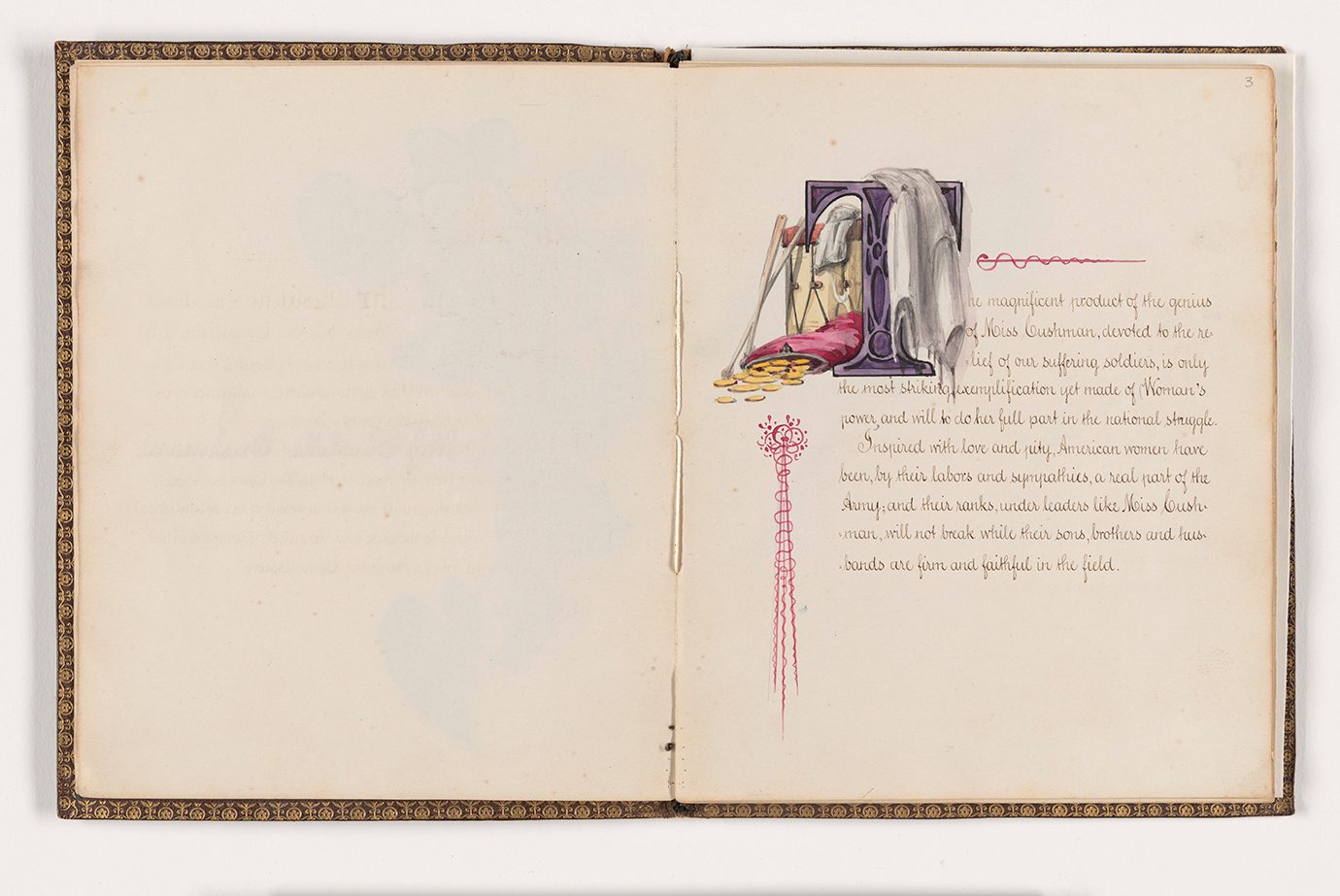
While the dedicatory texts are the same, each chapter of the USSC had artists illustrate the texts in varying levels of complexity. The third leaf of the album, shown below, identifies Cushman as a leader amongst the United States’ women while also elevating women’s work off the battlefield to equal importance with the work being done on the battlefield:
“Inspired with love and pity, American women have been, by their labors and sympathies, a real part of the Army; and their ranks, under leaders like Miss Cushman, will not break while their sons, brothers and husbands are firm and faithful in the field.”

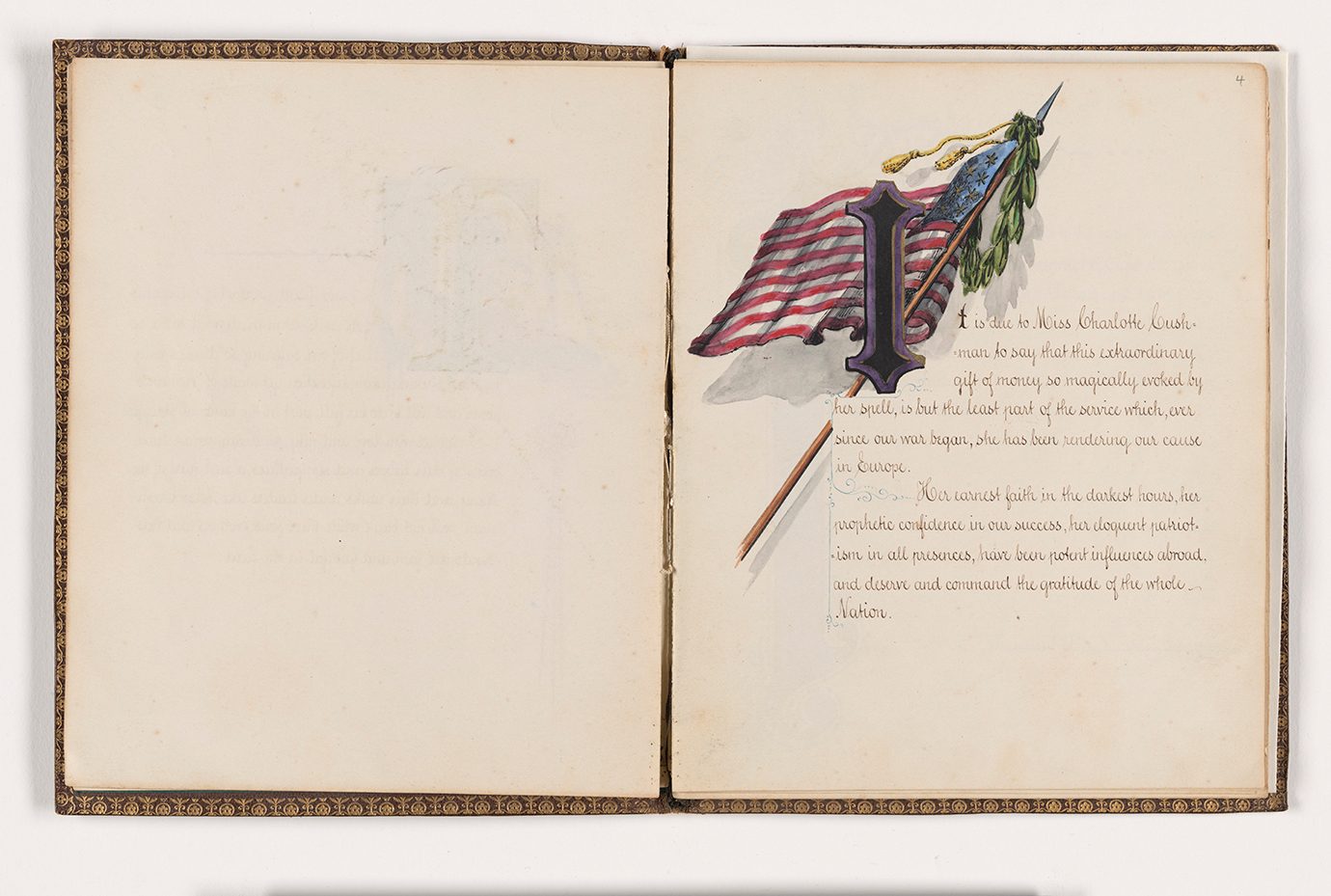
The president of the USSC takes pains to thank Cushman, shown below, for her work in the United States, like her performances at the Metropolitan Fair, while also establishing the importance of her ambassador-like impact abroad in the albums:
“Her earnest faith in the darkest hours, her prophetic confidence in our success, her eloquent patriotism in all presences, have been potent influences abroad and deserve and command the gratitude of the whole Nation.”

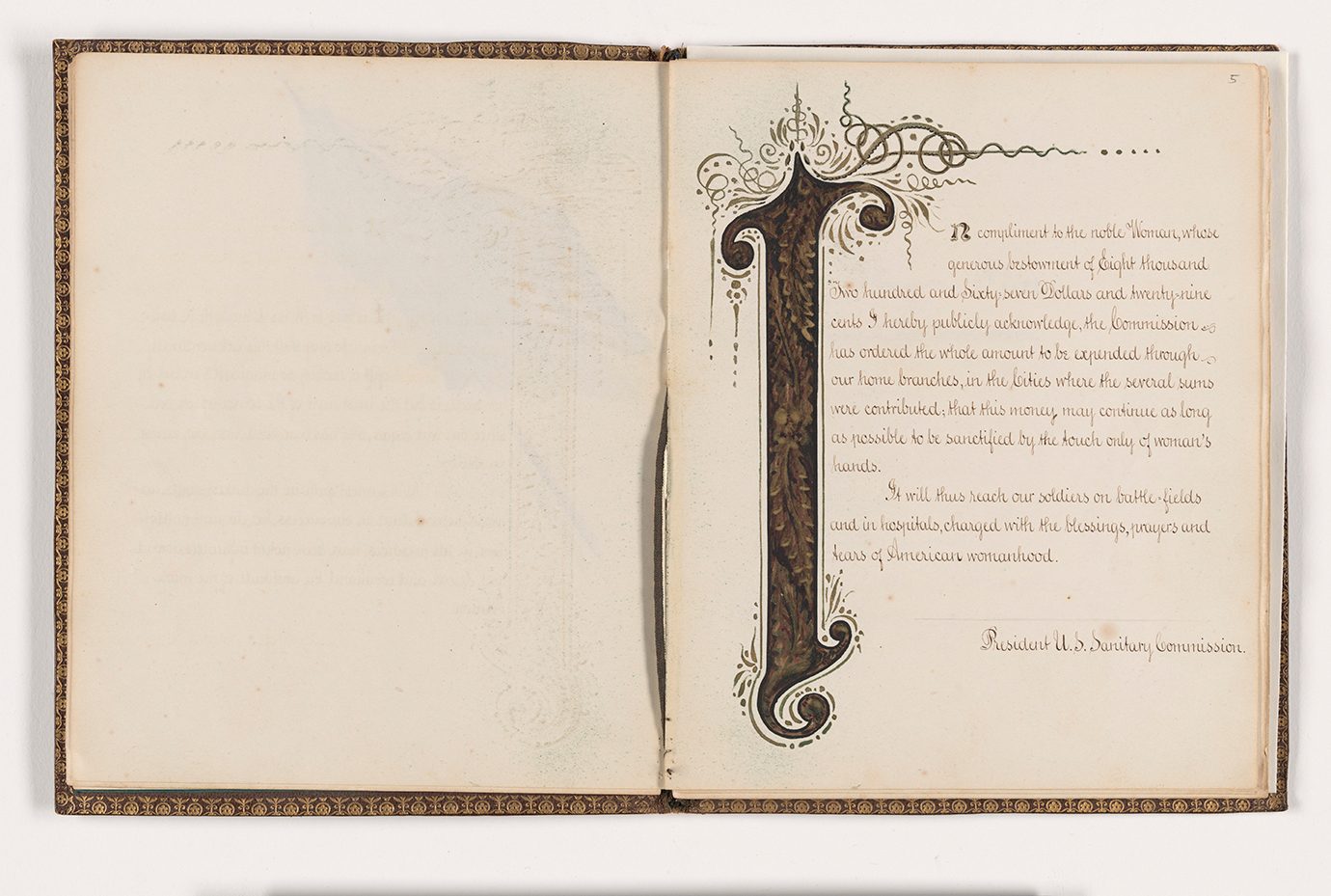
Finally, the albums repeatedly assure her that all the money she raised would go directly to support the troops. It also names the exact sum of money she personally donated: $8,267. In 2026, that would be nearly $175,000!
Cushman’s performances for the USSC would be some of the final of her career. In 1869, she would begin treatment for breast cancer. She died from related complications seven years later at the age of 59.
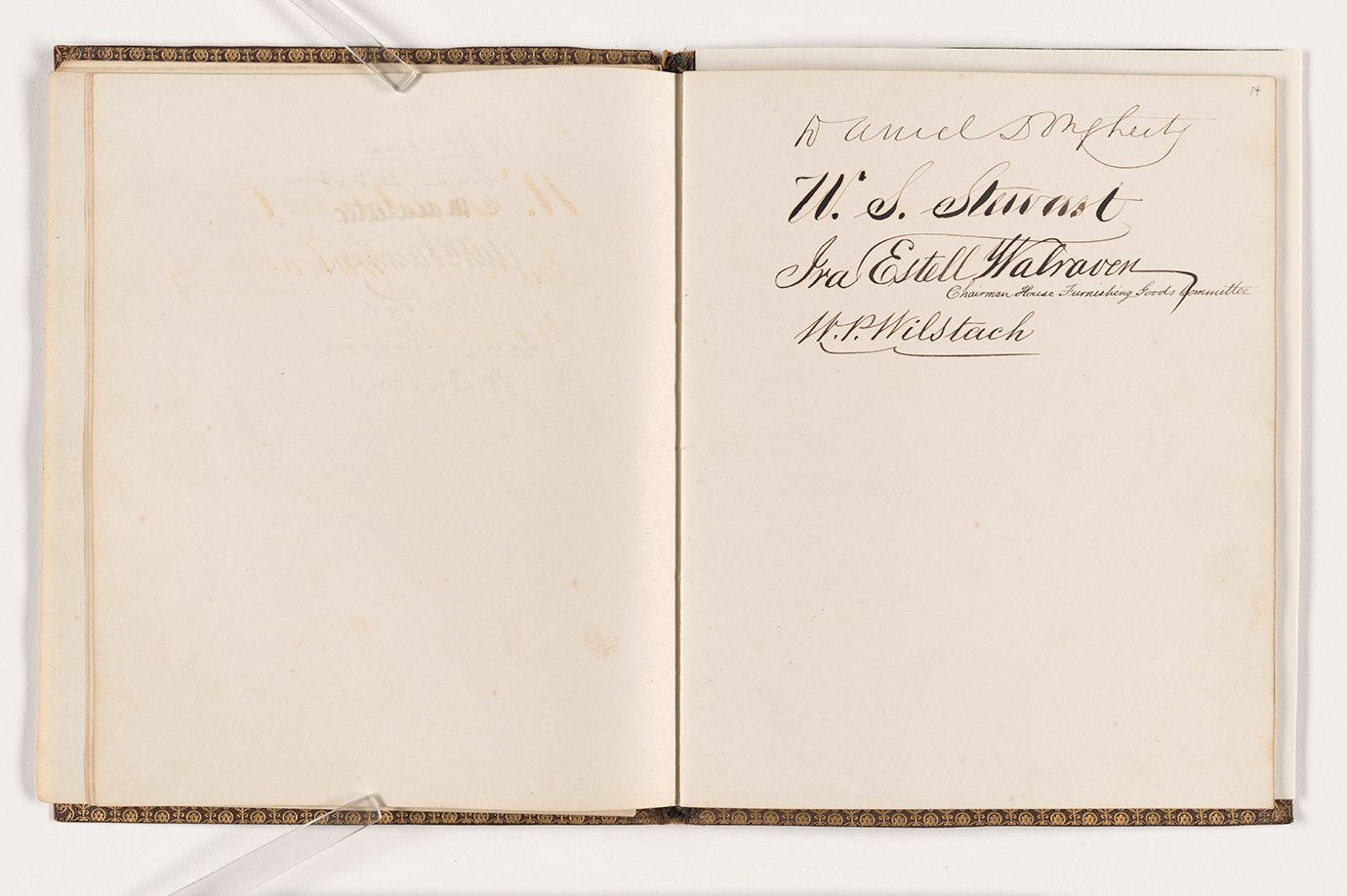
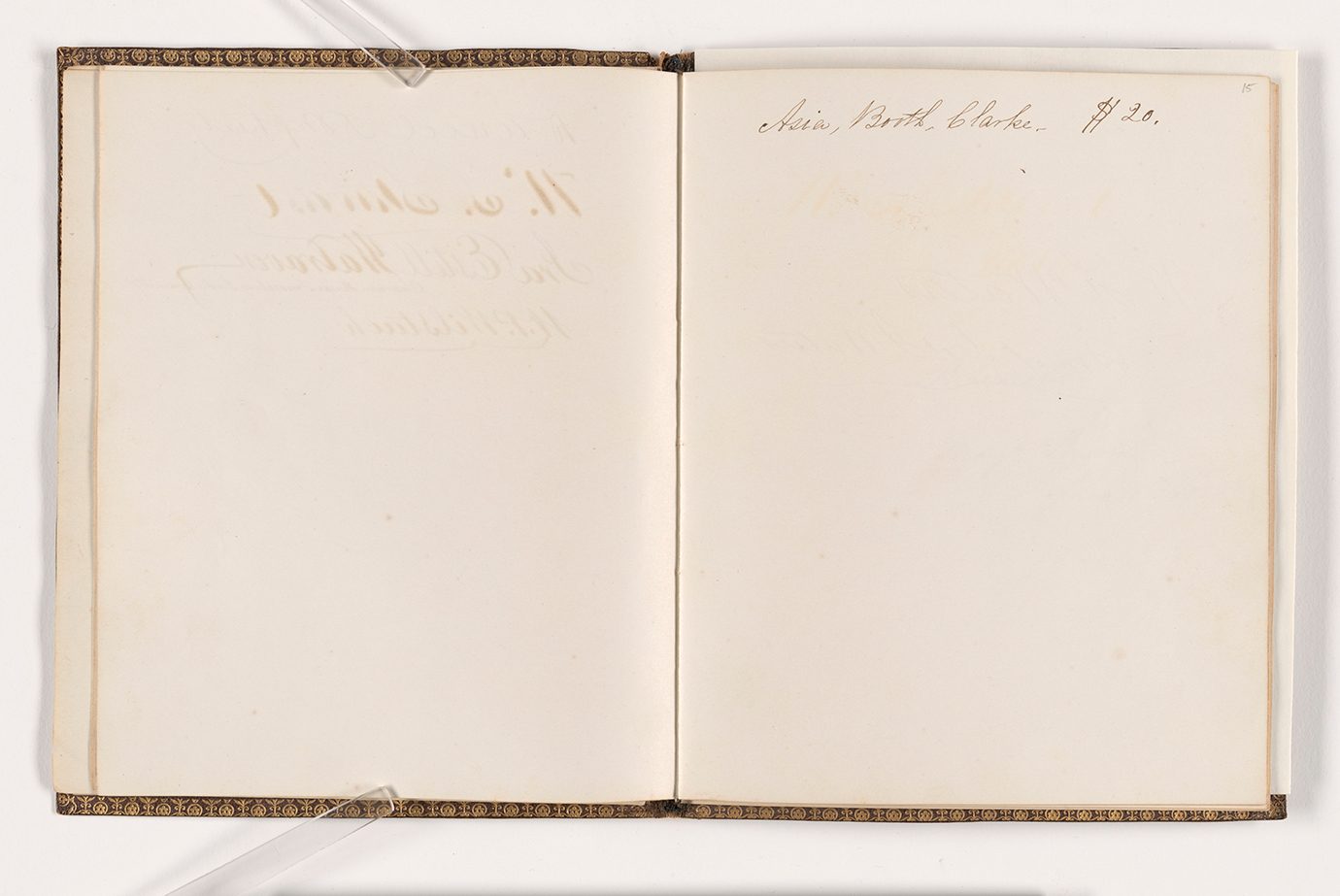
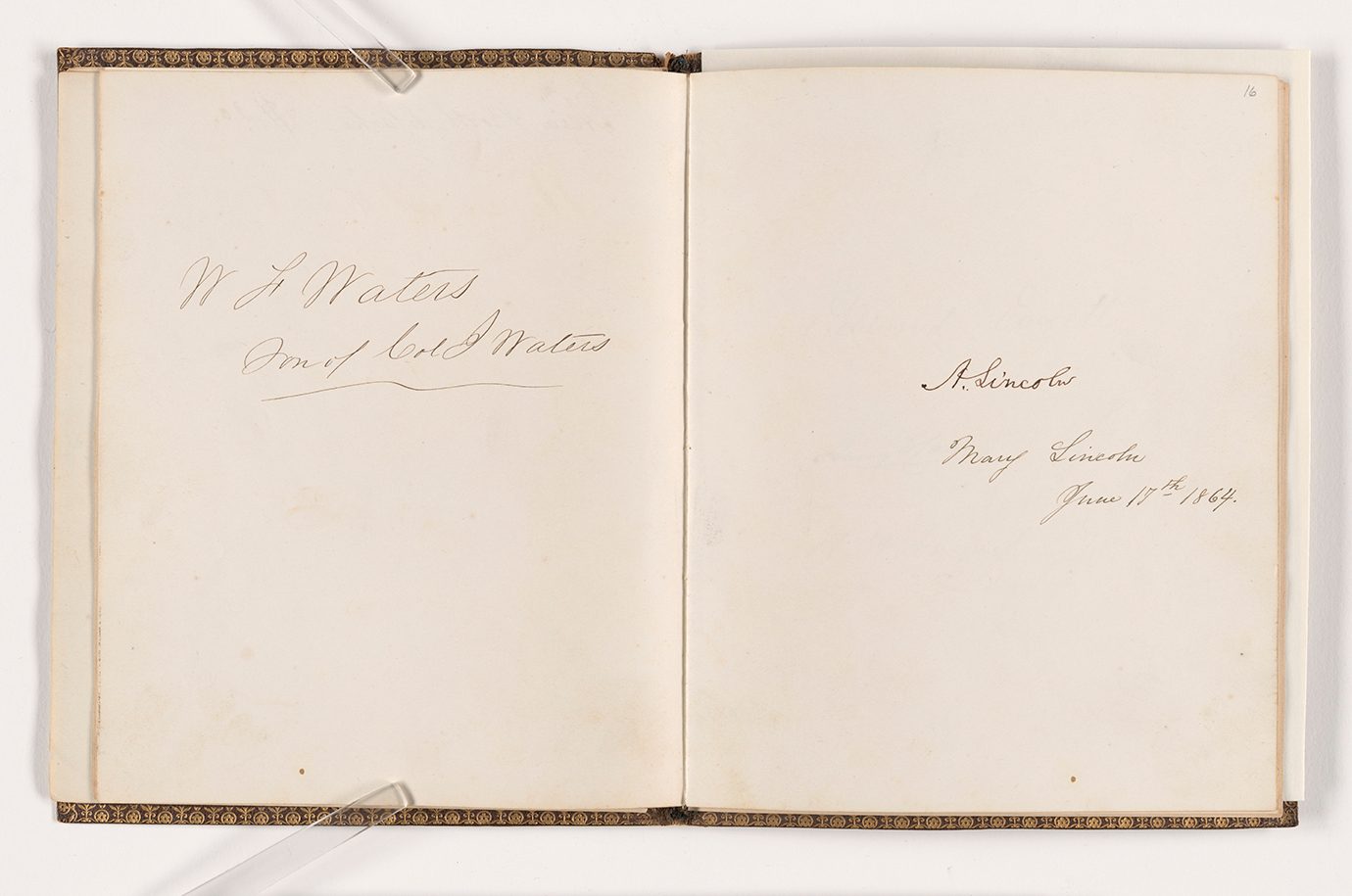
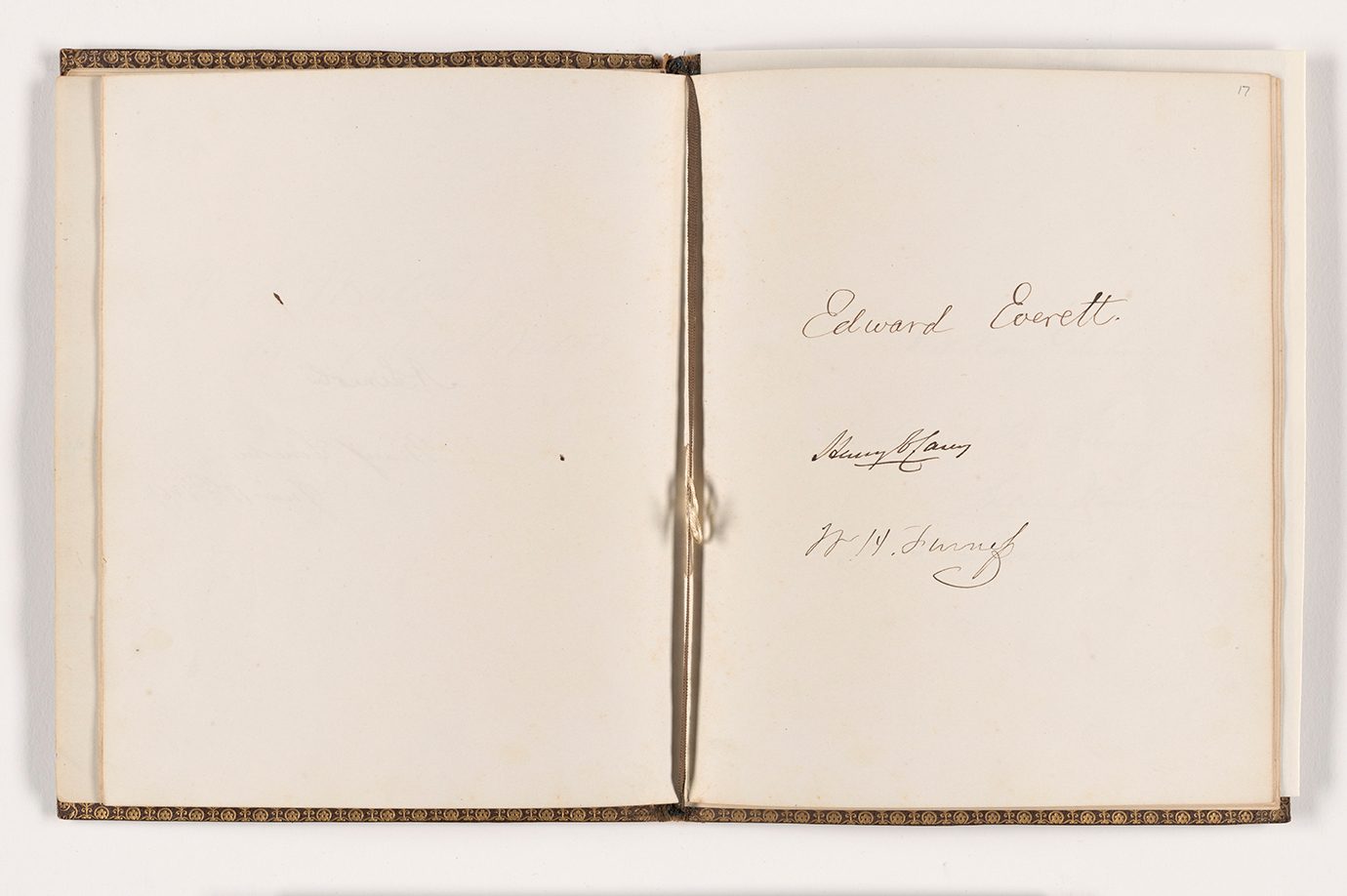
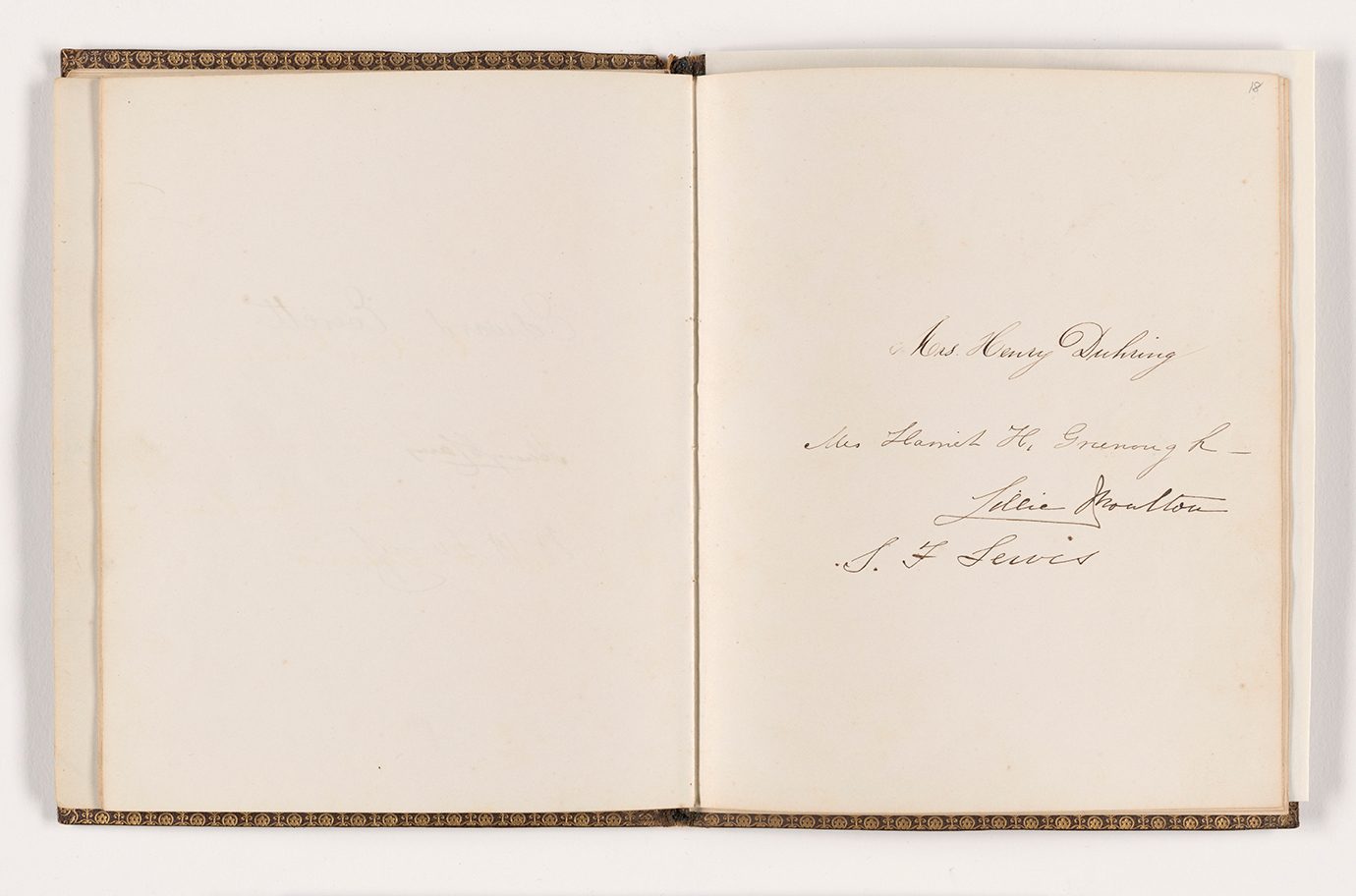
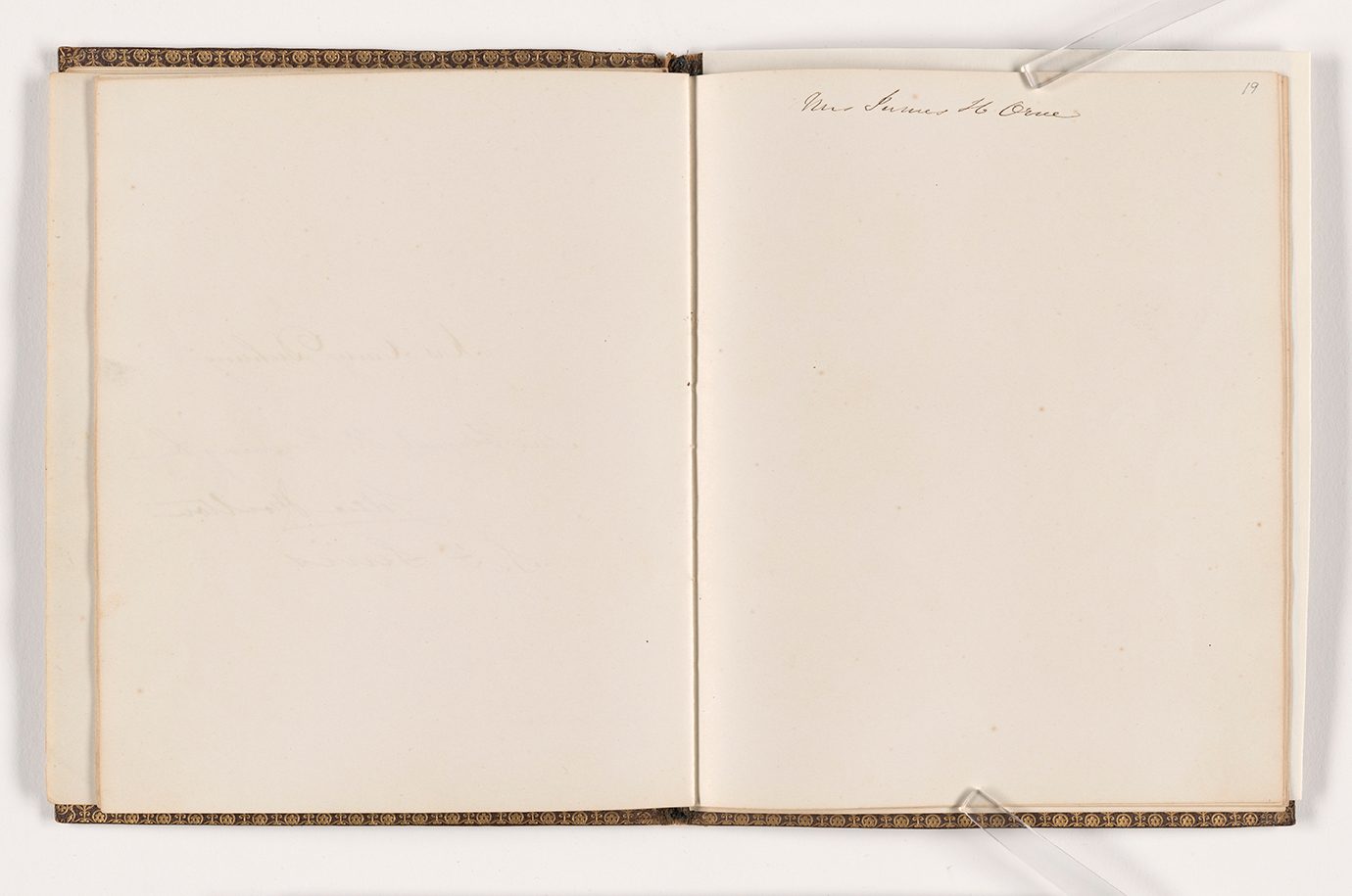
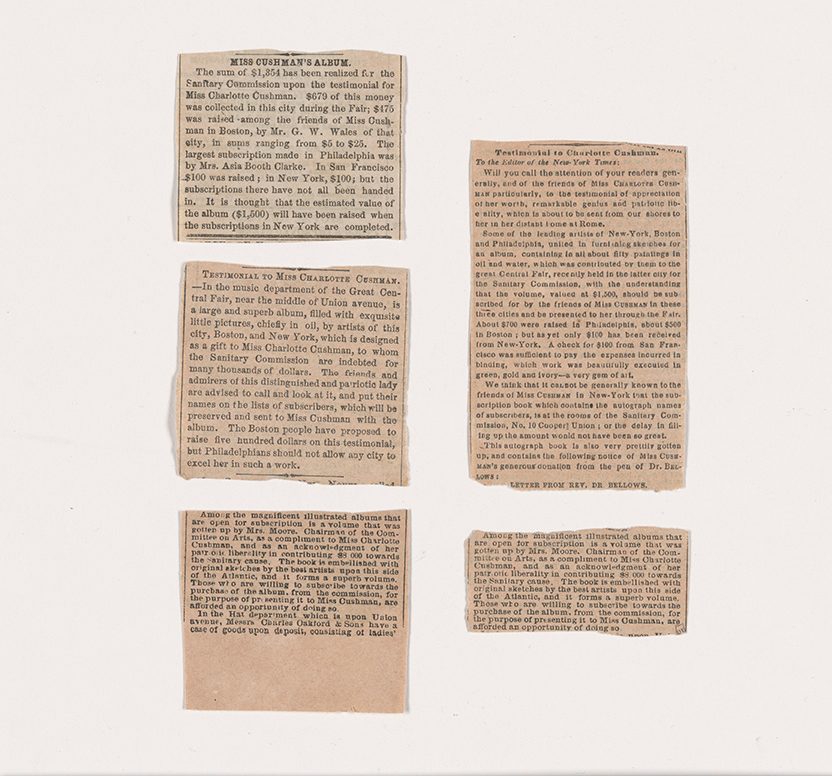
Album presented by the USCC, Philadelphia branch, to Charlotte Cushman


More Folger collection items about Charlotte Cushman and Edwin Booth
The Folger contains nearly 100 rare materials documenting Cushman’s career and life, including an 1852 Staffordshire porcelain figurine of Charlotte and her younger sister, Susan, in Romeo and Juliet, letters written by Cushman to American theater producer Augustin Daly (1838–1899), and a photograph of Cushman with her final lover, Emma Stebbins.
The Folger also contains over 500 rare objects related to Edwin Booth, including his costumes for Iago and Richard III and even a braided bracelet made from the actor’s own hair!
Keep exploring

Tana Wojczuk on Charlotte Cushman's Radical Life
Charlotte Cushman was one of the most famous American theater artists of the mid-19th century. And while she was known for her Lady Macbeth and Oliver Twist’s Nancy, she was acclaimed for her performances as Romeo and Hamlet.

Artists and scholars on queer Shakespeare
We’re celebrating Pride Month by sharing some of our Shakespeare Unlimited podcast interviews and blog posts with acclaimed artists, actors, directors, scholars, and writers about queer Shakespeare over the centuries.

The Actor and the Assassin: Edwin and John Wilkes Booth
The Booths’ story is like one of Shakespeare’s tragedies, with an unstable father, a rivalry between brothers, and an ending that changes the course of history.
Stay connected
Enter your email address to follow this blog and receive notifications of new posts by email.