
Cloaked conspirators gather in the dead of night to plan an assassination. A betrayer hands a poisoned chalice to an unwitting victim. A Scottish castle serves as the perfect backdrop for midnight murder. These scenes are all ripped straight from Shakespeare’s Julius Caesar, Hamlet, and Macbeth, but they are also ripped straight from episodes of NBC Peacock’s The Traitors. This reality competition show is, surprisingly, filled with Shakespeare quotes, aesthetics, and symbols. With Alan Cumming as host, an actor with several Shakespeare credits under his belt, The Traitors is not so much appropriating Shakespeare as transforming him into a vibe.
Based on a Dutch original, The Traitors has become a worldwide phenomenon with spinoffs in 36 countries. A few players are secretly chosen as “Traitors” and pitted against the other “Faithful” players. The Traitors meet to “murder” a Faithful each night, while during the day all contestants compete for prize money before gathering to debate their suspicions and banish a supposed Traitor. With intrigue, dramatic clashes, and “murder” at the center of every episode, the show does call to mind Shakespeare’s most famous plays on a basic level. But NBC Peacock’s version for the US market goes to great lengths to draw attention to the Shakespearean vibes inherent in the premise.
I should probably define what “a vibe” is—if an undefinable atmosphere can even be defined. In his essay “A Theory of Vibe,” Peli Grietzer describes a vibe as a “style” or “collective aesthetic” of “all the myriad objects and phenomena that make up the imaginative landscape of [a] work.” In essence, a vibe is the simplified sense we have of a given object, comprised of its most memorable or striking features. But a vibe is also a means of characterization, of interpretation, and of unifying multiple separate elements together. Robin James calls this “sympathetic resonance” that “activates similar frequencies in nearby objects that are relatively ‘in tune.’” For cultural works, these resonating vibes may be something that audiences identify for themselves or that creators seek to cultivate for their own purposes.
With intrigue, dramatic clashes, and “murder” at the center of every episode, the show does call to mind Shakespeare’s most famous plays on a basic level.
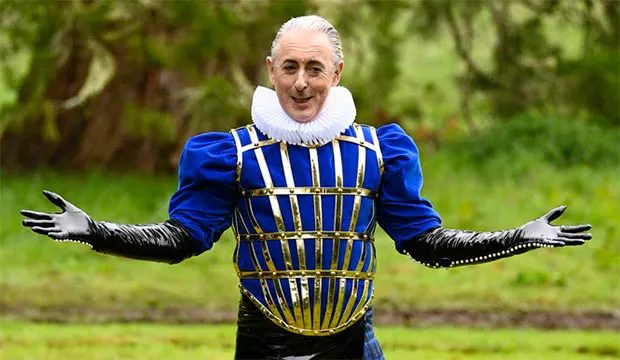
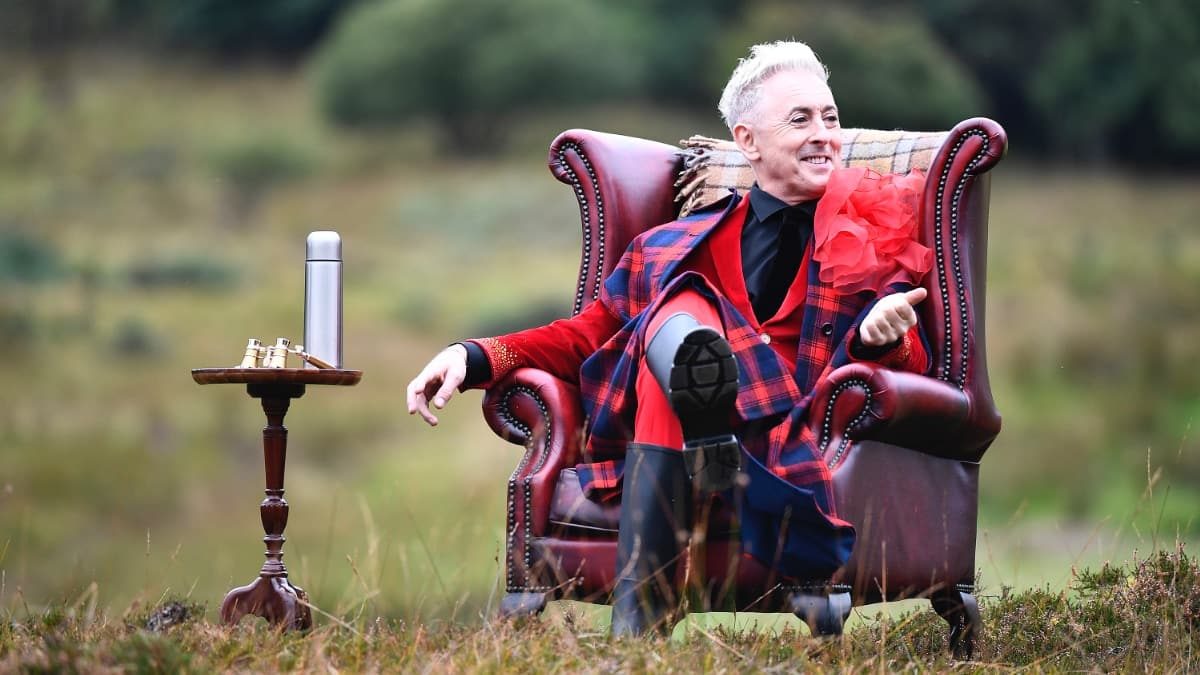
And such cultivation brings us back to the US spinoff of The Traitors and its unique vibe. The US version leans heavily into its “Britishness”; its most American element might be the mix of minor celebrities, athletes, and reality TV veterans that make up its contestants. The show is filmed in Ardross Castle in the Scottish Highlands and its host is also a Scotsman: stage and screen actor Alan Cumming. The US Traitors also leans heavily into theatricality and camp, juicing up moments of high drama with masked figures in cloaks, large columns of fire, and (of course) Cumming’s fabulous, dramatic, tartan-heavy wardrobe.
Alan Cumming’s Fabulous Style on The Traitors

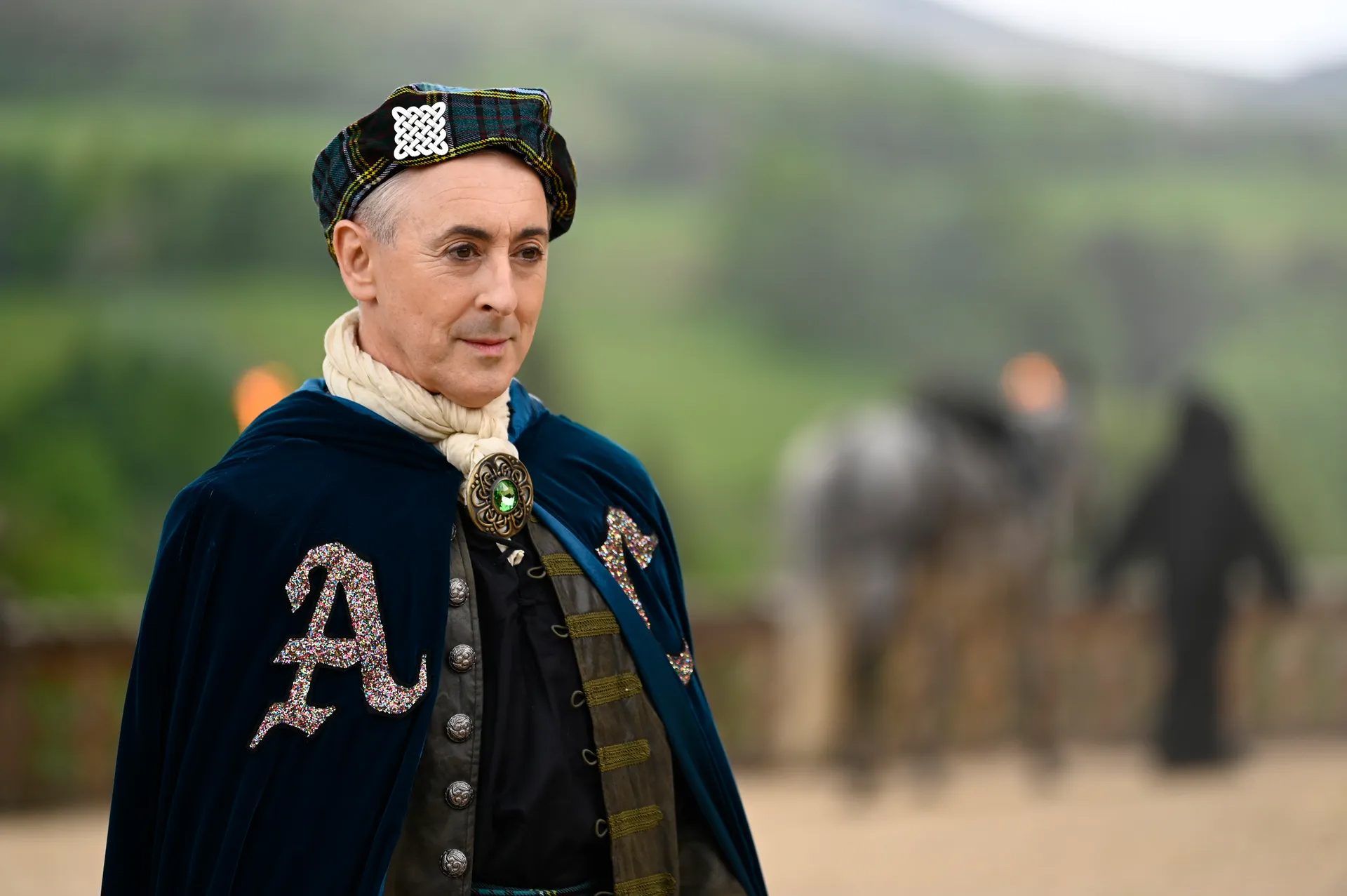
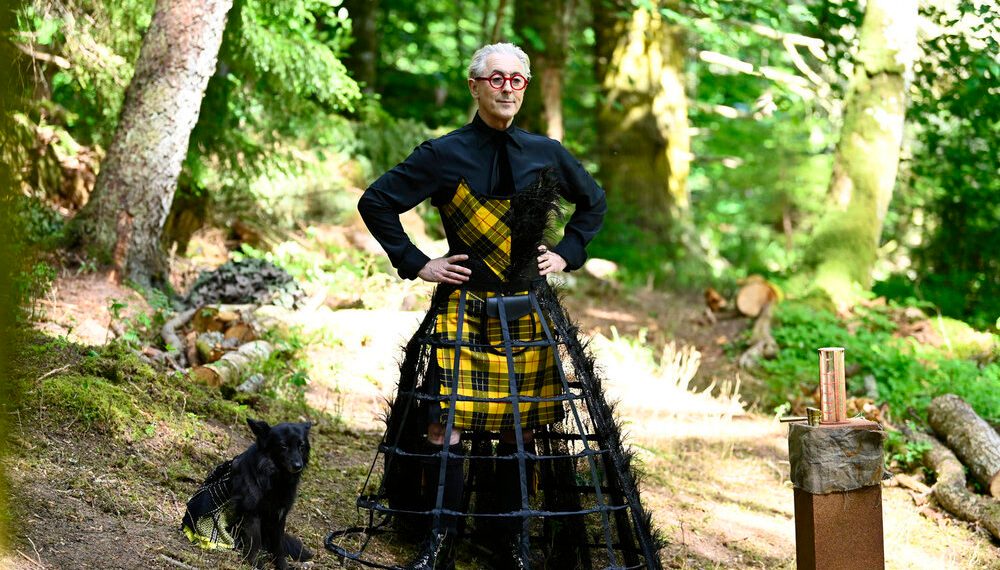
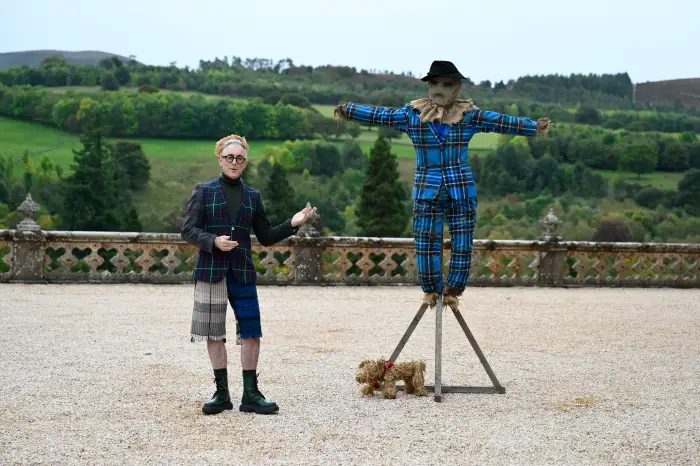
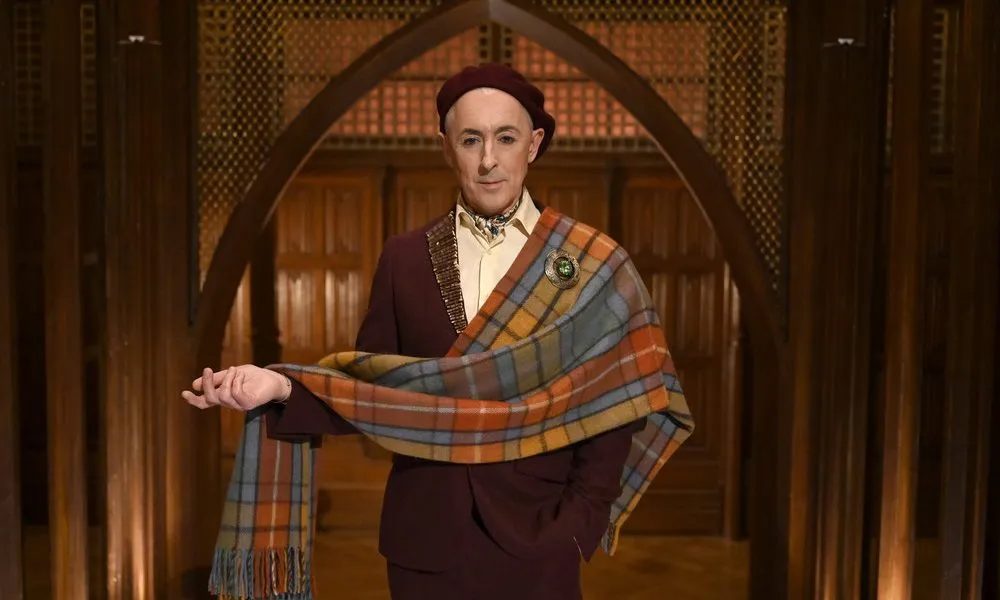
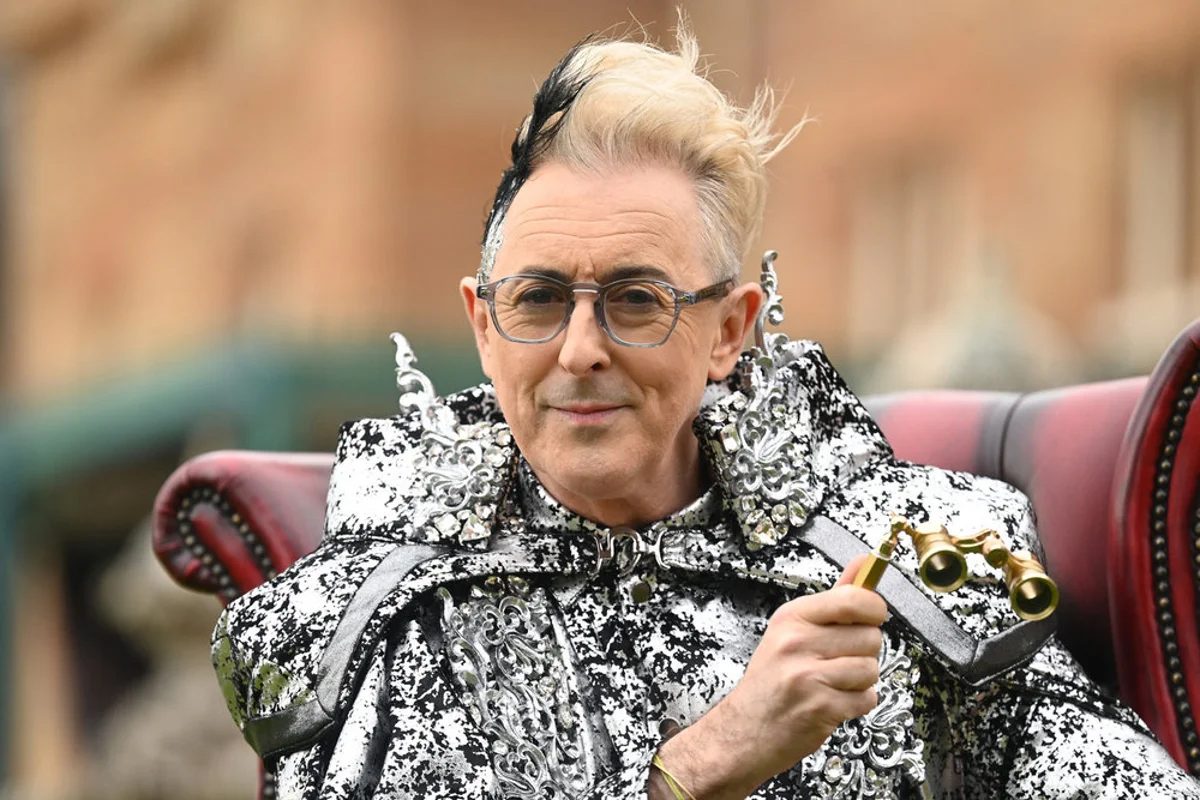
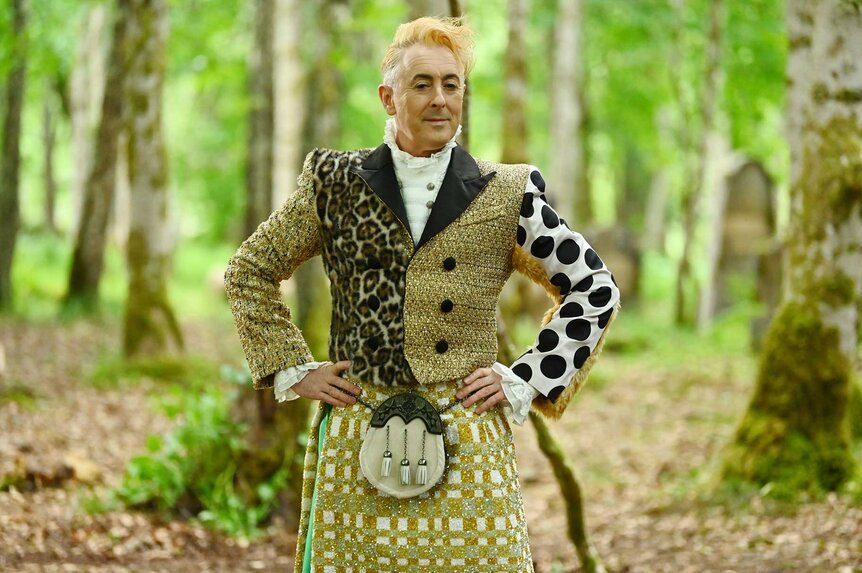
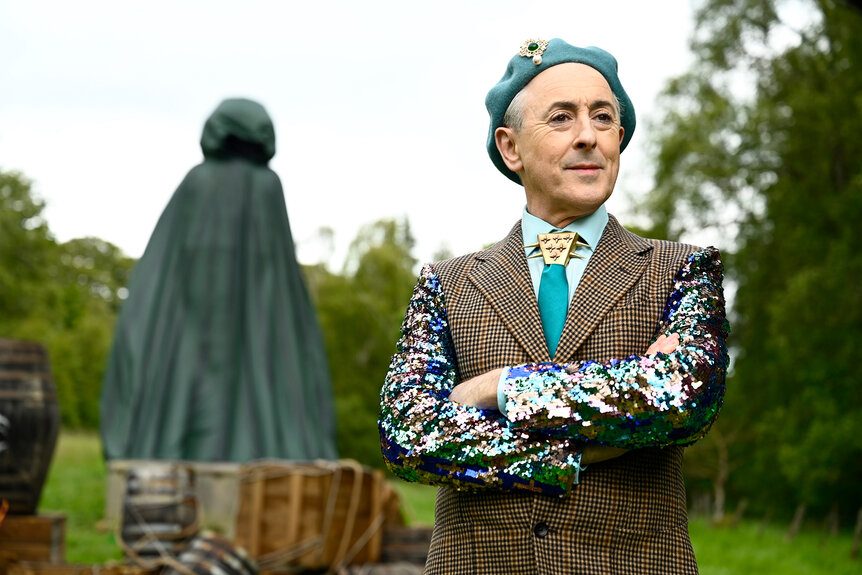
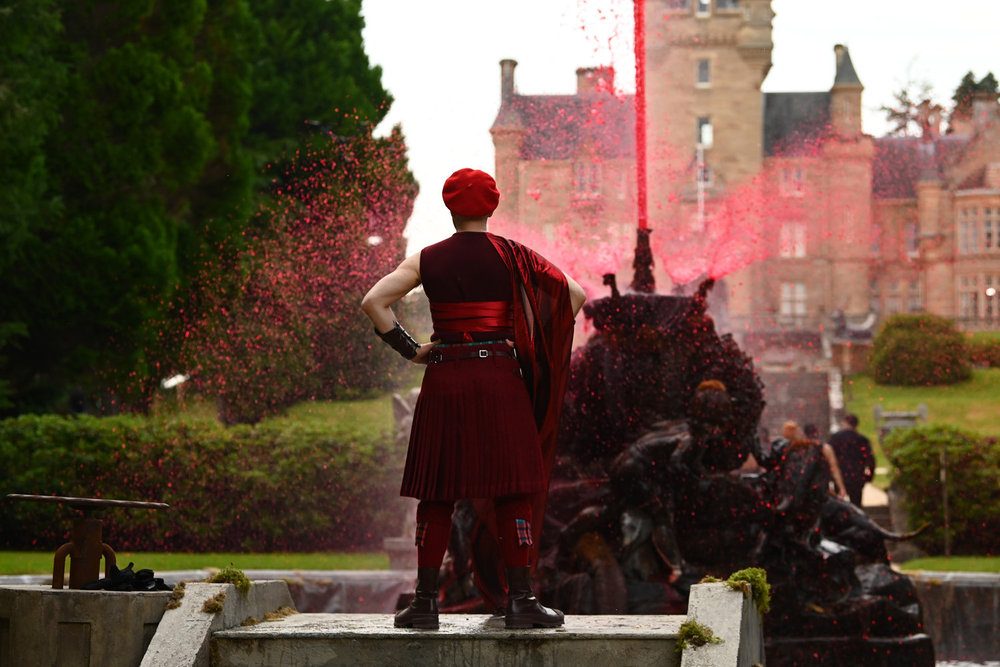
The whole production is dripping with the aesthetics of murder mystery and gothic horror. But discerning viewers will note that a unifying factor in the show’s “imaginative landscape” is, well, Shakespeare. Walls are lined with artwork featuring skulls, quills, ghosts, a gloomy jester, and even Falstaff at the Boar’s Head Inn. Background scenes feature large portraits of Cumming styled as a medieval king and Andy Cohen (who hosts reunion episodes) as a Renaissance gentleman. In one episode, the Traitors must poison a victim in plain sight with a vial hidden in a hollow set of Shakespeare’s tragedies. Even the Traitors themselves echo Julius Caesar as they conspire cloaked in the darkness a la Brutus and Cassius before “pricking” out victims for execution a la Octavius and Mark Antony.

Even the Traitors themselves echo Julius Caesar as they conspire cloaked in the darkness a la Brutus and Cassius before “pricking” out victims for execution a la Octavius and Mark Antony.
And then there are the quotations. The most Shakespearean element of The Traitors is Cumming’s use of Shakespearean language in his hosting patter. A majority of episodes feature Cumming quoting or creatively misquoting Shakespeare in his advice to the players: 9 out of 11 competition episodes in Season 3 alone. The mood is set with Macbeth (“something wicked this way comes”; “fair is foul and foul is fair”). Players are encouraged with Henry V (“the game is afoot”; “once more unto the breach, dear friends!”). The murdered are mourned with Hamlet and Julius Caesar (“Alas, poor Reza, I knew him well”; “if you have tears, prepare to shed them now”). More than the skulls, artwork, and cloaked conspirators, these quotes create a Shakespearean vibe that strongly characterizes the US version of The Traitors. But—to join Cumming in creatively appropriating Shakespeare— wherefore?!
To be sure, Alan Cumming’s unique flair as a host explains some of these Shakespearean vibes, as does his acting experience with Shakespeare. Like his flamboyant outfits, Shakespearean quotes add heightened drama and theatricality that separates The Traitors from the reality show pack. But these Shakespearean vibes would not be so ubiquitous if Cumming and his fellow producers didn’t think that American audiences would eat them up. What those audiences are craving may not be Shakespeare specifically but exactly the kind of “imaginative landscape” that his vibes can provide. Murder and betrayal are more entertaining if they are stylish. The strutting and fretting of reality stars is elevated above the mundane through the “collective aesthetics” of a higher art. In this, The Traitors follows a long tradition in American pop culture of seeking legitimacy through proximity to Britain and the Bard.

Shakespearean quotes add heightened drama and theatricality that separates The Traitors from the reality show pack.
Making Shakespeare a vibe may be just a new way of doing something very classic. Still, these vibes are worth paying attention to as we think about the ways 21st-century pop culture operates in increasingly reductive ways. What does it mean for Shakespeare’s continued role in our culture if he can be reduced to a vibe? Both Grietzer and James see vibes as a means of both expanding and limiting possibilities in how we perceive and interpret objects. We see this at play in the Shakespearean visuals of The Traitors, which are largely focused on neck ruffs, poison, daggers, skulls, literary ephemera, and ghosts. Visually, Shakespearean vibes are of tragedy and horror, with none of the humor, history, and complexity that characterize his larger works. But the inclusion of quotations in The Traitors does suggest that Shakespeare is still best understood aesthetically through his language. The heavy use of this language in the show indicates that Shakespeare’s poetic words remain his most striking feature—without which the vibes could not truly resonate as “Shakespearean”.
For those of us who love Shakespeare’s works, the idea that language is his most striking feature should come as no surprise. But it is also not something we should take for granted. As our culture becomes more and more referential, meme-ified, and vibe-centric, it’s worth taking the time to understand what a vibe is and how Shakespeare is being consumed as part of this larger cultural phenomenon. If Shakespeare can be reduced down to a vibe—a dagger and some pretty words—how long can we expect the pretty words to remain a part of the imaginative landscape? How long will those words remain authentically Shakespearean? Can a vibes-based aesthetic retain its distinct character over time?
Season 4 of The Traitors may provide the example, as it relies far less on remixed Shakespeare quotes and far more on a general “literariness” in the host soliloquies. Having used Shakespearean vibes to build the show’s overall style, those vibes are now somewhat diluted. And this may mean that Shakespearean vibes are best enjoyed when also consumed alongside his larger works. We can vibe with The Traitors and “The Fate of Ophelia” but should also read and watch Shakespeare’s plays and appreciate them in all their original complexity. Vibes are fun, and they make our pop culture better. But, to borrow from Alan Cumming’s playbook once more, we should probably never make them “the be-all and the end-all.”
The inclusion of quotations in The Traitors does suggest that Shakespeare is still best understood aesthetically through his language. The heavy use of this language in the show indicates that Shakespeare’s poetic words remain his most striking feature—without which the vibes could not truly resonate as “Shakespearean”.
Keep exploring

The fate of Ophelia
The first track on Taylor Swift’s new album, The Life of a Showgirl, is “The Fate of Ophelia.” Refresh your memory about Hamlet’s ingenue and why we can’t stop writing, painting, and singing about her.

The vibes of the past in Shakespeare and fantasy
For many creators in the fantasy genre, from books to shows to games, the action takes place in a distant past. Why is medievalism so often the default setting for fantasy and what does that say about us?

Wonder Man: Marvel’s love letter to Shakespeare
Shakespeare as the creator of heroes is explored in Wonder Man, the newest entry in the vast Marvel Cinematic Universe. Austin Tichenor explores the series’ interest in the power of theater and storytelling over super-powered beings fighting evil.
Stay connected
Enter your email address to follow this blog and receive notifications of new posts by email.