


“Unruly women,” “outlaws,” “the female Wild,” “the Other”: these are some of the provocative terms used by feminist scholars in recent years to refer to Shakespeare’s heroines. They have helped us to take a fresh look at these characters while we are reevaluating the position of women within our own society. But are Shakespeare’s women really unruly? It would be anachronistic to believe that he created rebellious feminists in an age that had never heard the term. Nevertheless, writing many of his plays with Elizabeth I on the throne, Shakespeare created heroines who operate in, rebel against, attempt to rule, or are crushed by a social structure largely determined by men.
Shakespeare’s Unruly Women, a 1997 Folger exhibition curated by scholar Georgianna Ziegler, included materials from the late 18th and early 20th centuries but focused primarily on the ways in which Shakespeare’s heroines were appropriated into the moral, literary, and theatrical culture of the 19th century.
Below is an excerpt from the exhibition catalog, “Shakespeare’s Beauties Illustrated.”
PICTURE THE VICTORIAN PARLOR, that crowded room overflowing with horsehair sofas, shawl-covered piano, perhaps a stuffed bird under glass, certainly a multitude of lace doilies and china brick-a-brack, dark engravings on the walls, and copies of the Bible, Shakespeare, a ladies’ annual, and several picture books on the many tables. Here the family gathered to read and sew in the evenings or to entertain friends and gentleman callers. Lacking our modern enticements—television, computer games, and movies—the Victorians turned to reading aloud and looking at pictures for entertainment. The rapidly developing printing industry took advantage of this growing middle-class appetite and churned out newspapers, magazines, serial novels, decorative gift-book annuals, individual engravings, and “beauties” books, those collections of pictures of women from real life or literature offered with appropriate quotations.
The rapidly developing printing industry took advantage of this growing middle-class appetite and churned out newspapers, magazines, serial novels, decorative gift-book annuals, individual engravings, and “beauties” books, those collections of pictures of women from real life or literature offered with appropriate quotations.
Shakespeare, the great national poet, provided inspiration for at least some of these. His plays had already formed the subject matter for Boydell’s attempt at the end of the previous century, to create a school of English history painting by commissioning a whole gallery of oil paintings on Shakespearean themes. These works by the likes of Fuseli, West, Smirke, Kauffman, and Westall were the predecessors to a host of 19th-century Shakespearean paintings, including a number featuring the heroines by women artists such as Fanny Corbaux, Lucy Madox Brown, Margaret Gillies, Emma Sandys, and Rebecca Solomon.
Since only the upper classes or newly-rich industrialists could afford to buy the paintings themselves, the large middle-class market was fed by engraved reproductions, sold as sets in portfolios ready for framing, or issued in magazines or gift books. Fanny Kemble, the actress, remembered that as a child she had visited the drawing-room of friends where “tall china jars of pot-pourri filled the air with a mixed fragrance of roses and … plum-pudding, and where hung a picture, the contemplation of which more than once moved me to tears, after I had been given to understand that the princely personage and fair-headed baby in a boat in the midst of a hideous black sea…were Prospero, the good Duke of Milan, and his poor little princess daughter, Miranda, cast forth by wicked relations to be drowned.” Many years later Kemble excelled in giving public readings of The Tempest, the play that had so caught her fancy through this picture.
Alongside the reproductions of these works of “fine” art flourished several more “popular” varieties of art that drew their inspiration directly from Shakespeare’s heroines, imagined either as actresses who portrayed them on stage or as types of female beauty. There always seemed to be a market for pictures of actresses, and the 18th and 19th centuries were no exception. Sarah Siddons, leading tragic actress of her day, was painted by Gainsborough, Reynolds, and Westall, but she was also depicted as Lady Macbeth in numerous engravings used singly or as book illustrations, and even in chess pieces. Her contemporary, Dorothy Jordan, the leading comic actress, could find her face in miniature on a box lid, or her depiction of Rosalind in an engraving based on her celebrated stage presentation of that “breeches” role. Jane Lessingham’s Ophelia was captured forever on a Liverpool delft tile, while Charlotte and Susan Cushman, playing Romeo and Juliet, were memorialized in a Staffordshire china figurine. Engravings of costumed actors and actresses, singly or in set, colored or in black-and-white, were popular throughout the period. When photography finally appeared in the later 19th century, cartes-de-visites with the likes of Sarah Bernhardt as Hamlet or Ellen Terry could be collected like baseball cards.


Actresses depicting Shakespeare’s heroines were not necessarily beauties—one need only look at Eleanor Glynn or Charlotte Cushman as Lady Macbeth—but the market for lovely faces was supplied through another source: the sets of engravings put out as “Galleries” of Shakespeare’s heroines. The first of these, produced by the engraver and illustrator Charles Heath, appeared in 1836–37, the first year of Victoria’s reign. A series of booklets in pink paper wrappers offered 45 pictures of Shakespeare’s heroines interleaved with brief quotations from the plays. These inexpensive paperbacks directed to a middle-class audience became so popular that the images were copied to illustrate books about the heroines in France (Galerie des Femmes de Shakespeare, 1840s), Germany (Heinrich Heine’s Shakespeare’s Mädchen und Frauen, 1839), and America (Henrietta Lee Palmer’s The Stratford Gallery; or the Shakespeare Sisterhood, 1859). Heath capitalized on their success by issuing a second set of engravings in 1848 that went through five editions until 1883, adding three more portraits to the original 45. They were based on paintings of the heroines by some of the most popular Victorian artists: Wright, Frith, Egg, Meadows, Hayter, Corbould, and Johnston. Eventually they were also reproduced as illustrations to the Routledge 1859 and Appleton 1860 editions of Shakespeare’s Works, and to Anna Jameson’s Characteristics of Women in British and American editions, where they are sometimes in color.
In the first Heath gallery, the heroines are shown as three-quarter figures dressed in period costumes, usually against a suggested background: Joan of Arc on a battlefield, Rosalind in a wooded place, Titania in a flowery bower. More attempt is made to suggest costume in the Roman and history plays than in the comedies, which are generically Victorian / Elizabethan, making it difficult to tell Julia from Rosalind or Silvia from Beatrice or Portia. In the second set, the figures are larger—Mrs. Ford has her letter, Helena a walking staff and straw hat, Lady Macbeth a dagger, and Titania her flowers, but again most of the heroines are not particularly distinguished by prop or costume. The emphasis instead is on the face, for a central belief in Victorian literature and art was “that the physical type indicates the moral.”
Most of the heroines are not particularly distinguished by prop or costume. The emphasis is on the face, for a central belief in Victorian literature and art was “that the physical type indicates the moral.”
A similar focus exists in a third set, The Beauties of Shakspere, issued in 1840s or 50s with 52 engravings drawn by W.G. Standfast. His thesis is that every woman created by Shakespeare “is a distinct representative of a class, whose prototype is ever to be found, in mental or physical life, and forms a striking contrast to her opposite.” They “typify every phase of life among the ‘gentle sex’ from the most repulsive to the most endearing.” Standfast’s black-and-white portraits face each other in pairs; the emphasis is on the head with a few attributes or other characters sketched in as decorative motif below. The pairings are not by play and set up some odd juxtapositions that are probably meant to be thought-provoking: for example Margaret of Anjou and Perdita; Portia (Merchant) and Audrey; Lady Macduff and Cordelia; Miranda and Ophelia. The faces are so stereotyped and so Victorian in their appearance, however, that one of their main functions must be to encourage young women to read their own vices and virtues in them.
The faces are so stereotyped and so Victorian in their appearance that one of their main functions must be to encourage young women to read their own vices and virtues in them.
Physiognomy, the determination of moral character by observing facial features, was all the rage. It provided a gendered code through which both class and character could be distinguished by facial attributes. In 1848 one physiognomist wrote:
The energies and tastes of women are generally less intense than those of men; hence their characters appear less developed and exhibit greater uniformity. That their passions are stronger is undeniable, but these do not constitute character…. Their indexes are the eyes and mouth.
Leigh Hunt, friend of Shelley and Keats, remarks on the accepted view of eye color in his essay “Criticism on Female Beauty” (published 1847): “Black eyes are thought the brightest, blue the most feminine, grey the keenest,” but he adds his own belief that “it depends entirely on the spirit within.” He continues, “The shape of the head, including the face, is handsome in proportion as it inclines from round into oval.” As for the lips, their size was thought to indicate the degree of sensual appetite. Thin lips obviously suggest restraint; the rosebud mouth of so many heroines “compresses passion into fastidiousness”; while large lips signify voluptuousness. Uneven lips, usually the upper smaller and the lower one full, create a mouth which “is the most sensual of all, for following the physiognomical interpretation, it promises to give more enjoyment than it demands in return.”
Most of the Shakespeare heroines follow this code; in Heath’s second series, Juliet, Perdita, Miranda, and Ophelia have the rosebud lips and sweet faces of Victorian girls daydreaming, while Portia the lawyer shows a fuller lower lip, and Rosalind with her hair cropped short looks out at us with humor in her eyes. As might be expected, Kate the Shrew, Lady Macbeth, and Margaret of Anjou have stormy brows. All of them, however, are presented as types of Victorian beauties.
The Graphic Gallery of Shakespeare’s Heroines, 1896
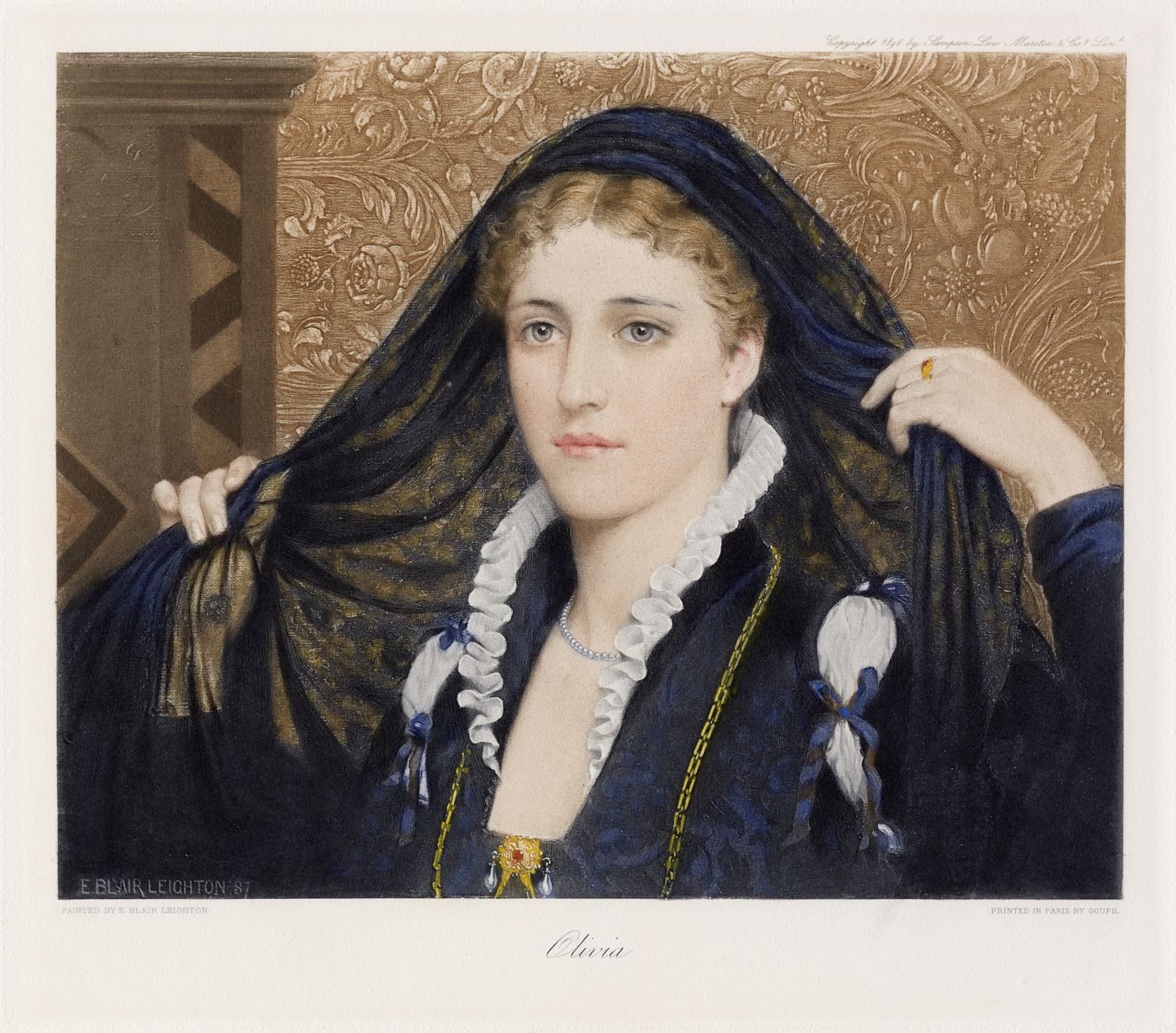
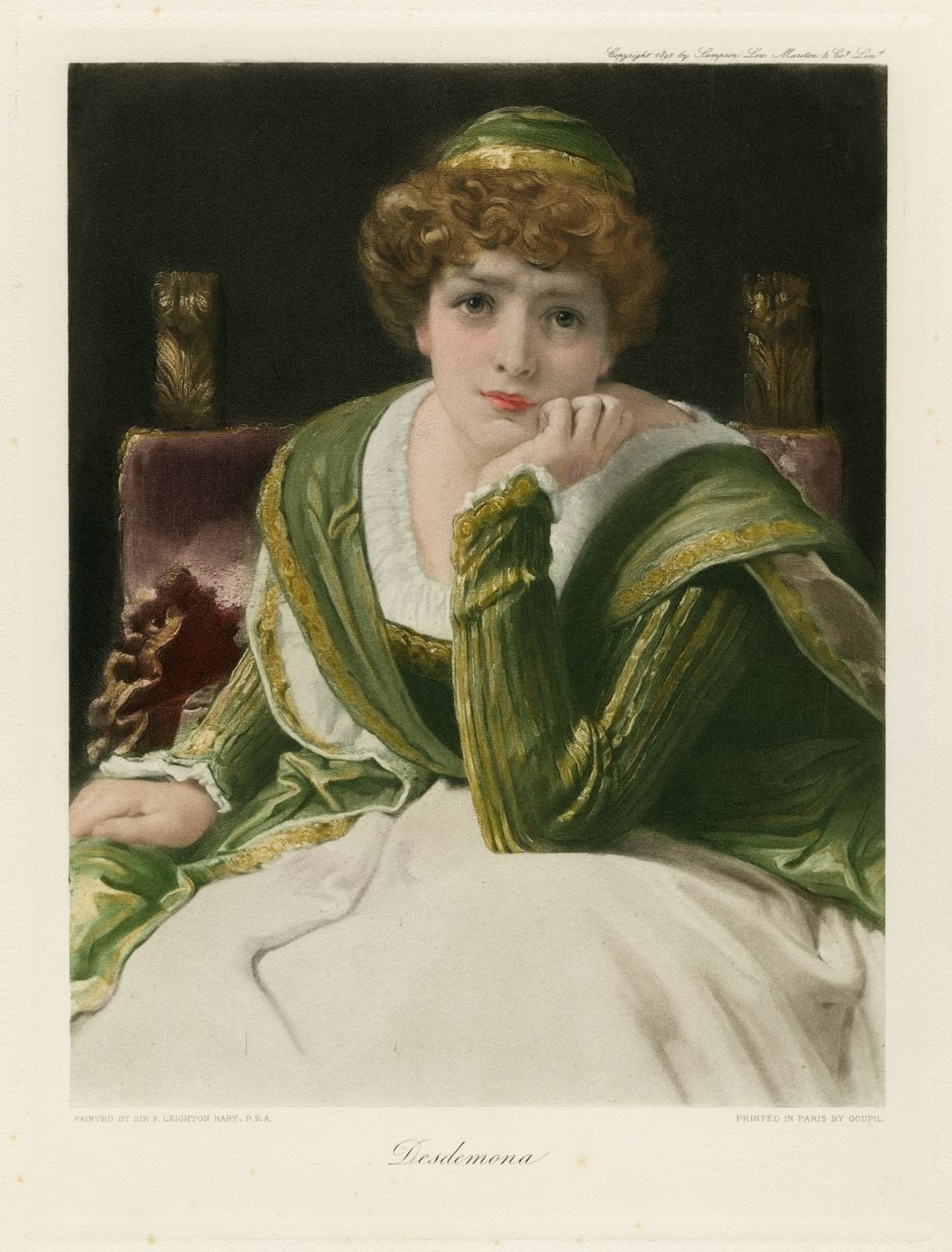
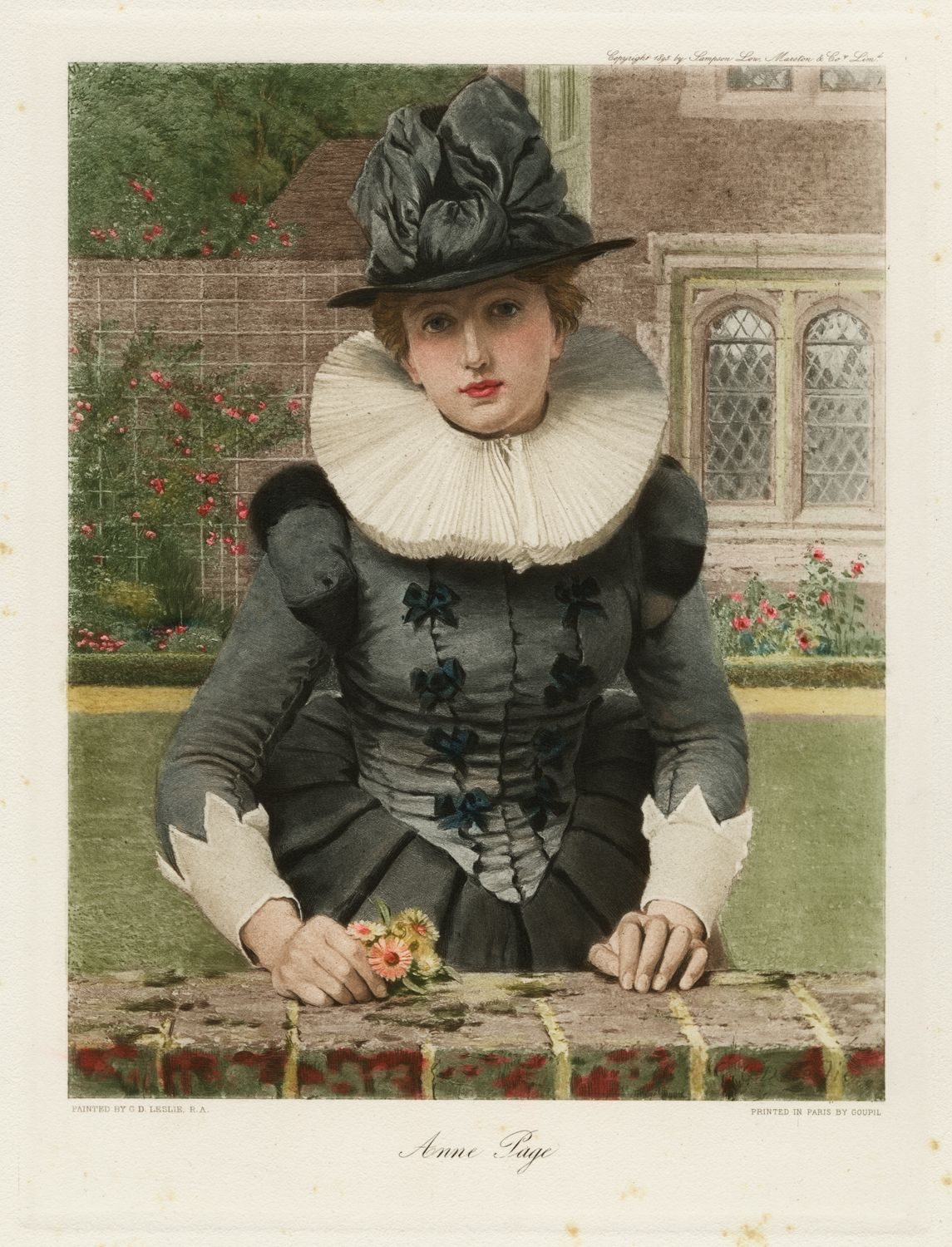
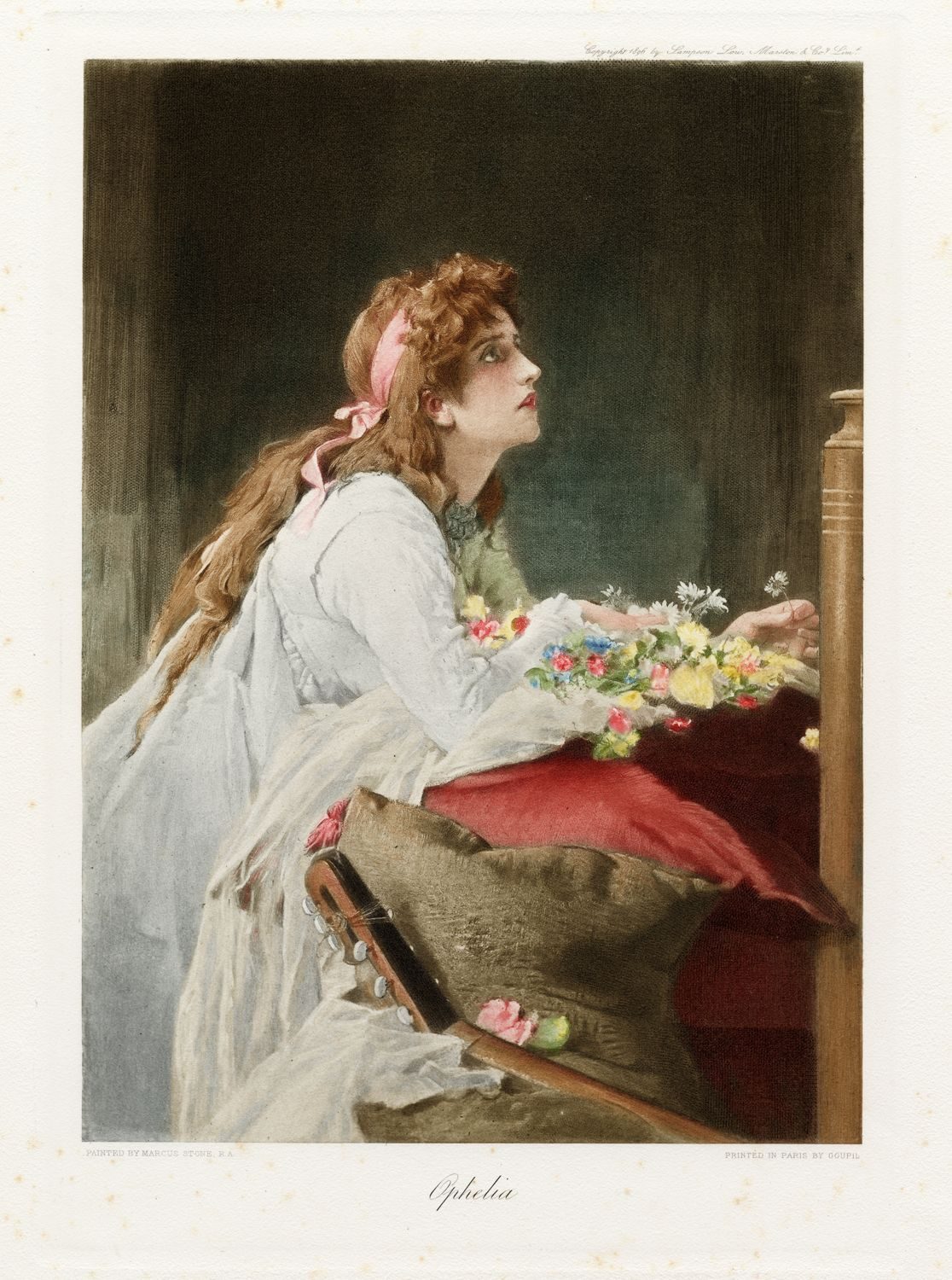
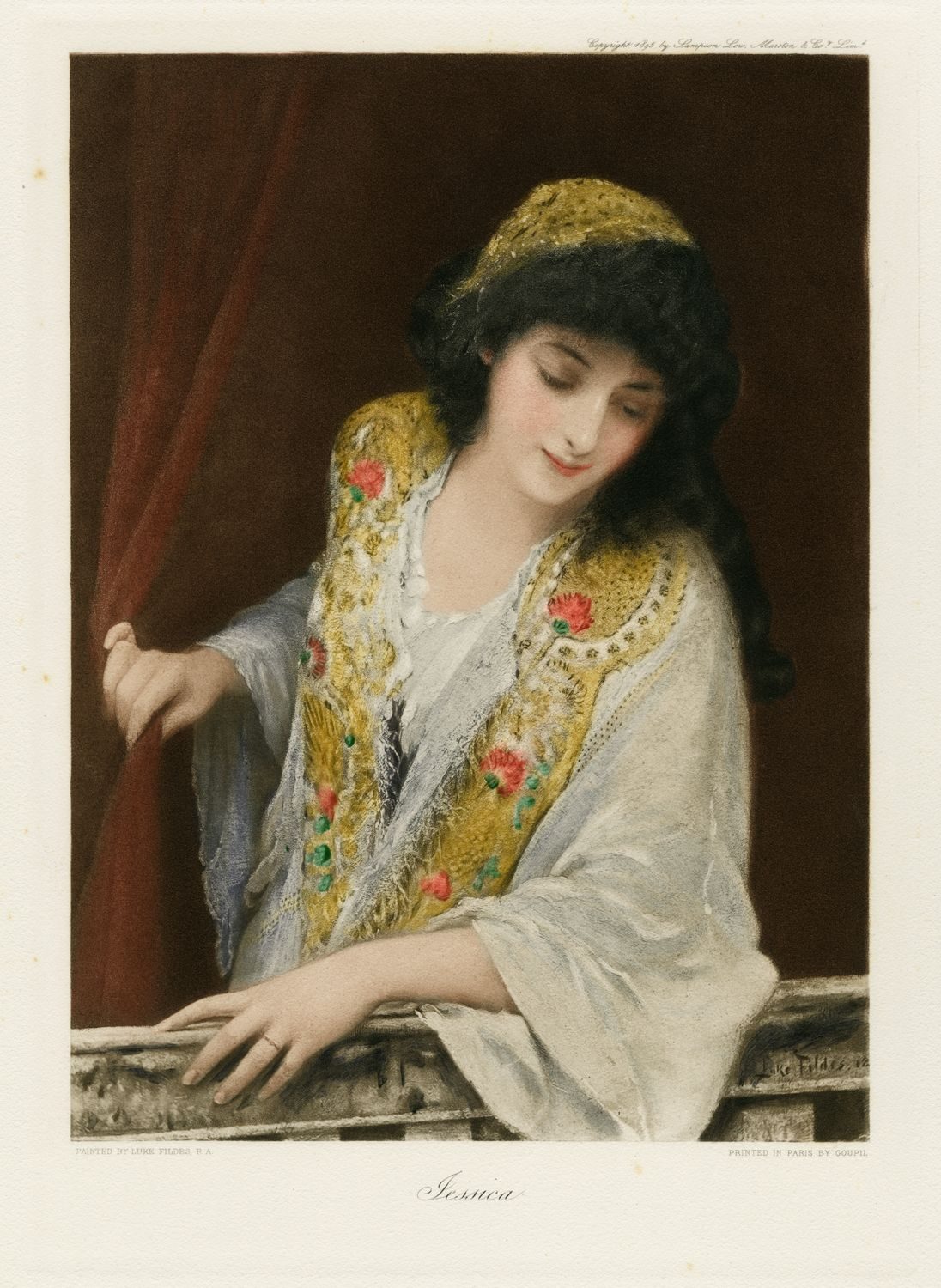
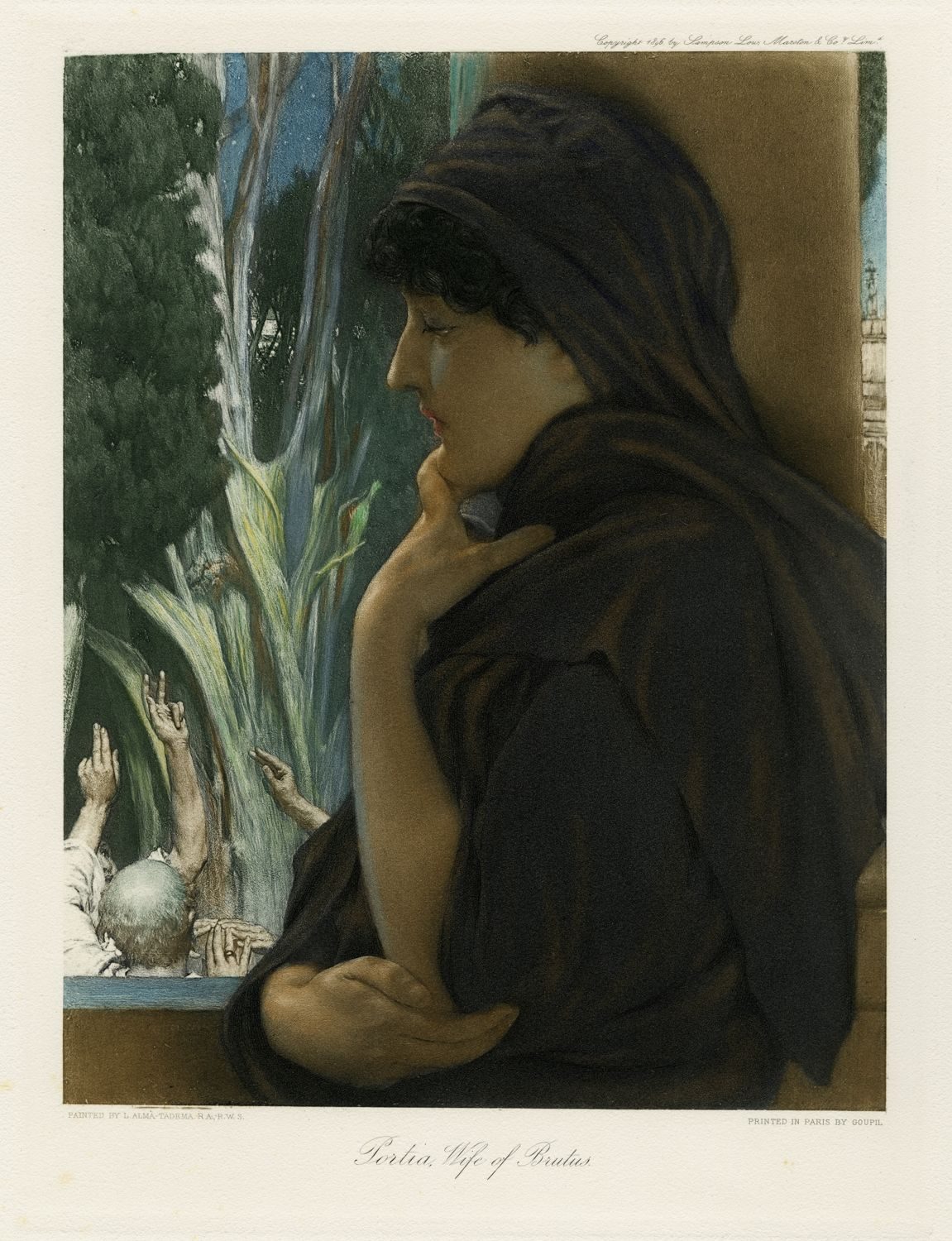
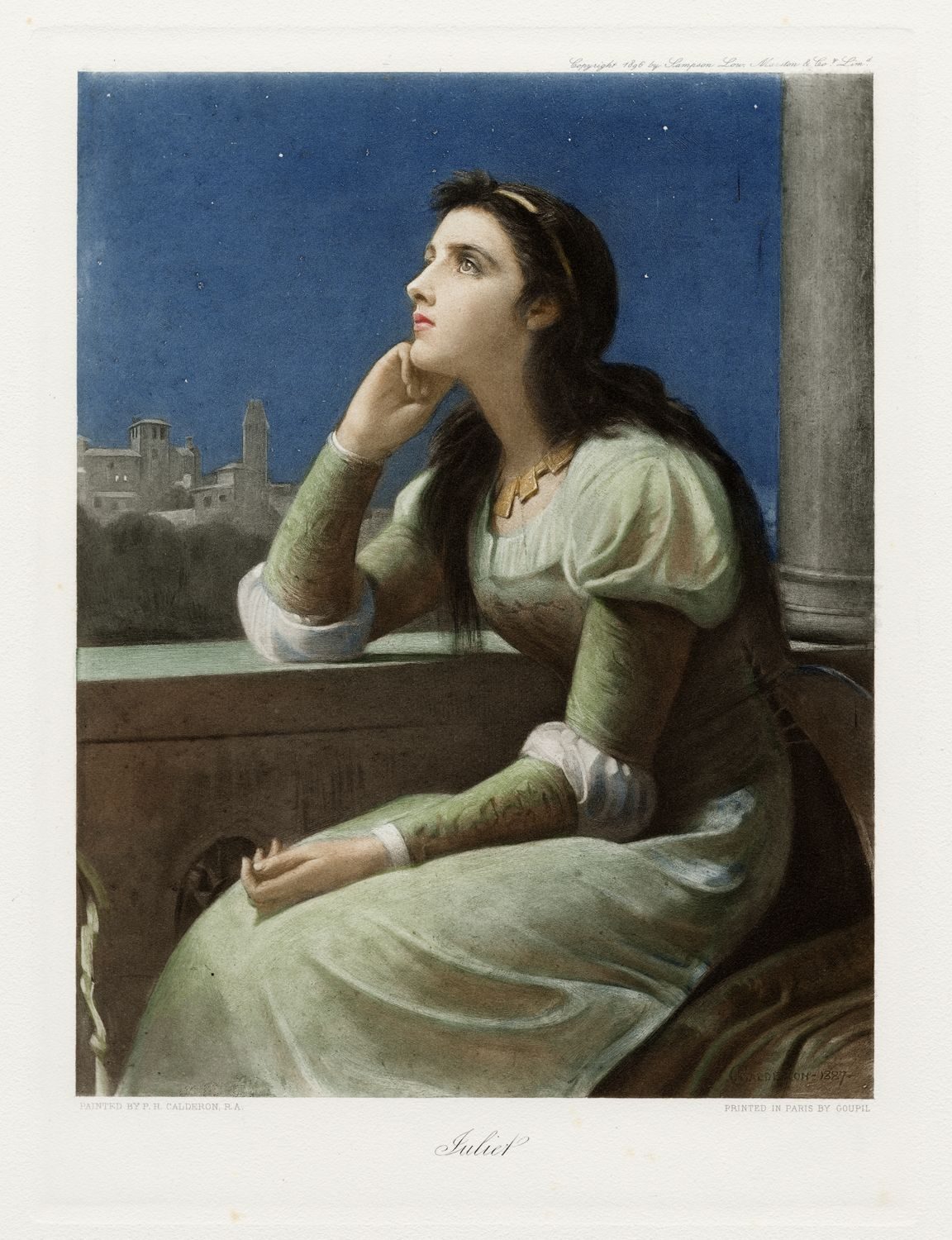
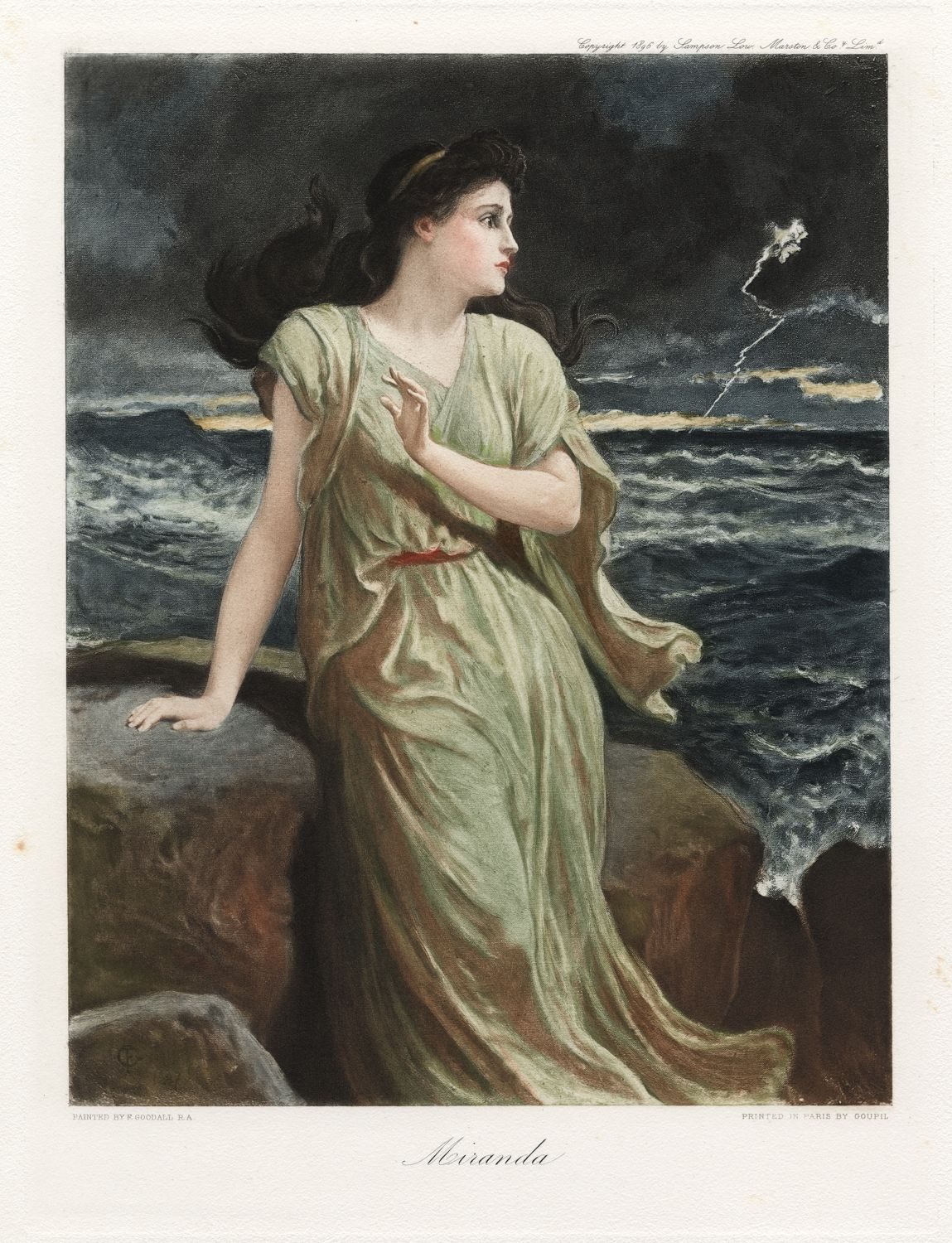
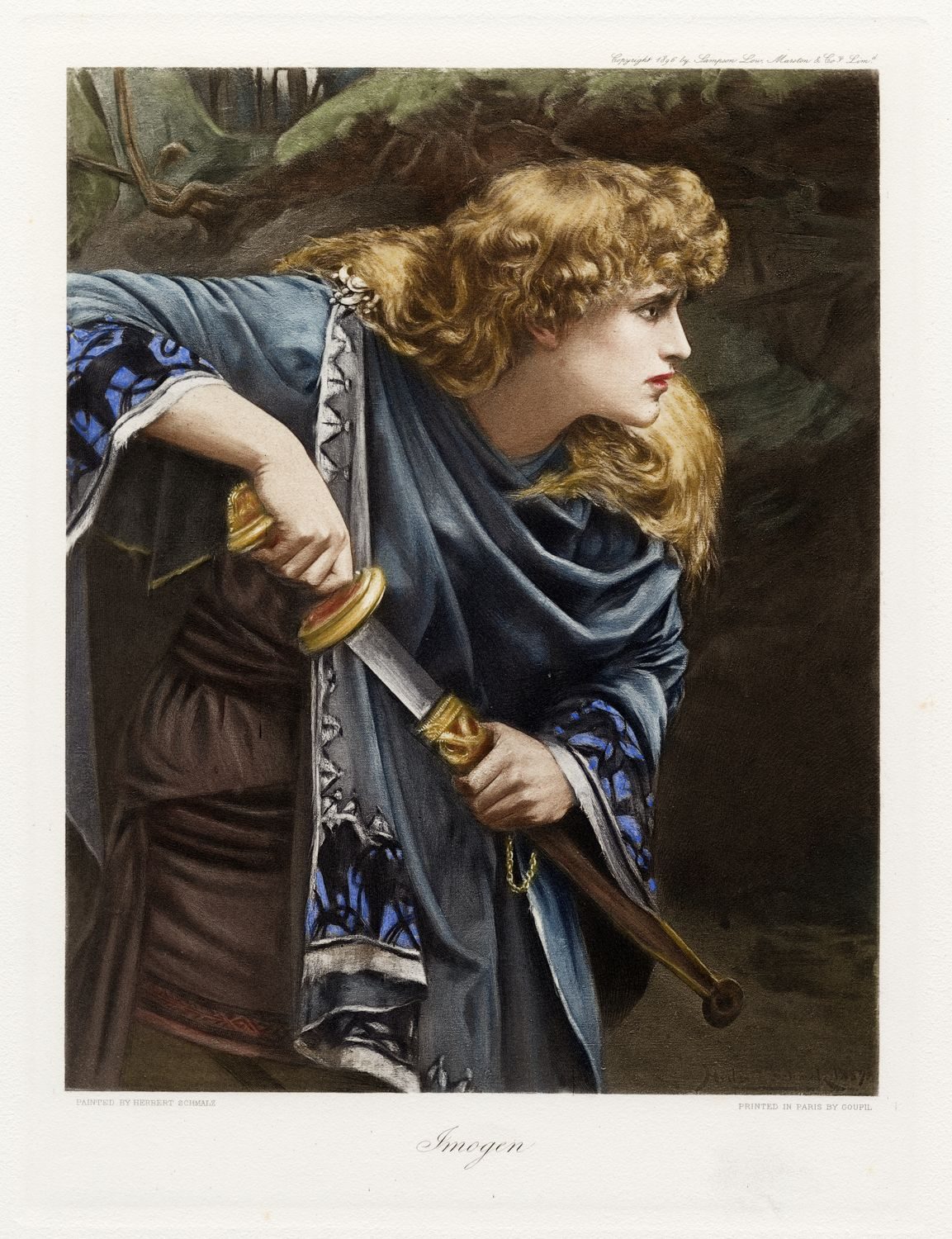
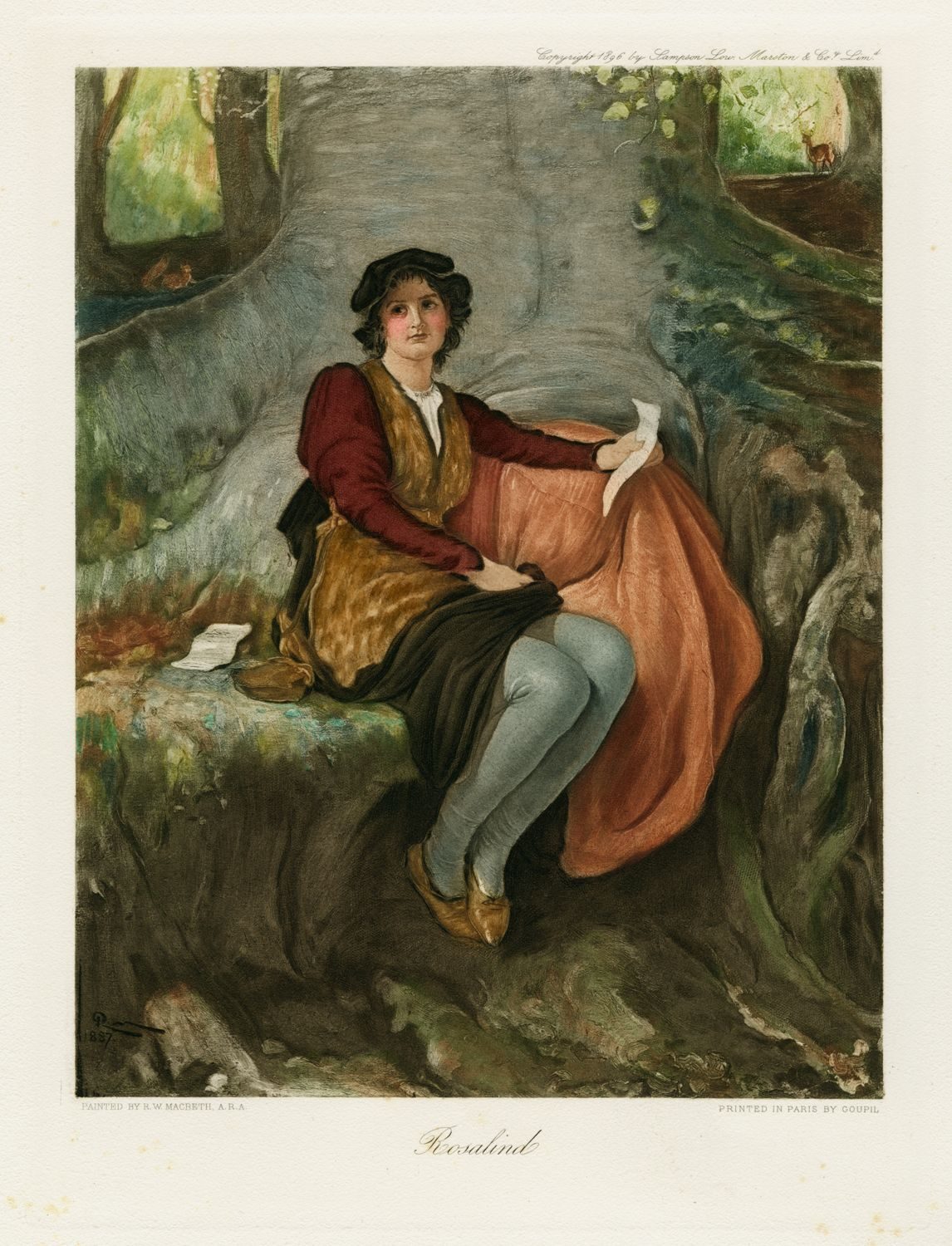
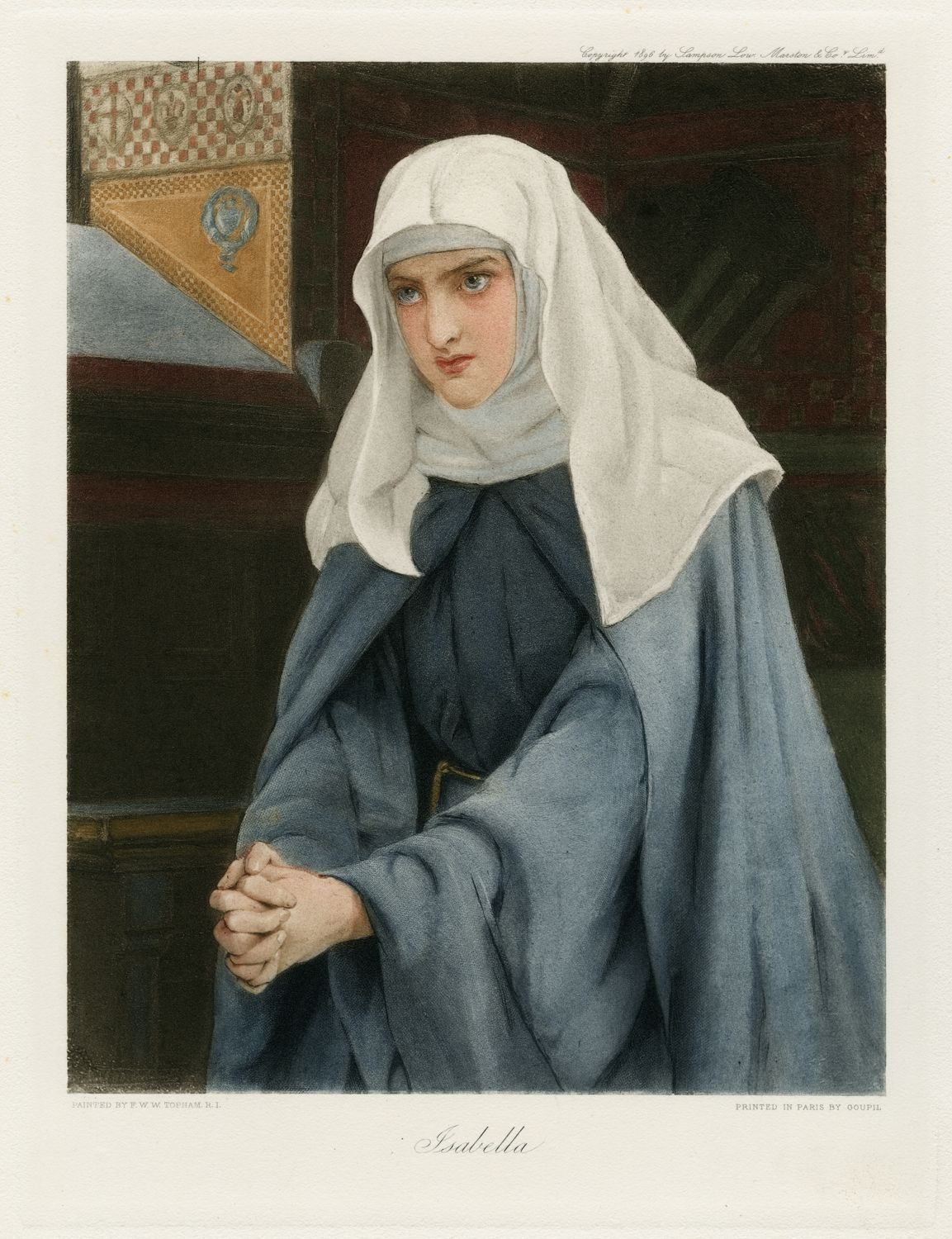
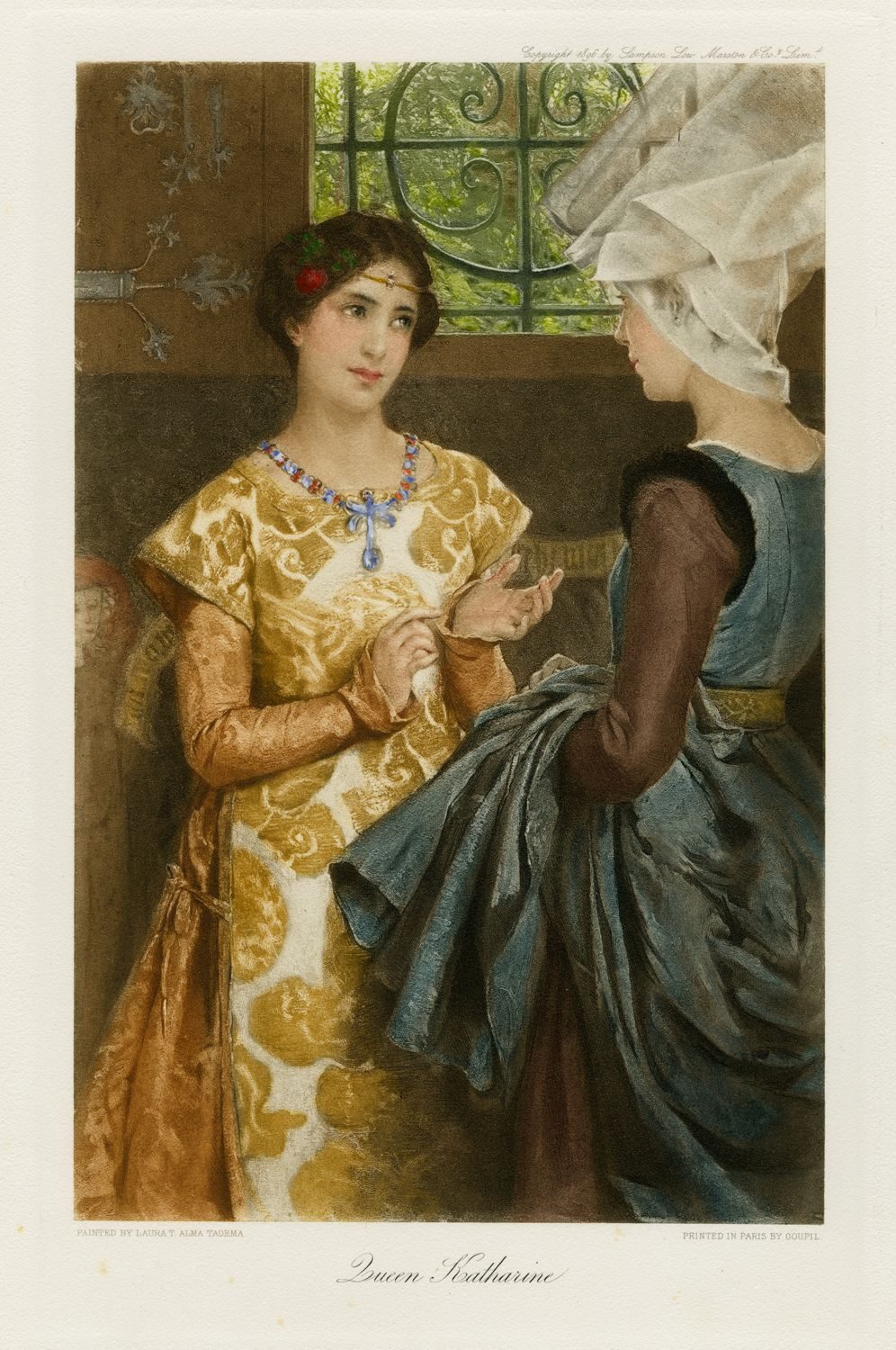
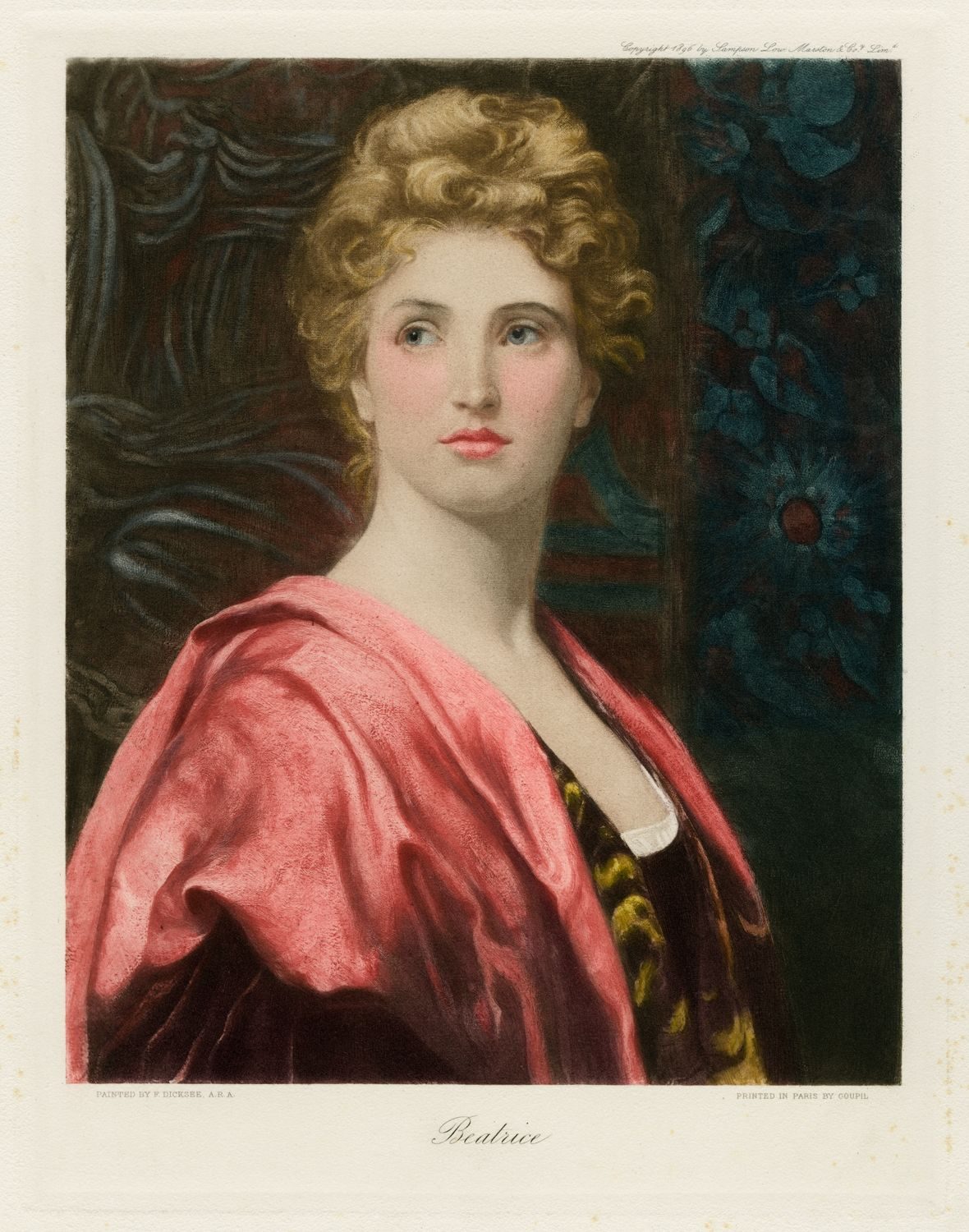
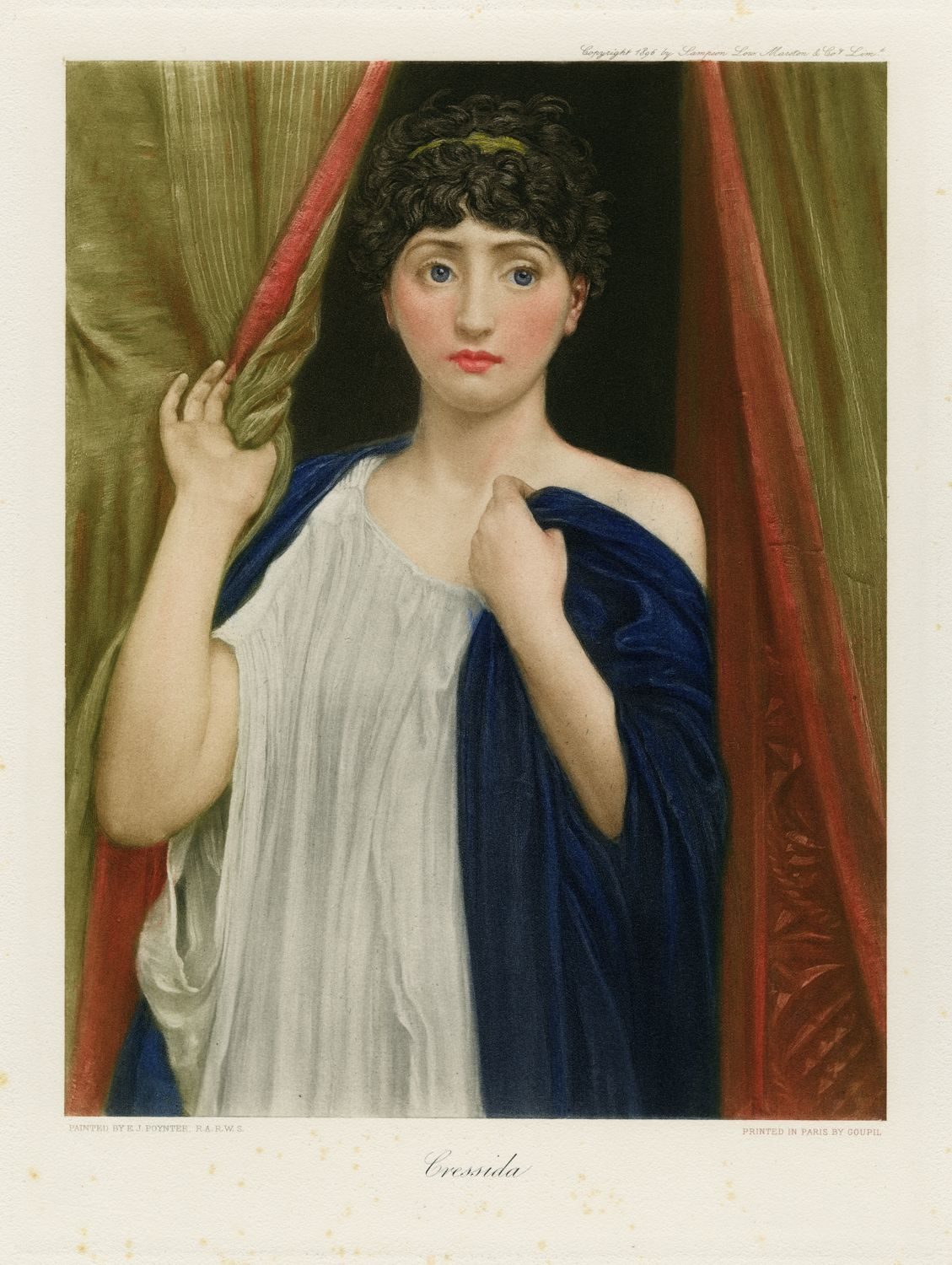
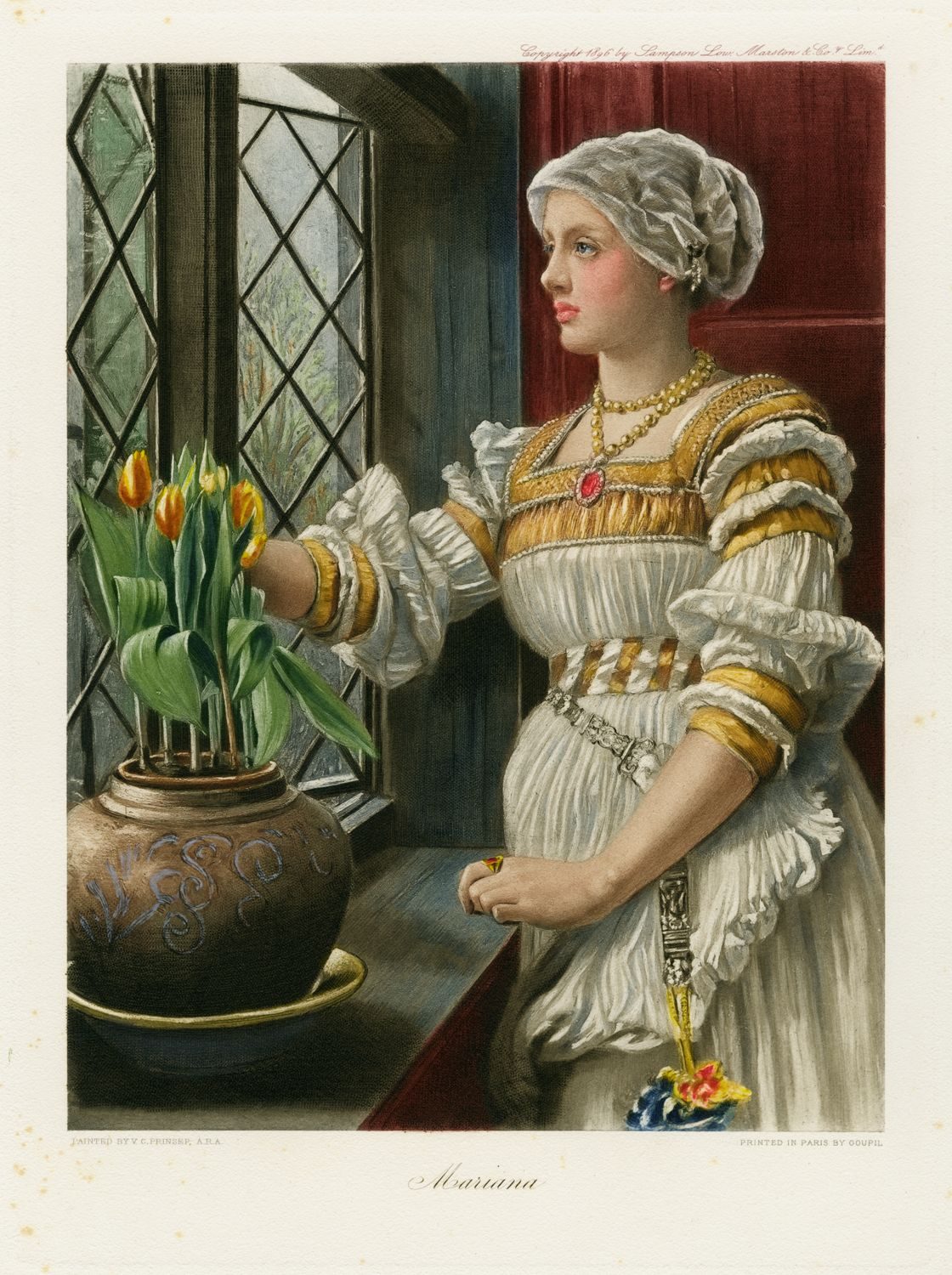
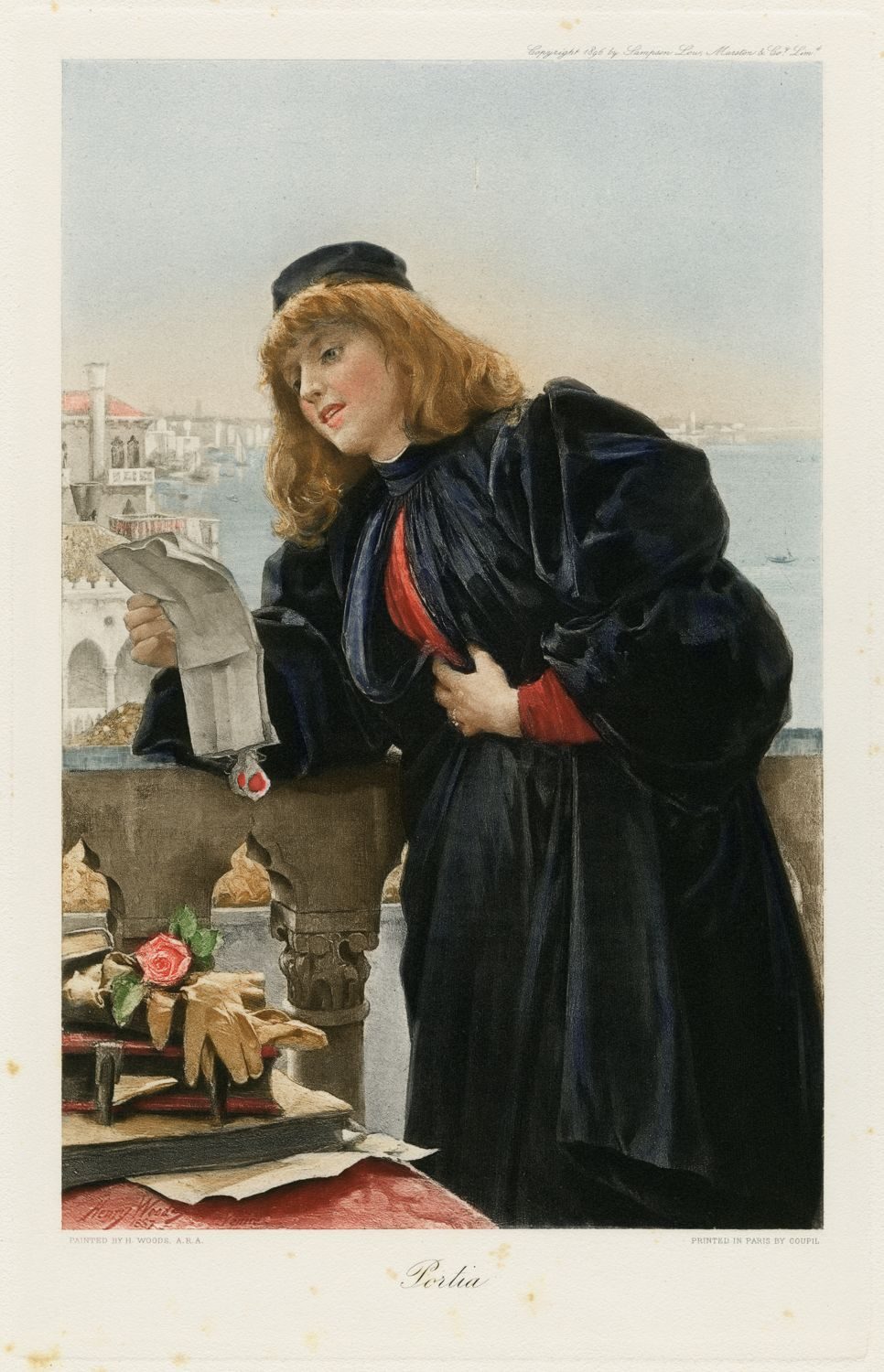
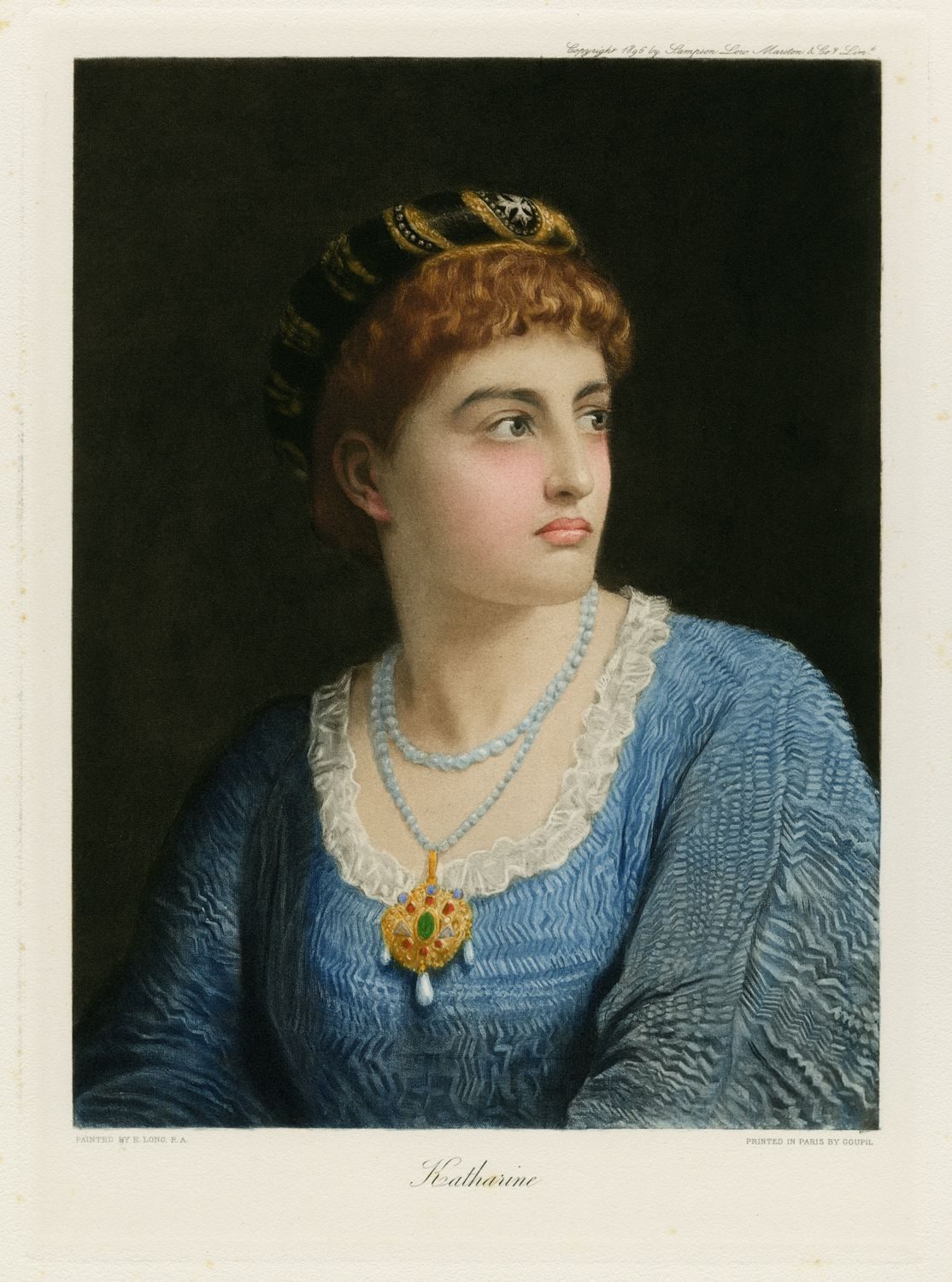
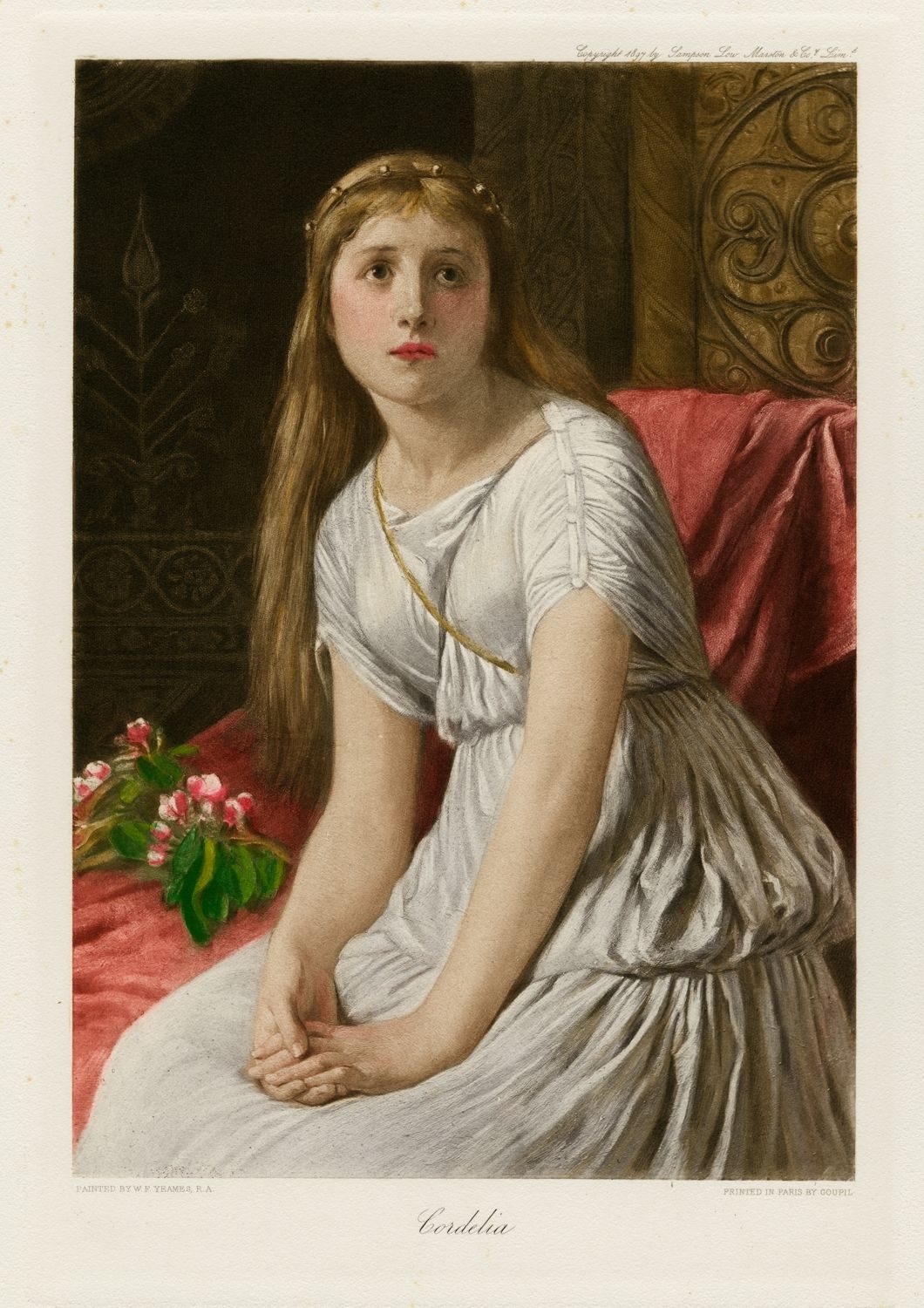
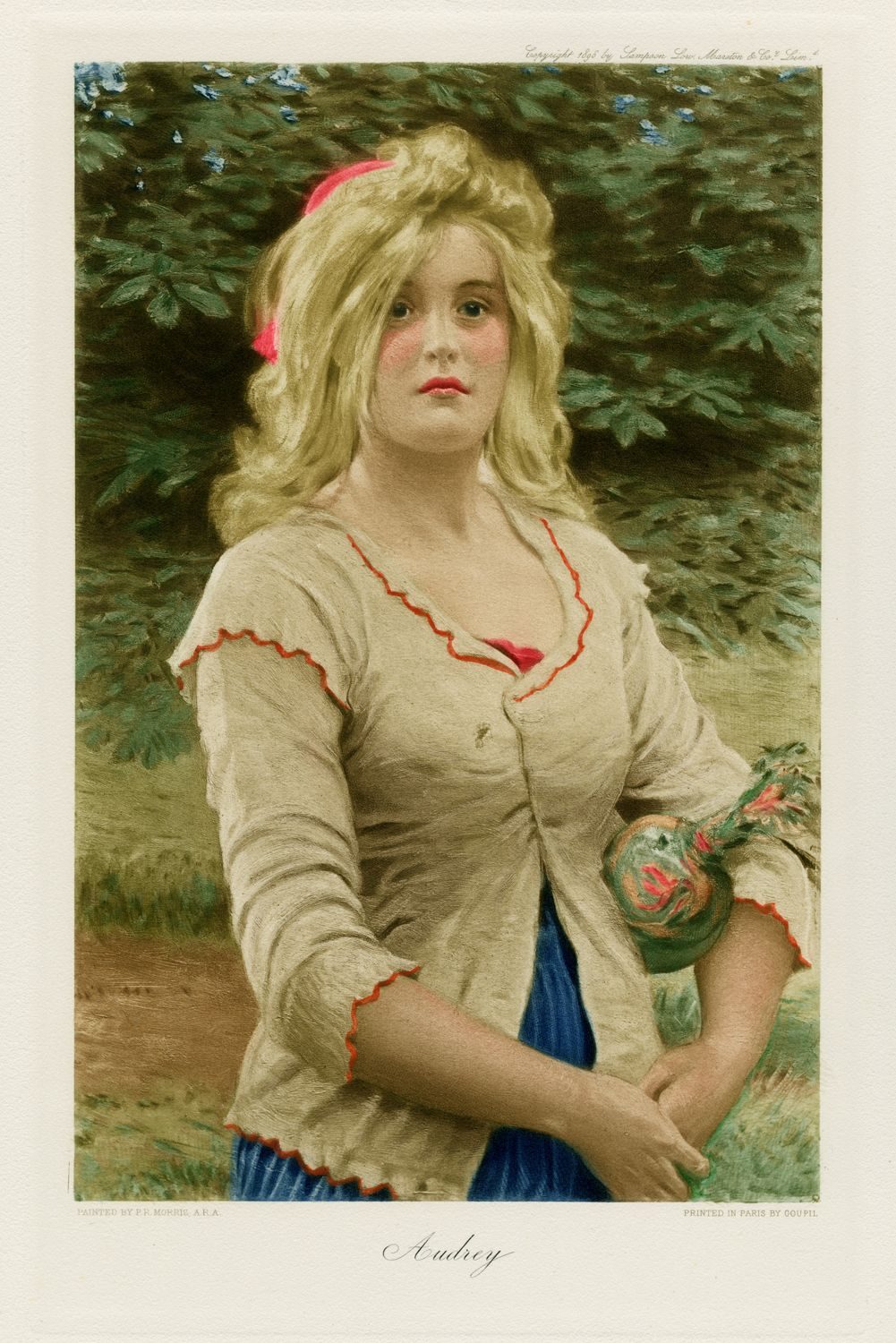
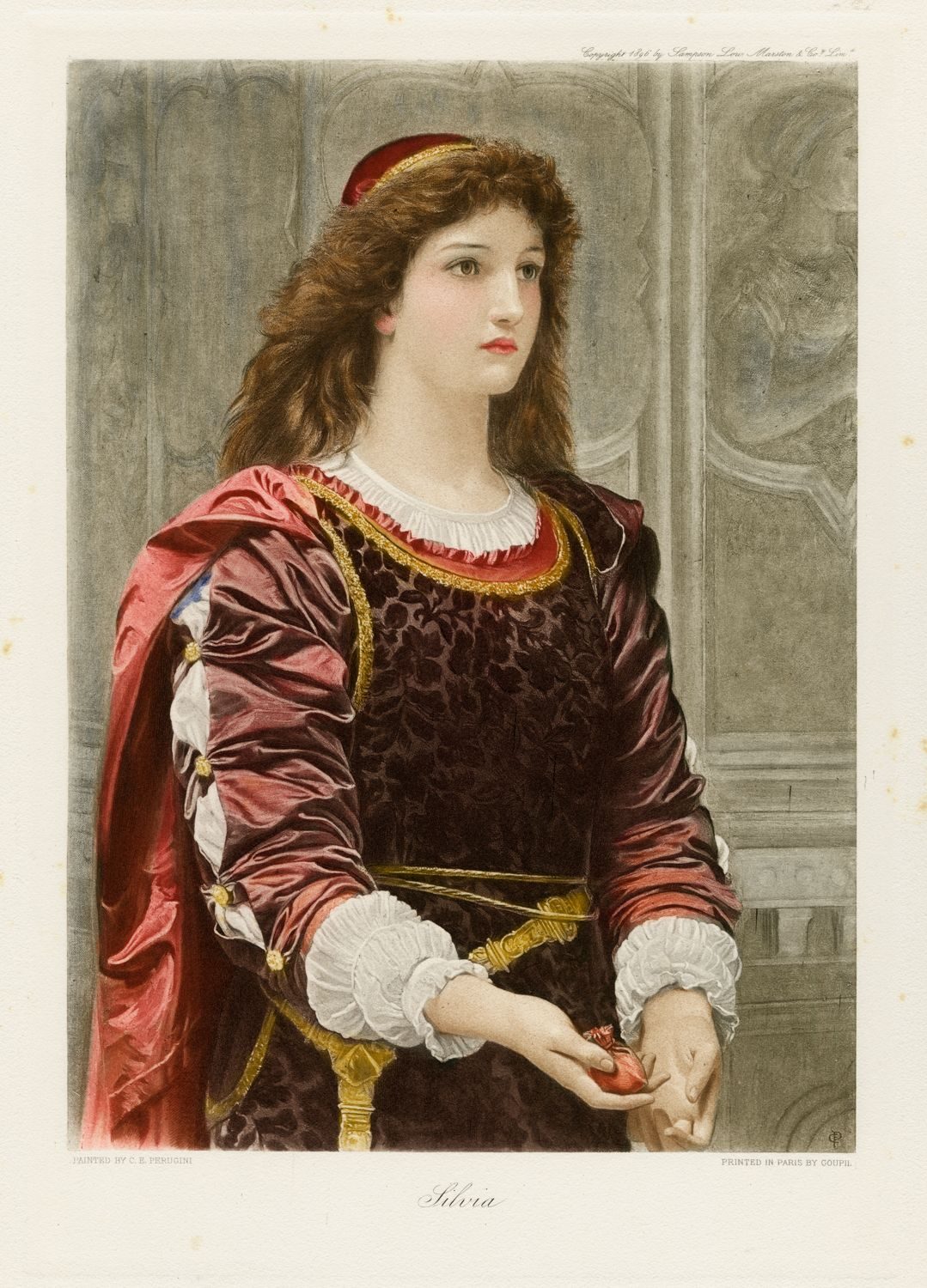
The rage for collections of such “portraits” in Britain likely originated with “Sir Peter Lely’s series of Windsor Beauties painted in oils for Anne Hyde, Duchess of York, in 1662–65 and Sir Godfrey Kneller’s Hampton Court Beauties painted in the same medium for Mary II c. 1691.” During the 18th century, following the model established by the Reverend James Granger, a craze developed for “grangerizing” books of biography or history—that is, adding a large number of portrait heads and other historic engravings to the text. Granger’s system of organizing pictures according to social classes included “Class XI Ladies and others, of the Female Sex, according to their Rank, &c.” By the following century, books focusing only on portraits of women became popular. In 1814 the artists Anne Foldsome Mee completed, for King George IV, a set of portrait miniatures as a “Gallery of Beauties,” some of which appeared in a two-volume set, Portrait Gallery of Distinguished Females including Beauties of the Courts of George IV and William IV (1833). A rough count shows at least 12 different “beauties” titles between 1833 and 1857, not including the Shakespeare heroines. These range from the Female Portraits of the Court of Queen Victoria (1839), to the literary beauties of Walter Scott, Byron, and the Irish poet Thomas Moore. In all of these books, as in the popular women’s magazines of today, the emphasis is on the depiction of female beauty, however idealized. Neither the court ladies surrounding Victoria nor the exotic guises of Byron’s heroines could provide realistic models for most of their audience; but then, neither can the slim, tall, youthful bodies of our own fashion models. The so-called insipid quality of many of these pictures is again a social construction, based on expectations about beauty and ways of seeing which are different from our own but were just as powerful then as now in enforcing society’s notion of what constitutes the feminine.
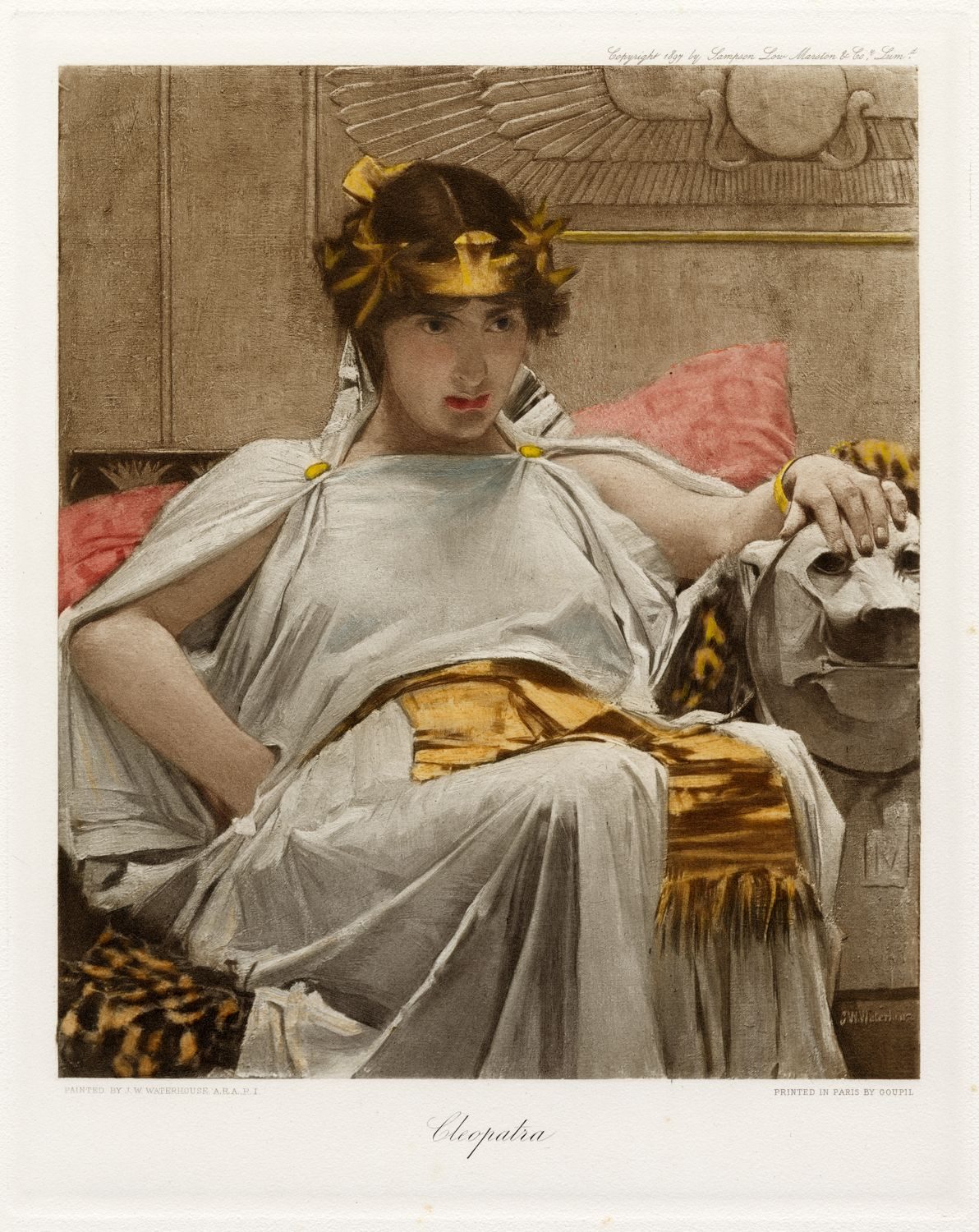
At the end of the century in 1888, a fourth set of engravings appeared and marked a departure from the others in marketing techniques and in appearance. The Graphic magazine, a popular London publication with a circulation in the hundreds of thousands, commissioned a series of 21 paintings of Shakespeare’s heroines by some of the leading artists of the day (including Laura Alma-Tadema, the only woman artist represented in any of these series) which they displayed in a London gallery. These paintings were reproduced as double-page centerfolds purchased with the magazine, but they were also sold in special large portfolio editions that could be viewed on a table or individually framed, pictured in the gallery above. Each picture was accompanied by a folded leaf containing a plot summary / commentary by the poet William Earnest Henley (these were also sold separately as a small book, presumably to be carried when walking around the gallery). In 1896 The Graphic also offered a smaller-sized set of colored engravings, suitable for framing, in small grey-board portfolios. About the size of the color reproductions sold at many museums today, they were obviously directed at a similar middle-class market.
The style of the portraits themselves has undergone a transformation. Some, such as Ophelia, Juliet, Portia, and Jessica are still variations on the classic 19th-century beauty, but others derive from a range of artistic models: Desdemona from Italian Renaissance painting, Anne Page and Marianna from Dutch 17th-century painting, and Isabella from the Pre-Raphaelites. A contemporary reviewer praised the set as “one of the most sumptuous and … most artistic publications that we have lately seen,” and he singled out Leighton’s Desdemona, “remarkable for the masterly treatment of the rich Venetian costume,” and the “Oriental splendour” of Waterhouse’s Cleopatra (Graphic, Feb. 2, 1889). Indeed, J.W. Waterhouse’s portrait of Cleopatra marks the end of an era. This splendid woman, gazing out under dark sultry brows as she lounges easily on a leopard skin, has a fin-de-siècle air about her. Heath’s Cleopatras of 40 years earlier are stiff and restrained in their Victorian corsets. This Cleopatra’s unsupported breasts lie suggestively beneath her loose white tunic; she invites and repels, commands admiration and respect. She is “My serpent of old Nile,” as the accompanying quotation says, not a Victorian lady with pouting lips in “dress-up.” This painting by Waterhouse looks not backward but forward to the loosening of garments and morality, and to the changes in women’s roles that would come with the Edwardian period and the Great War. The New Woman has broken away from the Victorian enterprise that bound women and Shakespeare to a moral notion of British nationalism dominated for nearly a century by the ideology of a Queen.


This painting of Cleopatra by Waterhouse looks not backward but forward to the loosening of garments and morality, and to the changes in women’s roles that would come with the Edwardian period and the Great War. The New Woman has broken away from the Victorian enterprise that bound women and Shakespeare to a moral notion of British nationalism dominated for nearly a century by the ideology of a Queen.
Keep exploring

Women painting Shakespeare in the time of Jane Austen and Queen Victoria
During the late 18th and early 19th century, professional women artists in England were becoming more prominent and turning to Shakespeare for material.

Defining Beauty in Text and Image in the late Seventeenth-Century
Fellow Jean Marie Christensen explores beauty standards of the 17th century.

Sarah Siddons: "Tragedy Personified"
Actress Sarah Siddons was 18th-century London’s best-known tragedienne, most famous for her portrayal of Lady Macbeth. An assortment of objects from our collection show her rise as an early star of modern celebrity culture.
Stay connected
Enter your email address to follow this blog and receive notifications of new posts by email.