


Shakespeare Unlimited: Episode 290

It’s been more than 400 years since she first appeared on stage, and she’s still controversial. Margaret of Anjou appears in not one, not two, but four of Shakespeare’s plays—Henry VI, Parts 1, 2, and 3 as well as Richard III—maturing from a young bride-to-be to a vengeful widow. She also speaks the most lines of any of Shakespeare’s female characters.
Although her historical counterpart never saw battle, Shakespeare’s Margaret leads armies. And while the real Margaret was permanently exiled to France, the Shakespearean version returns to England to confront her old foes.
Charles O’Malley and Scott W. Stern, co-authors of Shakespeare’s Margaret: The Dramatic Life of a Warrior Queen, share how Margaret exists as an avatar for anxieties about women in power throughout the ages. Shakespeare’s depiction may have been influenced by Elizabeth I, but Margaret has been portrayed on stage as a witch, a seductress, an anti-fascist resistance fighter, and even an analogue for Margaret Thatcher.
In this episode, O’Malley and Stern shine the spotlight on Shakespeare’s most deliciously complex anti-heroine.
From the Shakespeare Unlimited podcast. Published July 14, 2026. © Folger Shakespeare Library. All rights reserved. This episode was produced by Matt Frassica. Garland Scott is the executive producer. It was edited by Gail Kern Paster. Technical support was provided by Pat Mesiti-Miller in Oakland and Voice Trax West in Studio City, California. Web production was handled by Megan Fraedrich. Transcripts are edited by Leonor Fernandez. Final mixing services provided by Clean Cuts at Three Seas, Inc.
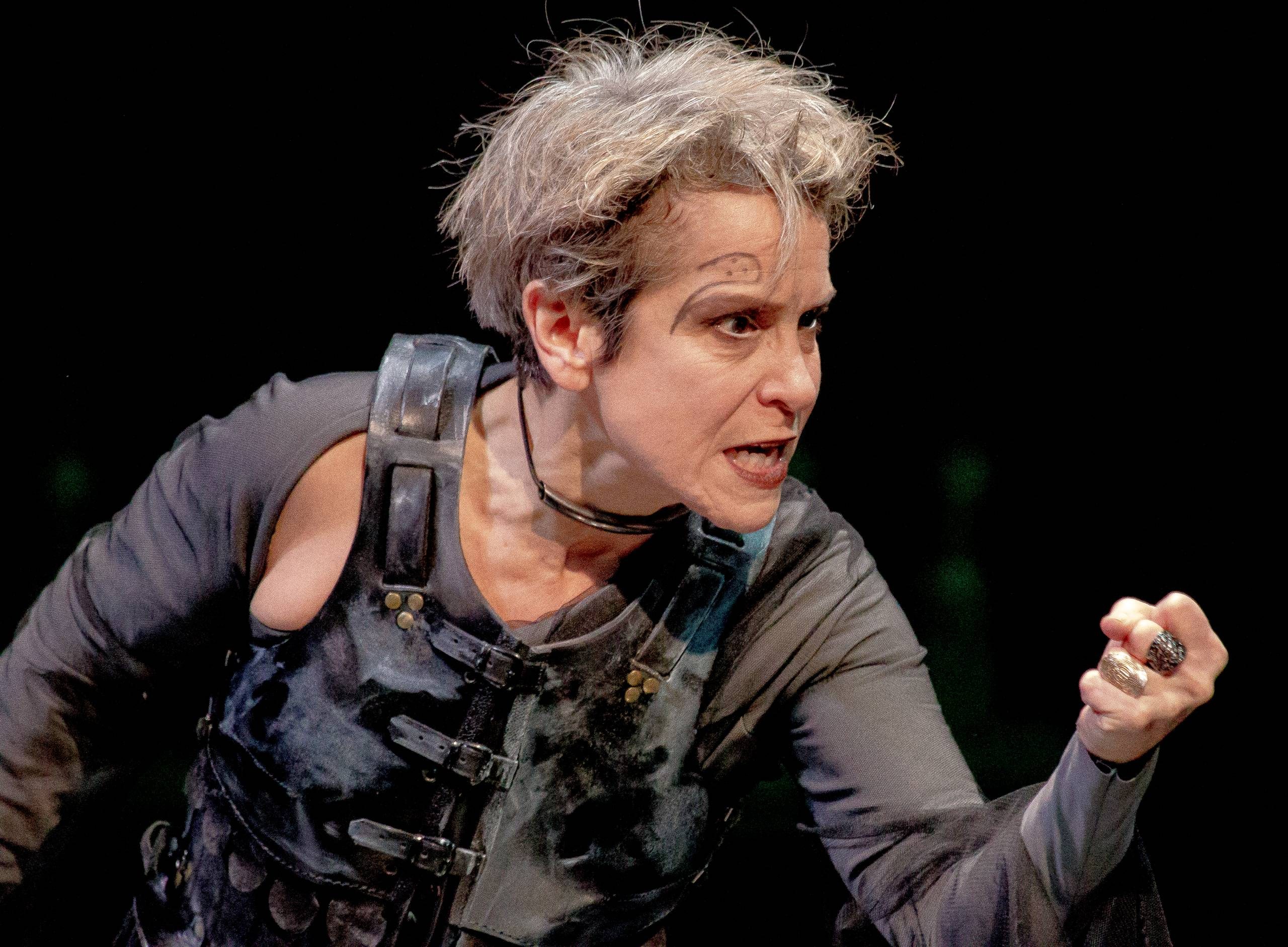

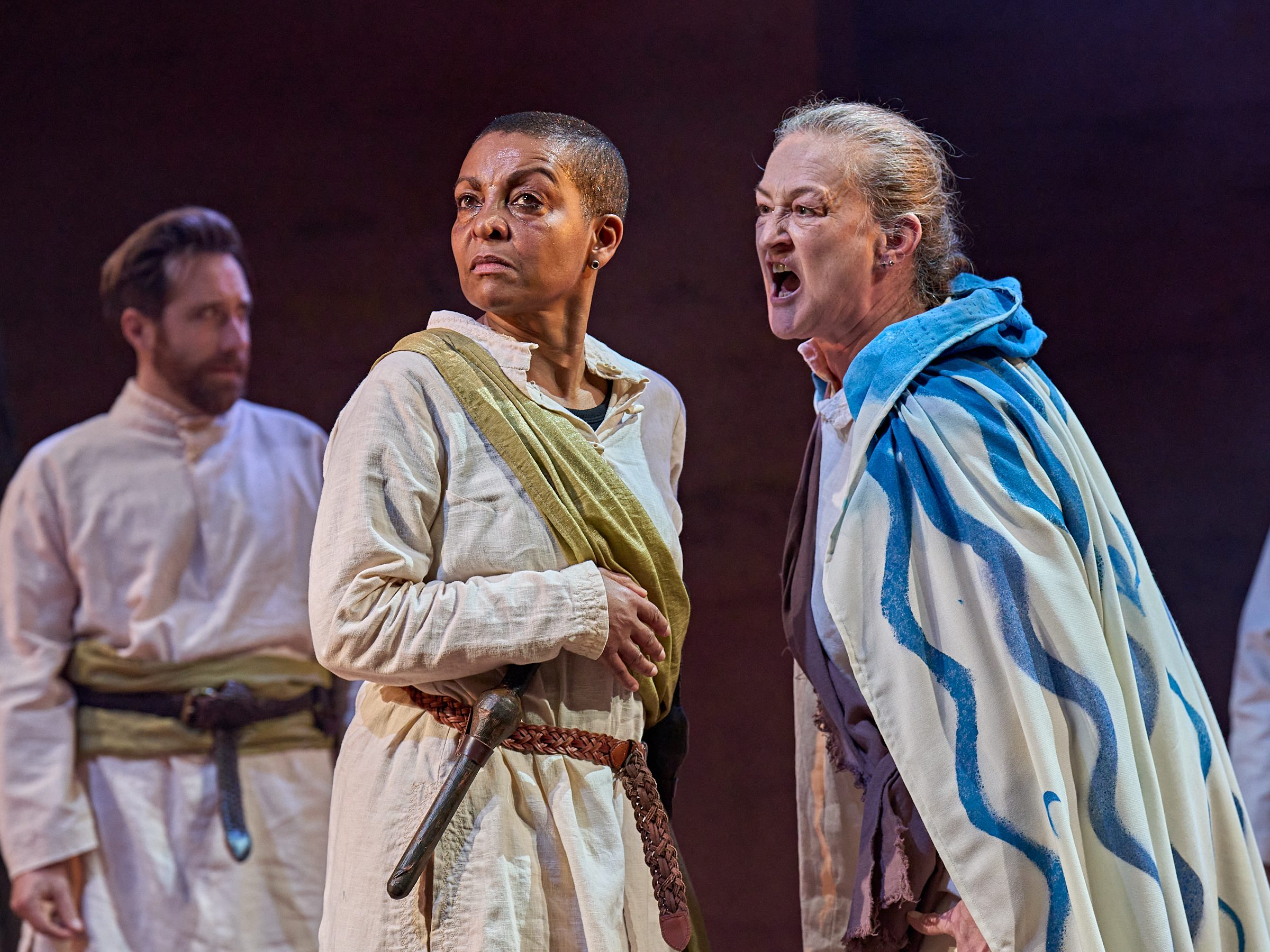
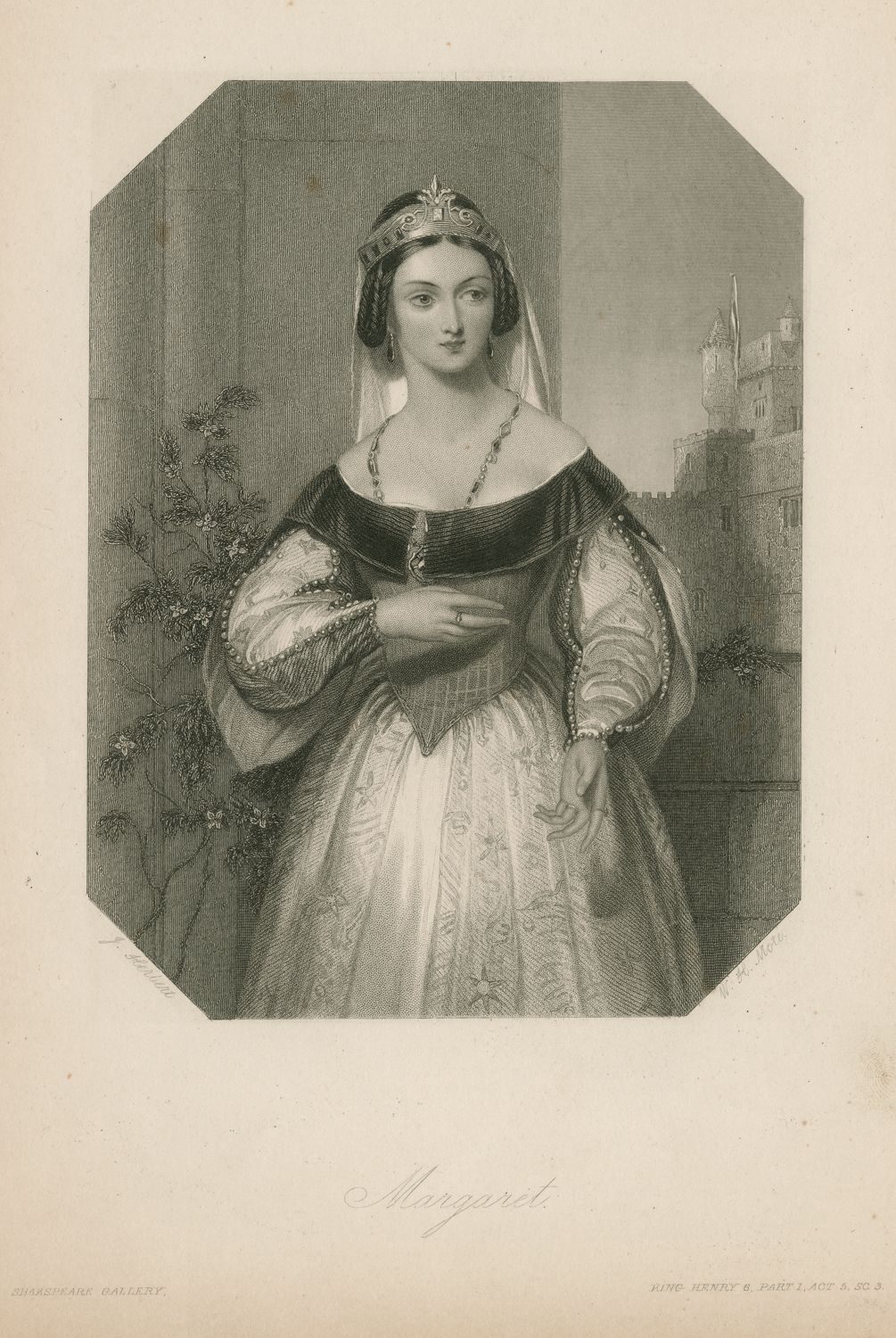


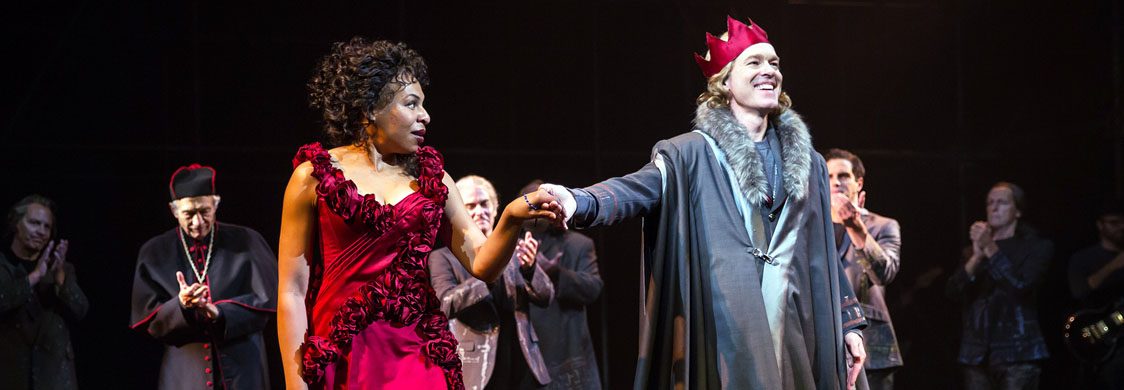


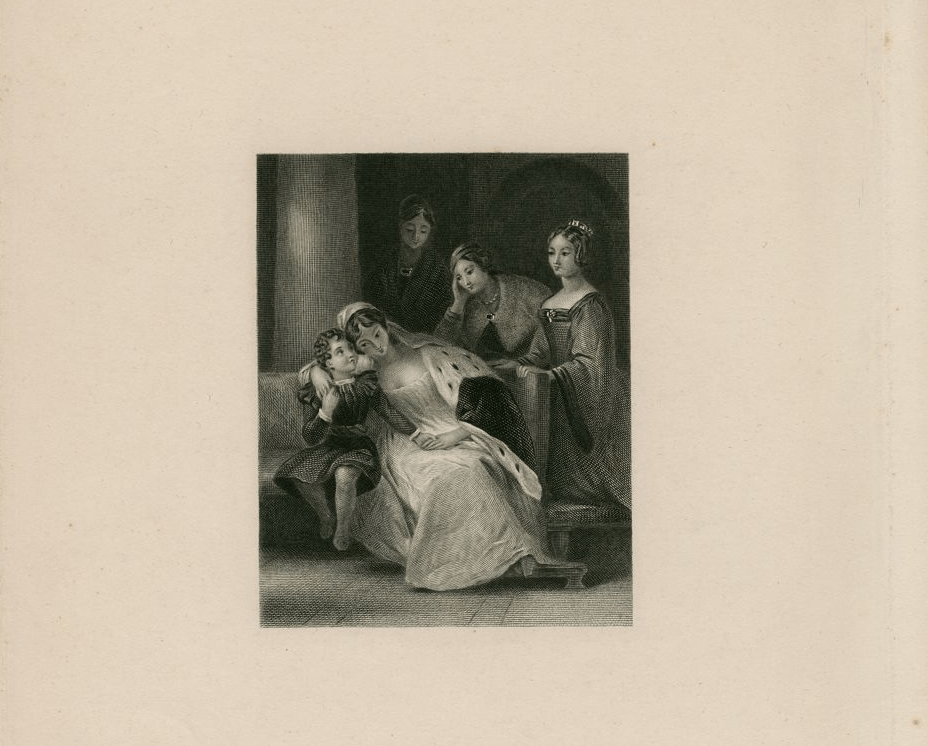
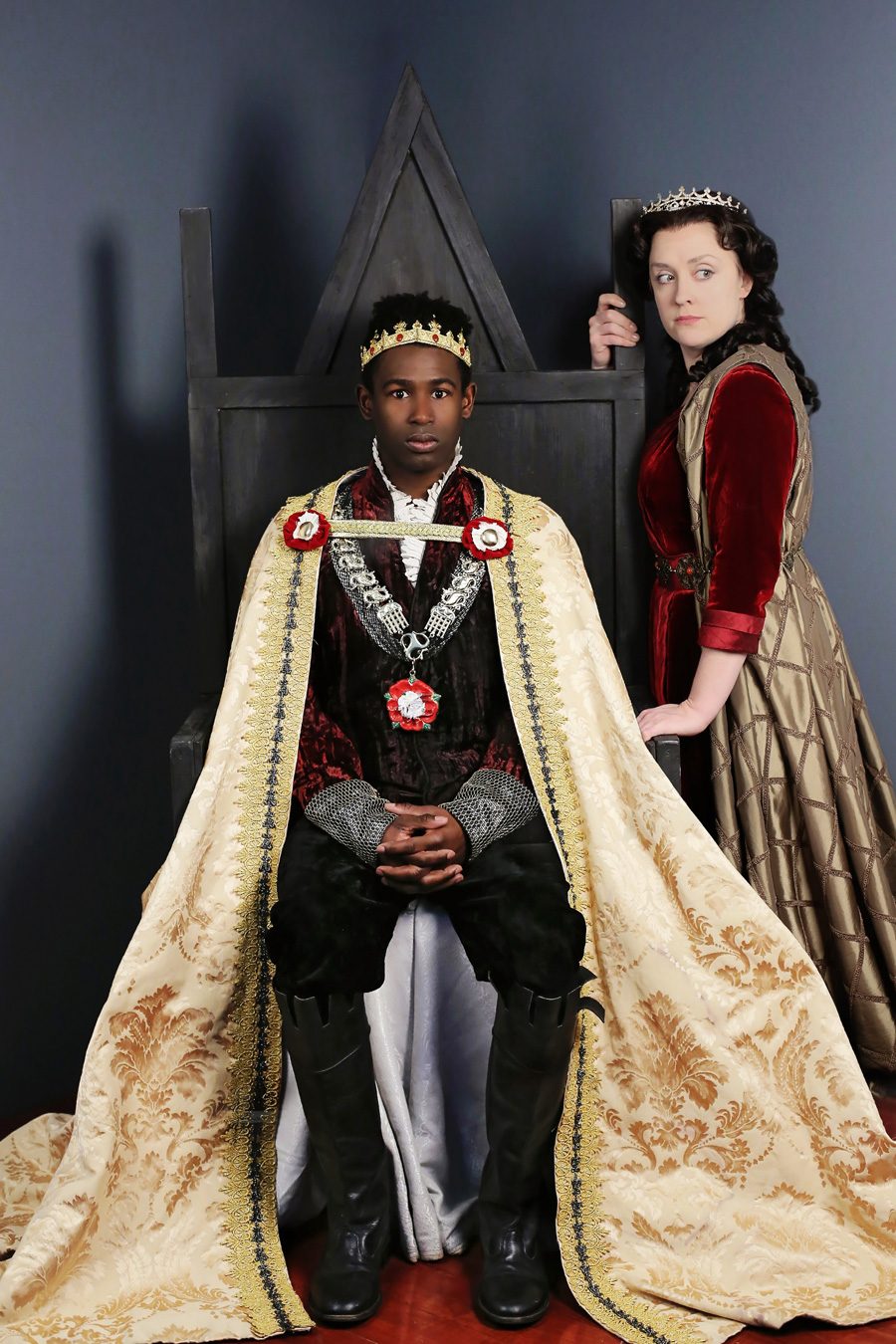
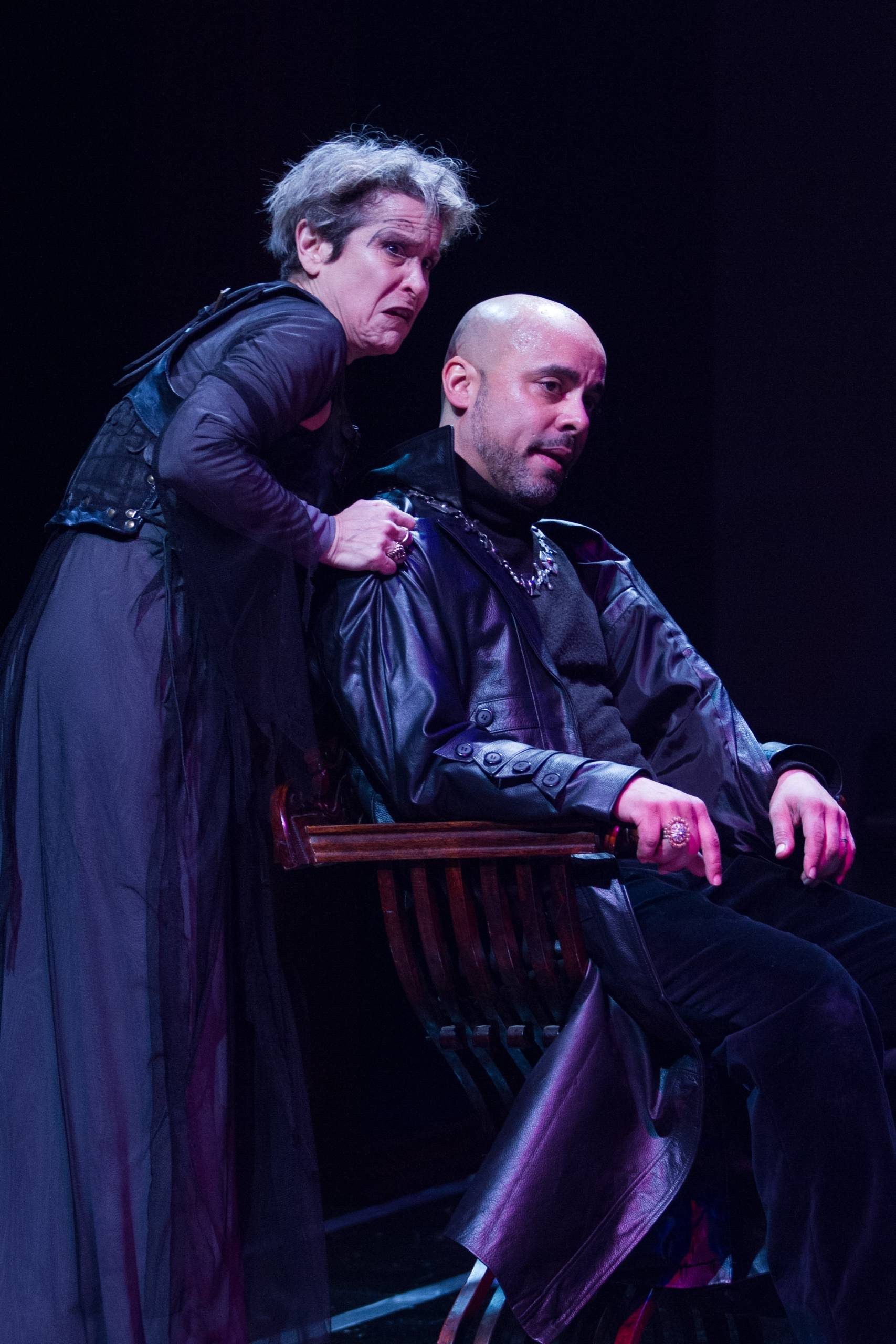
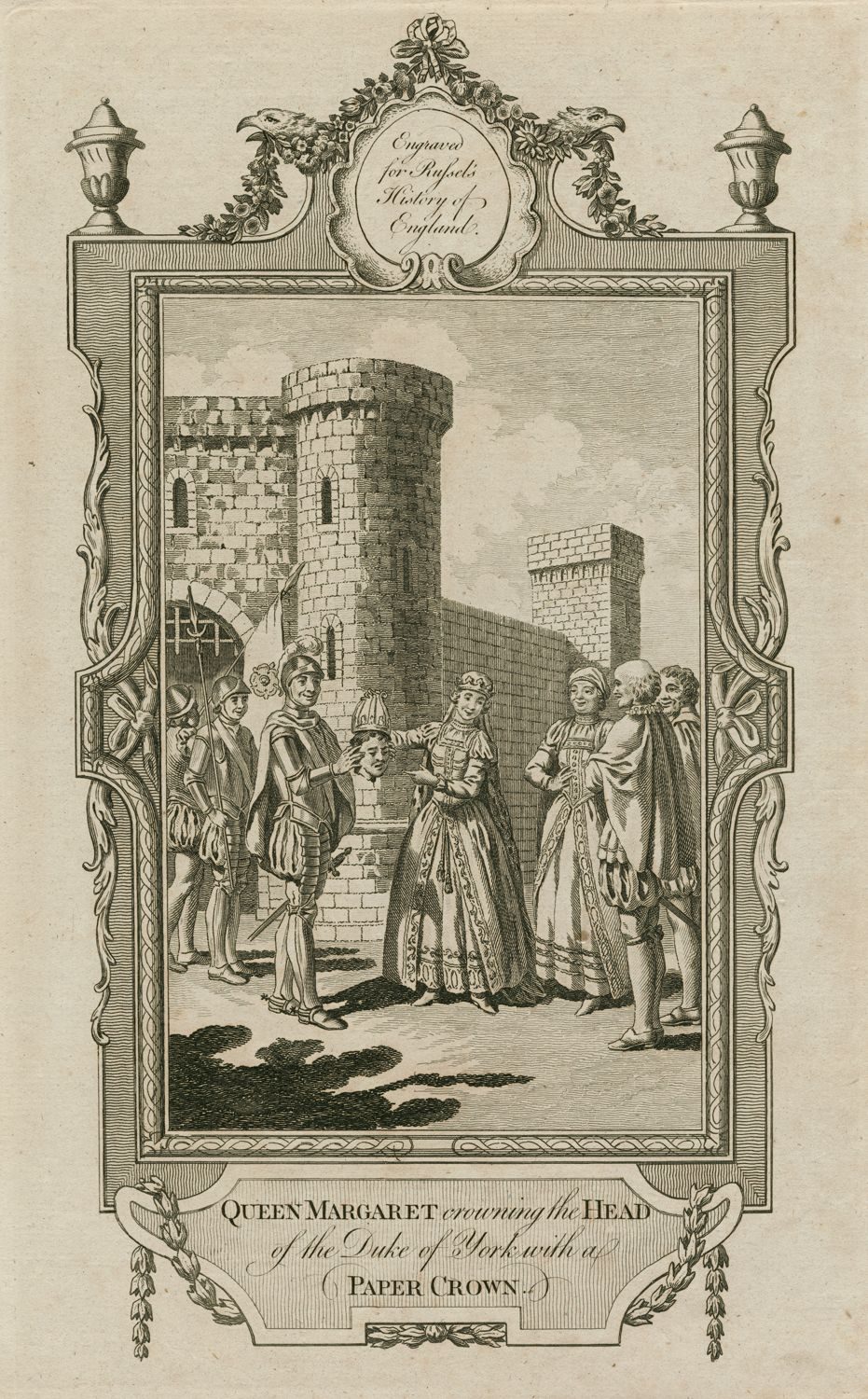
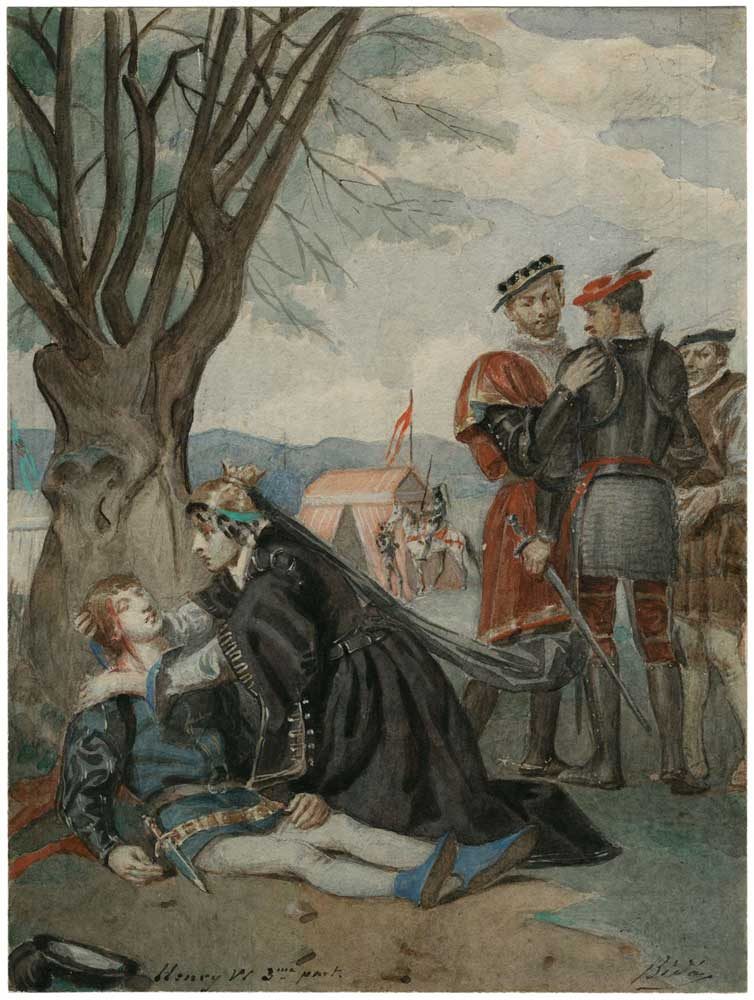
Queen Margaret Through the Ages
How have artists, actors, and theater-makers depicted Margaret over time?


Charles O’Malley holds a doctorate in dramaturgy and dramatic criticism from the Yale School of Drama and has worked at theaters across the United States. He is the editor of Toward a Just Pedagogy of Performance.
Scott W. Stern is a scholar and critic. He is the author of The Trials of Nina McCall, a New York Times Editors’ Choice selection, and There Is a Deep Brooding in Arkansas, which the Times called “powerful new history.”
Related

Shakespeare's Margaret in Honduras
150 years after her death Margaret of Anjou returned as a character in four early Shakespeare plays, Henry VI, Parts 1, 2, and 3 and Richard III. She’s found fans in every era since, including in community performances on the island of Roatán.

Actresses on Shakespeare
Shakespeare Unlimited: Episode 2 In Shakespeare’s time, only men appeared on stage, with teenage boys playing the women’s parts. Today, women play women and sometimes men—and vice-versa. In this podcast we have gathered some of the best-known actresses in the…

Interview and excerpt: Jennie M. Votava, Shakespeare’s Histories On Screen: Adaptation, Race and Intersectionality
An interview with Dr. Jennie M. Votava and an excerpt from her 2023 book, Shakespeare’s Histories On Screen: Adaptation, Race and Intersectionality.
Transcript
FARAH KARIM-COOPER: From the Folger Shakespeare Library, this is Shakespeare Unlimited. I’m Farah Karim-Cooper, the Folger director.
[Music fades]
Here’s a bit of fun trivia for you: which one of Shakespeare’s heroines has the most lines?
It’s not Lady Macbeth…
Or Cleopatra…
Or Juliet…
Give up?
The answer is Margaret of Anjou, who appears in four plays: Henry VI, Parts 1, 2, and 3, as well as Richard III. Across those plays, Shakespeare gave Margaret far more lines than any of his other female characters. And she’s the only female character he depicted from youth to old age.
Although the part was once neglected, in recent decades Margaret has come back into fashion. She’s been played by the likes of Peggy Ashcroft, Helen Mirren, and Sophie Okonedo. The historical Margaret of Anjou had a life just as dramatic as Shakespeare’s fictionalized one.
And now, two writers have given this extraordinary character a literary biography. Charles O’Malley is a writer and dramaturg, and Scott W. Stern is a writer and lawyer. Together, they co-wrote Shakespeare’s Margaret: The Dramatic Life of a Warrior Queen.
Here are Charlie O’Malley and Scott Stern, in conversation with Barbara Bogaev.
——————-
BARBARA BOGAEV: So why don’t we start with the real Margaret of Anjou? What were her origins, and what was her childhood like?
CHARLES O’MALLEY: So, Margaret was a French princess. She was born in the first half of the 1400s in France. Her uncle was the King of France.
This was a period when England and France had been at war with each other for about a hundred years—we call it now the Hundred Years’ War—and both sides of this conflict were looking for a way out after all these decades and decades of bloodshed.
And Margaret was, as a young woman, she was promised in marriage to Henry VI, who was the child king of England. He’s the son of Henry V, the more famous warrior king that we know from Shakespeare’s play, also from history. So, when she was thirteen years old, her hand was promised in marriage to King Henry VI. They got married when she was 14, and she was brought across the Channel. We have no record that she spoke or knew any English. And she was wed to this enemy king, and she became the queen consort of this country that had been damaged by over a hundred years of conflict.
BOGAEV: So, the idea was that this alliance will preserve the peace after this horrible, endless century of war. I think the way you put it in the book is that “her dowry was peace,” which is so ironic, because so much war follows. But anyway, she had a very important early political alliance with the Duke of Suffolk, which will figure into the Shakespeare plays, right?
SCOTT STERN: Yes, that’s right. The Duke of Suffolk was actually the emissary of Henry’s who first met Margaret in France, and she was symbolically wed to Henry with Suffolk actually standing in for the King and putting the ring on her finger.
According to the historical records we have, it seems that they were just close allies. But Shakespeare would expand considerably from the records that we have and suggest that Margaret and Suffolk were actually lovers, and that he was, in a sense, the great love of her life.
BOGAEV: Because that makes for great drama.
STERN: It certainly did.
O’MALLEY: Absolutely.
BOGAEV: You have beautifully brought us up to the beginning of Henry VI, Part 2, which confusingly, just to remind everyone, is the first play Shakespeare and a few collaborators we believe wrote in the saga of the Wars of the Roses and the play begins with the Duke of Suffolk presenting Margaret to Henry.
[CLIP from The Hollow Crown, directed for the BBC by Dominic Cooke, 2016. From Henry, VI Part 2. Ben Miles is Somerset, Tom Sturridge is Henry VI, and Sophie Okonedo is Queen Margaret. Note: This adaptation reassigns some of Suffolk’s dialogue from the play to Somerset.]
SOMERSET: As by your high imperial Majesty
I had in charge at my depart for France,
As procurator to your Excellence,
To secure Princess Margaret for your Grace,
I have performed my task.
And humbly now upon my bended knee,
In sight of England and her lordly peers,
Deliver up the happiest gift that ever marquess gave,
The fairest queen that ever king received.
KING HENRY: Welcome, Queen Margaret.
I can express no kinder sign of love
Than this kind kiss.
O Lord, that lends me life,
Lend me a heart replete with thankfulness!
For Thou hast given me in this beauteous face
A world of earthly blessings to my soul,
If sympathy of love unite our thoughts.
QUEEN MARGARET: Great king of England and my gracious lord,
The mutual conference my mind hath made
By day, by night, waking and in my dreams,
With you, my sovereign,
Makes me the bolder to salute my king.
BOGAEV: Margaret is rather demure and so polite and well-behaved, in the beginning of the play anyway. Why were Shakespeare and his coauthors so drawn to this story and this queen in the first place?
O’MALLEY: I think there are a lot of reasons. So, this play was probably premiering in either the late 1580s or early 1590s. This is the last decade or so of Elizabeth I’s reign on the throne of England. She is the last monarch of the House of Tudor, so that’s the house that the Wars of the Roses led to. After this series of dynastic conflicts, it is the House of Tudor that takes over the throne of England for over a hundred years.
Meanwhile, Elizabeth, she doesn’t have an heir, and there are a lot of questions about what’s going to happen when she does die, and people are kind of turning over in their brains the idea of what is it to have a woman in power.
So, in these early plays, Shakespeare and his collaborators, they’re really struggling with these ideas of gender. There are a lot of women’s roles in these plays that are subversive and that are really kind of playing with audiences’ expectations of what a woman’s conduct should be, either in court or on the stage.
BOGAEV: Right. Eleanor, Duchess of Gloucester, for instance, figures largely in this play.
STERN: Absolutely.
BOGAEV: And I really appreciate in the book how you give us a window into the soup that Shakespeare was swimming in as a young author, because you talk about how Marlowe had already made history plays trendy when young Shakespeare was writing this one.
And also, you suggest that Shakespeare was emulating John Lyly, another older writer who’d been popular before Marlowe, who wrote about strong women.
STERN: Yes, exactly. I mean, I think that two things that you point out are really good points. One is that, yes, Lyly had written about strong queens, even strong virgin queens, and that’s certainly a model that Shakespeare was probably emulating.
But even more so, Marlowe was, you know, in his really pioneering play, Tamburlaine, he puts an anti-hero on stage, and that was a real innovation in the 1580s and 1590s.
Even a couple of decades earlier, these kinds of plays basically didn’t exist. Instead, what dominated were morality plays and miracle plays, which are far less complex by modern standards, and the characters in those plays are basically anthropomorphized character traits. They’re like good deeds and vice and folly, and you contrast that to someone like Tamburlaine or someone like Margaret, who’s up there on stage personifying psychology, and also, just a really contradictory and complicated person. In the case of Margaret, she’s both power hungry and violent, but also incredibly tender and sensitive and, you know, a devoted mother and also lover. That kind of complexity, it’s something we’ve come to expect in dramatic characters today. But at the time Shakespeare and Marlowe were writing, that was a real cutting-edge innovation, and it was something that audiences apparently flocked to see.
BOGAEV: So, there are a number of deviations from history in Shakespeare’s version, and one of them is in Act 3, Scene 2, in which Suffolk and Margaret reveal their love for one another.
[CLIP from the BBC production of An Age of Kings, 1960, directed by Michael Hayes. From Henry VI, Part 2, Act 3, Scene 2. Queen Margaret is Mary Morris and Suffolk is Edgar Wreford.]
QUEEN MARGARET: O, give me thy hand,
That I may dew it with my mournful tears;
I will repeal thee, or, be well assured,
Adventure to be banishèd myself;
And banishèd I am, if but from thee.
Go, speak not to me. Even now be gone!
O, now farewell, and farewell life with thee.
SUFFOLK: Thus is poor Suffolk ten times banishèd,
Once by the King, and three times thrice by thee.
BOGAEV: So, Charles, is this the first love scene Shakespeare wrote?
O’MALLEY: We think it might be. We know that this is one of his very early plays, and this is possibly, you know, one of the first scenes he wrote for this play.
If you think of it in that way, it’s kind of fascinating that one of the very first love scenes—and it’s a truly incredible scene with incredible back-and-forths and some wonderful poetry—and yet it is a scene in which the Queen of England is cheating on her husband with one of his main advisors. What does that say about the play? Who is this woman who comes in, she has no power in court, she’s married to the King, and then within a few scenes, within a few acts, she’s having this truly emotional and really incredible scene that if you didn’t know it was adulterous, you might not even suspect it, because they truly love each other, they truly find some sort of connection in each other, and as Scott was saying earlier, that’s one of the most fascinating things about this character. She can turn on a dime. In one act, she is, you know, shouting or hitting, or even in one of her later plays, committing murder, but then, in these scenes where she’s with her lover or with her son Prince Edward, she really wants the best for them. She is a character with so many different sides at once.
BOGAEV: True. The end of the play is when the two sides in the Wars of Roses finally face off. You have York and the Yorkists, and Henry and Margaret, the Lancastrians, and Margaret’s right there, a military leader, leading her husband’s forces as the Wars of Roses begins. But the historical Margaret wasn’t on the battlefield, right?
O’MALLEY: Correct. We have no evidence that Margaret ever saw battle. Doesn’t mean that Shakespeare didn’t want to create some fantastic scenes in which she does, though.
So, when Margaret is young, she hasn’t been queen for even 10 years, Henry has what we would call today a mental break. He becomes incapacitated and unable to communicate, and this really creates a schism in the English court because no one knows exactly who to be loyal to. Various people who think that perhaps they have the right to the throne, they think, “Okay, how are we going to supplant Henry on the throne?” And Margaret is there. She is barely 20 years old, and she’s trying to basically hold down the fort for her husband. She has a child, Prince Edward, who is her heir and Henry’s heir, during Henry’s incapacitation.
When Henry eventually does come out of whatever that mental state was, and he is able to retake his throne, by the end of that decade—we’re talking the 1450s here—England has essentially split, and half of the country is loyal to Henry, and half of the country is loyal to the Duke of York. That’s what creates the conflict of the Wars of the Roses that Shakespeare’s getting into in these plays.
BOGAEV: Well, in the end, what does Henry VI, Part 2 say about a woman ruler?
O’MALLEY: “To be continued.”
BOGAEV: Right, in Part Three.
O’MALLEY: The play ends with the two sides going to battle and then the next play begins in medias res. It begins right after the characters have all run off stage in the previous play.
BOGAEV: Right. And in Act One, Queen Margaret comes in hot.
[CLIP from The Hollow Crown, directed for the BBC by Dominic Cooke, 2016. From Henry VI, Part 3, Act 1, scene 4. Sophie Okonedo is Margaret.]
QUEEN MARGARET: For a thousand causes
I would prolong a while the traitor’s life.—
Come, make him kneel upon this dunghill here.
O’MALLEY: She comes running in, and this is Margaret from the previous play, amped up to a hundred. At the beginning of this play, she stabs the Duke of York who has been leading a rebellion against her husband.
But before doing that, they kill his son in front of him. She wipes a handkerchief in the son’s blood, and they smear it on his face, and she puts a paper crown on his head to mock him. This is incredible to think that Shakespeare would depict a Queen of England brutally killing an opponent right in front of him, mocking him as he dies.
And then for the rest of the play, Margaret is leading the Lancastrian forces. In history, we have no evidence that she ever would have enacted acts of violence herself.
BOGAEV: Right.
O’MALLEY: Wouldn’t it be more fun if we thought she did?
BOGAEV: Yes, and she must’ve been a really popular character if Shakespeare and his co-writers kept bringing her back. So, what about her do you think struck such a nerve with early modern audiences, given that she’s so shocking? Or was it because she was so shocking?
STERN: Yeah, I think that she’s a character unlike one that folks would have seen previously, certainly depicted as a woman.
This is a time of intense anxiety about the current reigning monarch, Elizabeth I, who is pretty old and who doesn’t have a clear heir, and there’s great fear about, you know, various claimants for her throne after her death.
But at the same time, you know, this is when witch hunting was reaching a peak in England in the 1580s and 1590s. There was intense anxiety about witchcraft, and the targets of these hunts were women.
This is also a time when more and more women are living alone—at the time, they were called, quote, “masterless”—and this is a real social freak-out.
And so, you have all of these conflicting and swirling anxieties about gender and sex and power that are being metabolized in this play. So, it’s kind of unsurprising, in that way, that audiences really respond to this contradictory and really compelling female character on stage.
BOGAEV: Yeah, and then on top of it all, I keep coming back to her life, which was so compelling anyway. I mean, in history, the Yorkists crush Margaret and Henry’s Lancastrians, and after that, Margaret flees England, and it sounds like the next nine years she spends in exile could have furnished Shakespeare with a dozen plays. It’s surprising he didn’t do anything with it. Tell us what happened to the historical Margaret after her devastating defeat.
O’MALLEY: Absolutely. So, the Duke of York we know is dead, and Shakespeare says that Margaret killed him and put a paper crown on his head. But eventually, his son Edward does become King of England as Edward IV. Henry is arrested, taken prisoner, and Margaret flees, first to Scotland and later to her home in France, where she tries for many years to gain foreign assistance for her husband and for the Lancastrian cause.
Living in exile, she moves all around [what] today we know of as the Netherlands into France, and she eventually gets the support of the French king and decides that she is going to mount one last attempt to take back the throne.
She gets Henry out of confinement, and they do lead one final attempt to get the throne back—which they do, for a short amount of time, get the throne back—before they are defeated in battle.
BOGAEV: And on top of all of that, during that time she went undercover, she faced robbers, she lived in poverty. You write that she manipulated leaders of numerous European countries, including Louis XI, who is her cousin?
O’MALLEY: Of France, yes.
BOGAEV: Yes, and he’s the one who intercedes. Wow, what a woman. So, only some of that turns up in the play. Louis does. But you write that this history informs the character we see at the end of Henry VI, Part 3 and again in Richard III, the Margaret that we see. What do you mean by that?
STERN: The thing about the historical Margaret that you really see carried through to the character of Margaret is her indefatigability. She is dedicated after all of these years at a time when it really didn’t look like it was going to work out for her cause. I mean, she’s being marginalized by her cousin, the King of France. She’s running basically a court in exile, but it’s not clear she’s going to be able to organize forces to retake England.
BOGAEV: And she’s broke.
STERN: And she’s broke, and, you know, it was a long shot. And that kind of indefatigability, that kind of monomaniacal focus and dedication to her son and his cause and her own right to the throne, that really does carry through to the character.
The character—that whole period, that dozen years of the character’s life—is only depicted in basically one scene that shows up in Louis’ court. But the indefatigability, that is carried through into the character, and it informs her martial presentation at the end of the play when she’s rallying her troops for one grand final cause.
O’MALLEY: So, that last scene that Scott’s talking about is the Battle of Tewkesbury, which was the Lancastrians’ final stand. We know that Margaret was nearby, but we don’t think she was involved in the battle. But that doesn’t matter to Shakespeare—he wants to put her in the battle. So, she shows up with her son. She gives a rallying speech to her troops. It’s almost like something out of Henry V.
The Lancastrians do lose the battle, and her son is killed in front of her. She begs for death from the Yorks, but they will not give it to her. And the last thing we see of Margaret in this play is a woman who is completely defeated. Her son has just died, and with him, any hope that her husband’s line could continue, and in history, that is when she’s taken prisoner and sent back to France. But Shakespeare did have one last return for her, which he provided for her in Richard III.
BOGAEV: And now we’re at Richard III, in which Shakespeare brings Margaret back, even though it’s not supported by the historical record because she never returned to England from her exile. But anyway, she’s on the stage, she’s very old here, and she keeps speaking to the audience. Was this common to use asides and break the fourth wall at the time? And why did Shakespeare have her do this?
O’MALLEY: Yeah, it did happen in these plays. We’ve seen it a few other times in the Henry VI plays.
We do have some evidence that might suggest that he’s bringing back Margaret and some other interesting characters in these plays because they’re fan favorites.
And when he gets to the last play in the cycle, which is Richard III, he brings her back unhistorically. Shakespeare brings her back because she has to have a final confrontation with Richard and everybody else in his family, the House of York. She needs to speak to them. She needs to remind these people the costs, the human costs, that have been exacted in these civil wars in England.
She speaks first to the audience for a long time in this play. Only the audience can see her, she speaks directly to them, and then she reveals herself. It shows that Margaret is not inhabiting the same world as everybody else. She’s not dead, she’s not a ghost, but there is something spectral about her in these scenes.
BOGAEV: Yes, I’m glad you said that because let’s jump ahead to Act Four. She disappears in the play until Act Four, when she and the Duchess of York mourn all of the death we just saw in the play.
[CLIP from The Hollow Crown. Directed by Dominic Cooke for the BBC, 2016. From Richard III, Act 4, Scene 4. Sophie Okonedo is Margaret.]
QUEEN MARGARET: I called thee once poor shadow, “painted queen,”
Where is thy husband now? Where be thy brother?
Where be the thronging troops that followed thee?
Decline all this, and see what now thou art:
For happy wife, a most distressèd widow;
For joyful mother, one that wails the name.
BOGAEV: So, this is a really moving scene, but it’s so confusing to me. Is Margaret a living person or a ghost in this play? She just seems to come from nowhere and disappear to nowhere with no goodbye.
STERN: And she says, you know, “I’ve lurked here over all the years,” basically witnessing all of the depredations of Richard’s rule, and so, she serves as a witness figure. It’s kind of immaterial to the play, actually, whether she’s literally alive or whether she’s literally a ghost.
The function that she serves is twofold. One is she’s there to talk about mourning and to talk about the human costs of these wars and all the people that have died on both sides. And then she’s also there to rouse the other women in the play to oppose Richard, and she convinces them to oppose him. In the very next scene, they basically confront him and curse him, and it so unsettles him that it contributes to his defeat, his horseless defeat, at Bosworth Field.
BOGAEV: It’s almost as if she serves as the conscience of the play.
O’MALLEY: Yeah, there’s certainly something Greek about it.
I think she’s alive. I don’t think that she’s a ghost, in part because we actually do see some ghosts in the final act of the play, but also because she kind of is the last figure left standing in these wars.
There’s actually a great production—and I’m going to kind of jump ahead right now—but there’s a great production in the 1980s that was made for the BBC in which she is literally the only person left alive. They have all of the actors that appeared in all of these plays lying dead and on the ground in a heap, and she’s sitting on top of them.
STERN: Laughing!
O’MALLEY: She’s sitting on top of them laughing because she’s saying, “You should have listened to me. I tried to tell you,” which is really kind of the message of a lot of these history plays.
Shakespeare pays a lot of attention to what the human costs in the play are. We’re not just seeing dukes and kings fight for who gets to sit on the throne. We’re seeing everyday people who are used as pawns. Shakespeare is really interested in figuring out, what are the scars of these types of conflicts? Where do they live, and who, and how do we carry them with us?
I think that’s also one of the reasons that Shakespeare and so many people in the 1580s and 1590s were interested in really remembering this conflict from a century prior. It had really shaped the world they lived in, it had shaped what England was, and they wanted to think about that and work that out on their public stages.
BOGAEV: But her story does not end there, and certainly not in your book, so, I’m going to skip ahead to the 18th century, because you write it was really a fertile time for Margaret. Why?
STERN: Really starting in the late 17th century, for the very first time, you start seeing women appearing on English stages as female characters. That’s a massive innovation. And, you know, we actually know the name of what appears to be the first woman to play Margaret. She was named Mary Lee.
The 18th century, the early part of that, became known as the Age of the Actress, and there was a real interest in women, in female characters, and in a lot of their exploits.
What is interesting is that the Henry VI plays are not popular at all. The Richard III play is quite popular, but it’s really only being performed in an adapted version. So, when audiences saw Margaret at all, they’re seeing an adapted version, and this cuts both ways. On the one hand, you know, audiences are not seeing Margaret leading armies like she did in the Henry VI plays. But on the other hand, it gives Margaret more space to adapt and to evolve as adapters are transmogrifying the character in order to suit the times, and gives some of the most important and prominent actresses of the age an opportunity to try out this character.
BOGAEV: It is kind of wild. It took about 150 years for a Richard III that was even close to Shakespeare’s original to get performed.
O’MALLEY: Yeah, mid-19th century, really.
BOGAEV: Right, and did that resurrect Margaret as one of the great female roles of all times?
STERN: It didn’t do so immediately. Basically, generations of dramatists were, quote-unquote, “discovering” the Shakespearean originals after more than a century of adaptations. It starts being an assertion of originality to put the original or something close to the original Shakespearean text on the stage. And so, throughout the 19th century, in fits and starts, Margaret starts appearing more and more on the English stages in versions that are showing more and more of her original unexpurgated text.
BOGAEV: And I guess it must be said, the Nazis really loved Richard III.
STERN: The Nazis loved Shakespeare, or at least many of them did. Germany in the 1930s claimed that it was the place where the most Shakespeare was performed of anywhere in the world.
But there were productions of the plays in which Margaret appears in the early days of the Nazis that were implicitly critical of the Nazis, and that really angered those in positions of power, and so they end up actually banning the history plays as well as basically all art criticism.
BOGAEV: Wow.
O’MALLEY: It’s over 300 years since she’s been composed, and she’s still—
BOGAEV: Controversial.
O’MALLEY: Causing regimes to ban her plays for fear that they would stoke some sort of discontent or revolution in the people.
BOGAEV: But then after the war in England, the great director Peter Hall took on the tetralogy with Dame Peggy Ashcroft as Margaret. Did that cement Margaret as one of Shakespeare’s greatest star roles?
STERN: Unambiguously, yes. The Barton-Hall production in the early 1960s, this was a total rewrite of the Henry VI plays and Richard III where the director Peter Hall’s collaborator, John Barton, was basically cutting a ton of the text and then adding his own fake Shakespearean dialogue. These were massively, massively popular, and the character of Margaret as depicted by Peggy Ashcroft really becomes the iconic version of Margaret.
[CLIP from The Wars of the Roses, directed by Peter Hall and John Barton. Peggy Ashcroft is Margaret.]
QUEEN MARGARET: What, was it you that would be England’s king?
Was ’t you that reveled in our parliament
And made a preachment of your high descent?
Where is your mess of sons to back you now,
The wanton Edward and the lusty George?
And where’s that valiant crookback prodigy,
Dickie, your boy, that with his grumbling voice
Was wont to cheer his dad in mutinies?
STERN: You know, a ton of people saw these plays and were like, “Who is that?” That Margaret character was really one of the true triumphs. Reviewers noted her, and so, you start seeing an explosion of productions of these plays, and in particular, a focus on Margaret following the Barton-Hall production.
BOGAEV: Yeah, what a comeback. I just love that this 1970s Margaret was all about her sexuality, especially that Helen Mirren Margaret for the RSC. Was second-wave feminism reinterpreting women’s power and agency through this amazing character?
O’MALLEY: Definitely, and also in the 1970s, as you mentioned, we see Helen Mirren play the role. She is on her way up. She’s not as big a star as she would later become, but it’s really a star-making performance for her. But the Helen Mirren depiction of Margaret in the late ’70s is a really interesting one because she does play the role in a way that is definitely influenced by the sexual revolution and by second-wave feminism. She plays her in a much more physically expressive way, in a much more self-consciously sensual way.
What’s interesting about this performance is the way that critics reacted to it, and a lot of them did not care for it. A lot of them compared it very unfavorably to Peggy Ashcroft, and a lot of them described Mirren in ways that read today as just straightforwardly misogynist. They’re really talking all about her body and they’re, you know, making weird little sexual asides talking about Mirren’s depiction, which is illustrating that even in an age when there is new possibility in the way that you can depict Margaret as, like, a liberated power player, still there is a discourse that is going to marginalize her and dismiss her or minimize her in sexist tones.
BOGAEV: You’re really prompting my overriding thought as I was reading your book, which is that we’ve talked about Anne Hathaway, Shakespeare’s wife, and how she was a female figure that successive generations have used as a proxy for their conflicted feelings and biases and misogyny, biases against women in general. Margaret seems to have been used similarly.
STERN: Yes. Margaret is a character whose depiction really reflects the particular anxieties of her age, and that is not unique to her, but it is, I think, acutely visible through her.
So, you know, in the 1580s and 1590s, maybe she is an analogue for Queen Elizabeth. In the early 20th century, maybe she becomes an anti-fascist fighter, and in the sexual revolution, maybe she becomes a sexual avatar, and so, you are really seeing whatever the particular bugaboo of the age is being metabolized through Margaret. I think probably the most clear illustration of this is just a little bit later in the 1980s when a number of productions compare Margaret to Prime Minister Margaret Thatcher, and they even dress her like Margaret Thatcher and give her that iconic Margaret Thatcher hairstyle. It’s unsurprising and understandable that artists would use Margaret to make a commentary on the new ruler of England, so to speak. But there is a drawback to the artistic merit of these productions when they’re too first and foremost invested in making a political commentary. You know, I think there’s some compelling critical takes that Margaret really emerges into her own only after Margaret Thatcher leaves power.
BOGAEV: And the future? What does the future hold for Margaret?
STERN: We’re concerned. I think anyone watching the current state of arts and of theater, in particular in the US, and really in the world, should be concerned. We’ve seen the National Endowment for the Arts, the NEA, cut grants to theaters and other artmakers across the country. You know, Margaret, since her beginning, has been a character who embodies a certain amount of gender exploration. You had boys cross-dressing to play Margaret, you’ve more recently had male actors again playing Margaret in ways that highlight the gender dissonance of her character, but in this particular moment, we’re in a real age of transphobic backlash and transphobic violence. She has become much more popular, certainly among scholars and actors over the last 50 years, but it’s not clear that she has the shining future that any Shakespearean character would because it’s just not clear, you know, what the future of theater is. Margaret’s coming years and coming decades are inseparable from the state of theater in the United States, and it’s a precarious future.
O’MALLEY: We started working on this book five years ago, just over five years ago, and there are companies that we wrote about in the book that no longer exist because they’ve gone under. As someone who works in theater, I’m scared for what the future holds, but I also know that it’s been over half a millennium, or almost half a millennium, I should say, that this character has existed, and she may have gone into hibernation for times, but she has continued to come to the stage. There’s something about her that talks to people, and I do have faith that she will continue to survive, and stories like hers—not just hers, but stories like hers—will continue to make their way to the public. They’re curious, and they want to hear what these stories say, and they say something new to every age, and people always want to hear that.
BOGAEV: Really wonderful to read your book, and wonderful to talk with you. Thank you so much.
STERN: Great. Thank you so much. We really appreciate it.
O’MALLEY: Yeah, we love it. We’re so glad that you read the book and that it spoke to you, and we hope it continues to speak to people, just like Margaret does.
——————–
FARAH KARIM-COOPER: That was Charles O’Malley and Scott W. Stern, interviewed by Barbara Bogaev.
Shakespeare’s Margaret: The Dramatic Life of a Warrior Queen is out now from W. W. Norton.
This episode was produced by Matt Frassica. Garland Scott is the executive producer. It was edited by Gail Kern Paster. We had technical help from Pat Mesiti-Miller in Oakland and Voice Trax West in Studio City, California. Our web producer is Megan Fraedrich. Leonor Fernandez edits our transcripts. Final mixing services provided by Clean Cuts at Three Seas, Inc.
If you’re a fan of Shakespeare Unlimited, please leave us a review on your favorite podcast app. It really helps others find the show.
Shakespeare Unlimited comes to you from the Folger Shakespeare Library. Home to the world’s largest Shakespeare collection, the Folger is dedicated to advancing knowledge and the arts.
If you’re in Washington, DC, come visit the Folger on Capitol Hill. Come face to face with a Shakespeare First Folio in our exhibition halls or take in a play in our theater or enjoy our Quill & Crumb café. We’d love to see you. For more information visit our website, folger.edu.
Until next time, thanks for listening!