


As part of our commemoration of the 250th anniversary of the signing of the Declaration of Independence and the founding of the United States, Folger curators have delved deep into the Folger collection to share a number of items with interesting stories to tell. Here are three of them.
See these items on exhibit in the Out of the Vault gallery through July 26, 2026.
The tendency of American public figures to namedrop Shakespeare is not a new thing. Shakespeare has been part of the American story since the arrival of the earliest English settler colonists, many of whom had probably seen or read his plays in London. In the late 18th century, advocates for and against independence invoked Shakespeare’s words to justify and explain their actions and to add gravitas to their speeches, letters, title pages, and textbooks. The founding fathers thought that the “upstart crow” from Stratford-upon-Avon embodied the American spirit. Even as they wrenched themselves away from British control, they adapted Shakespeare to their uniquely American needs.


1776 | Quoting Shakespeare While Waiting for the British to Attack
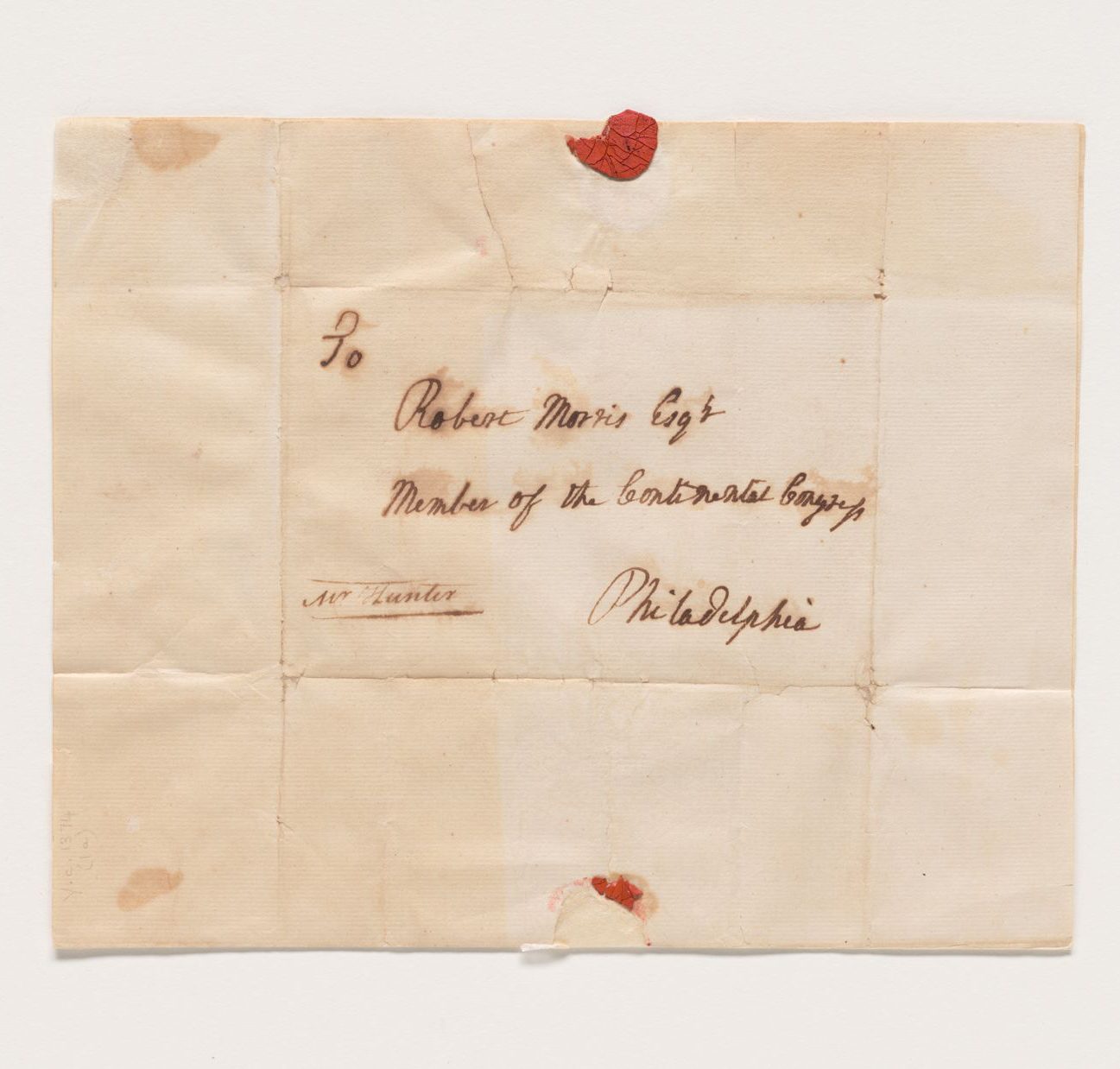
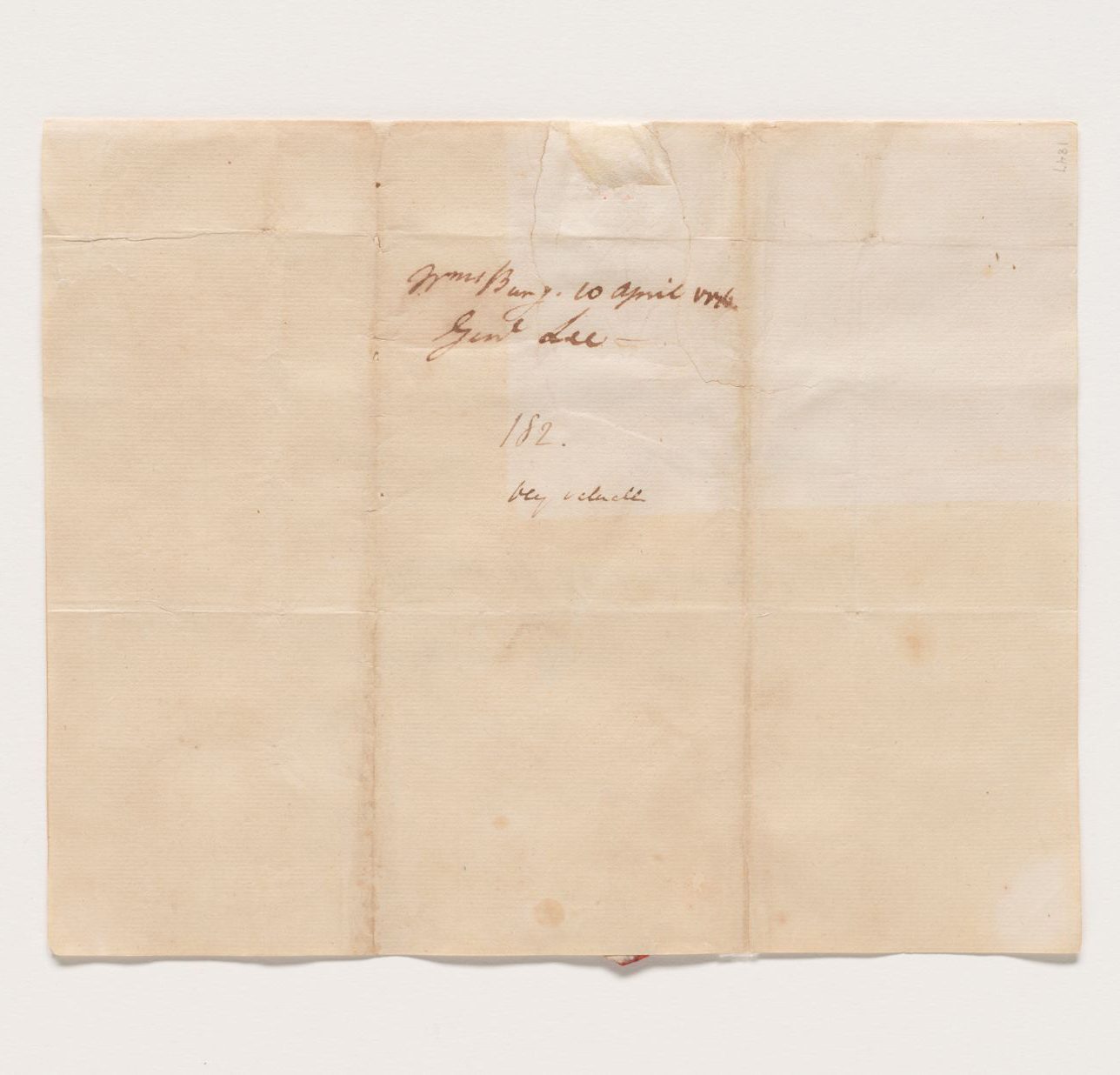
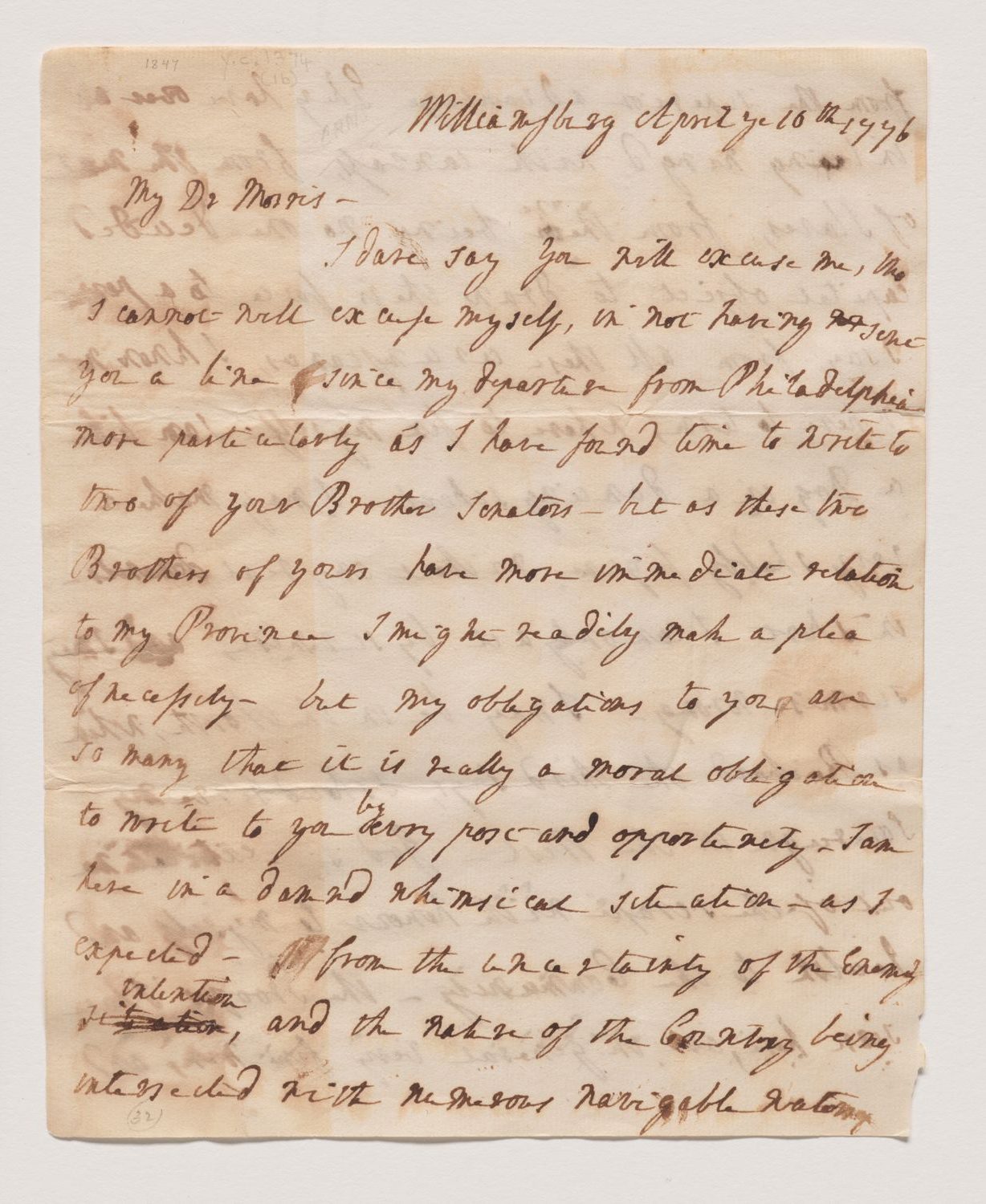
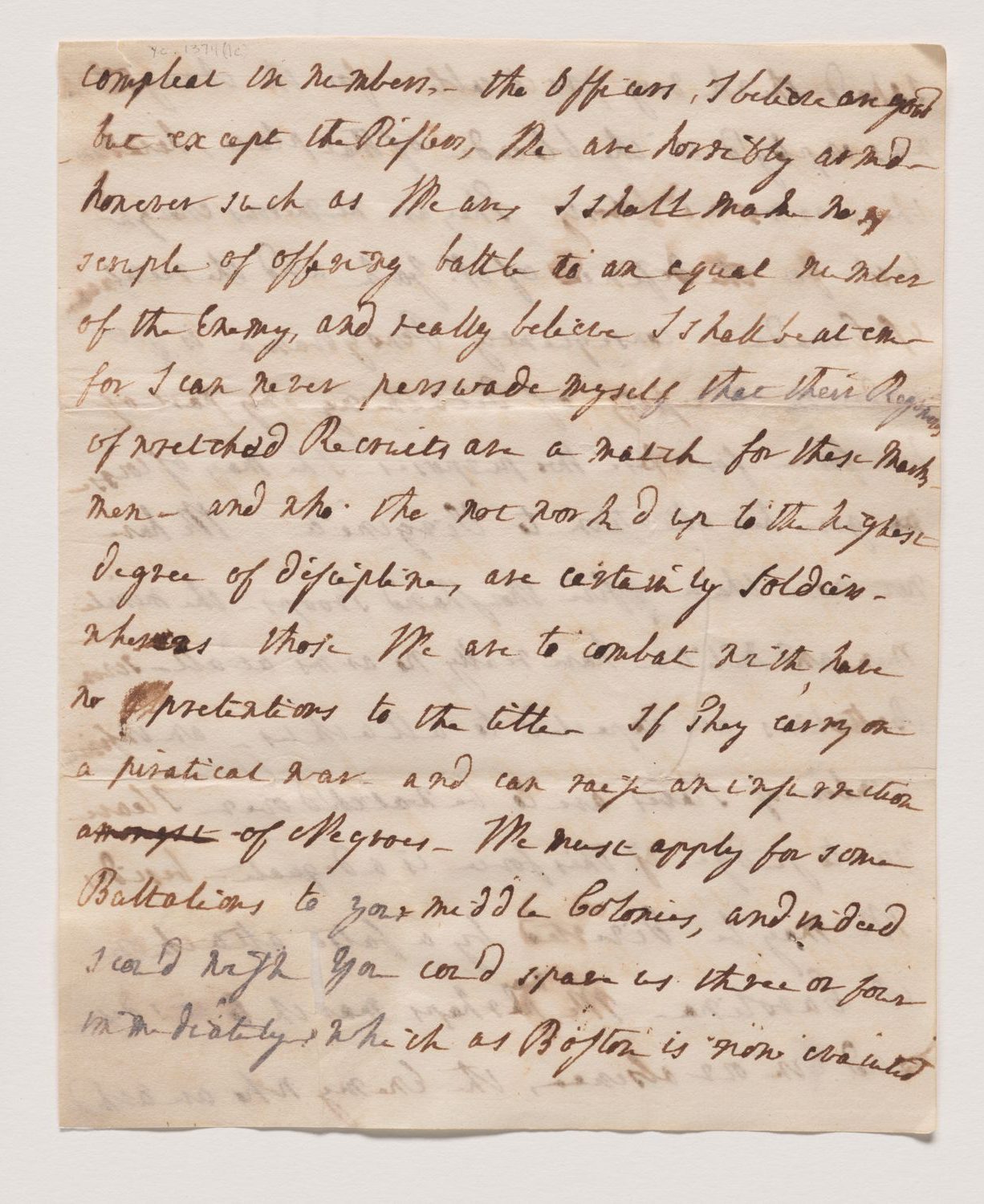
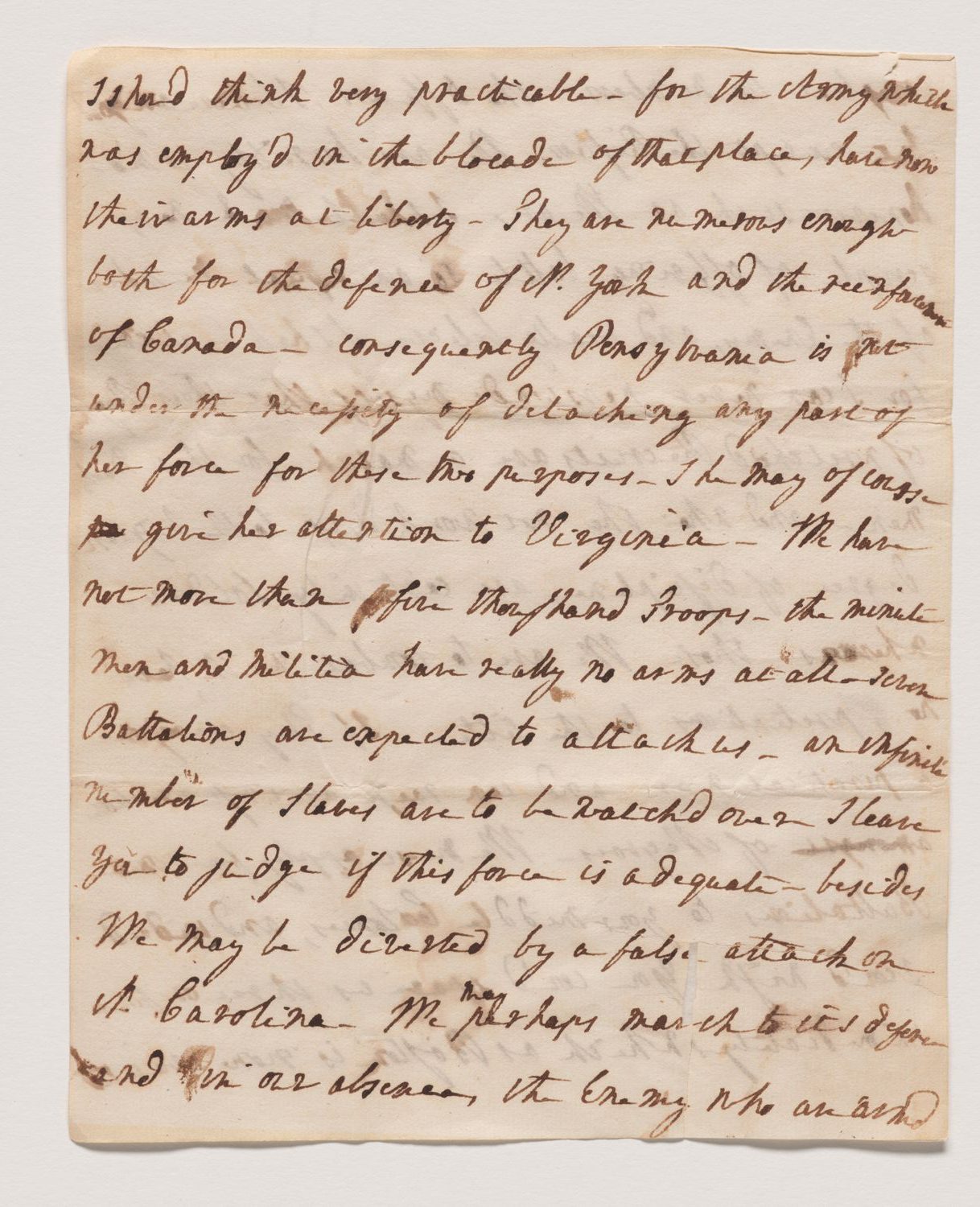
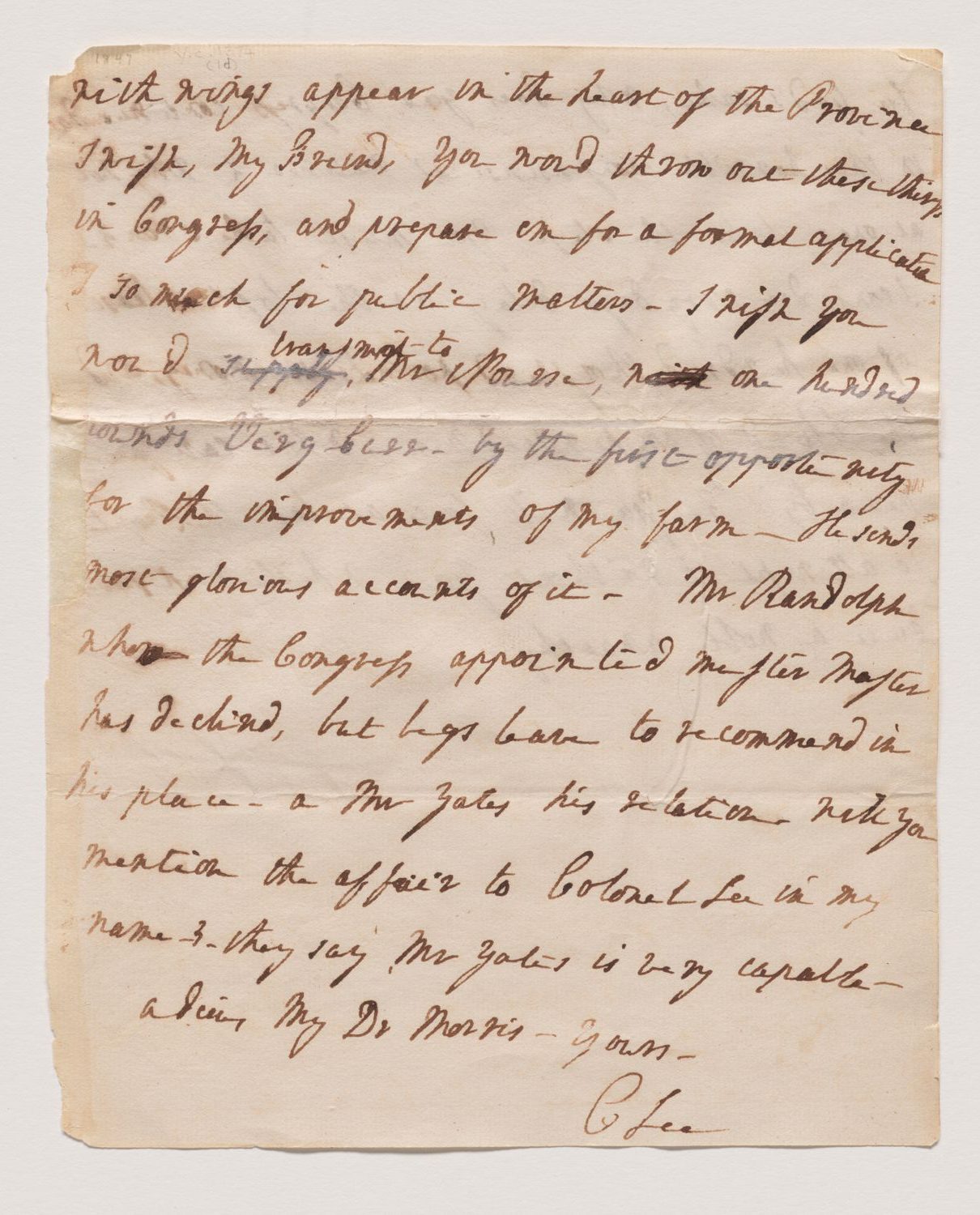
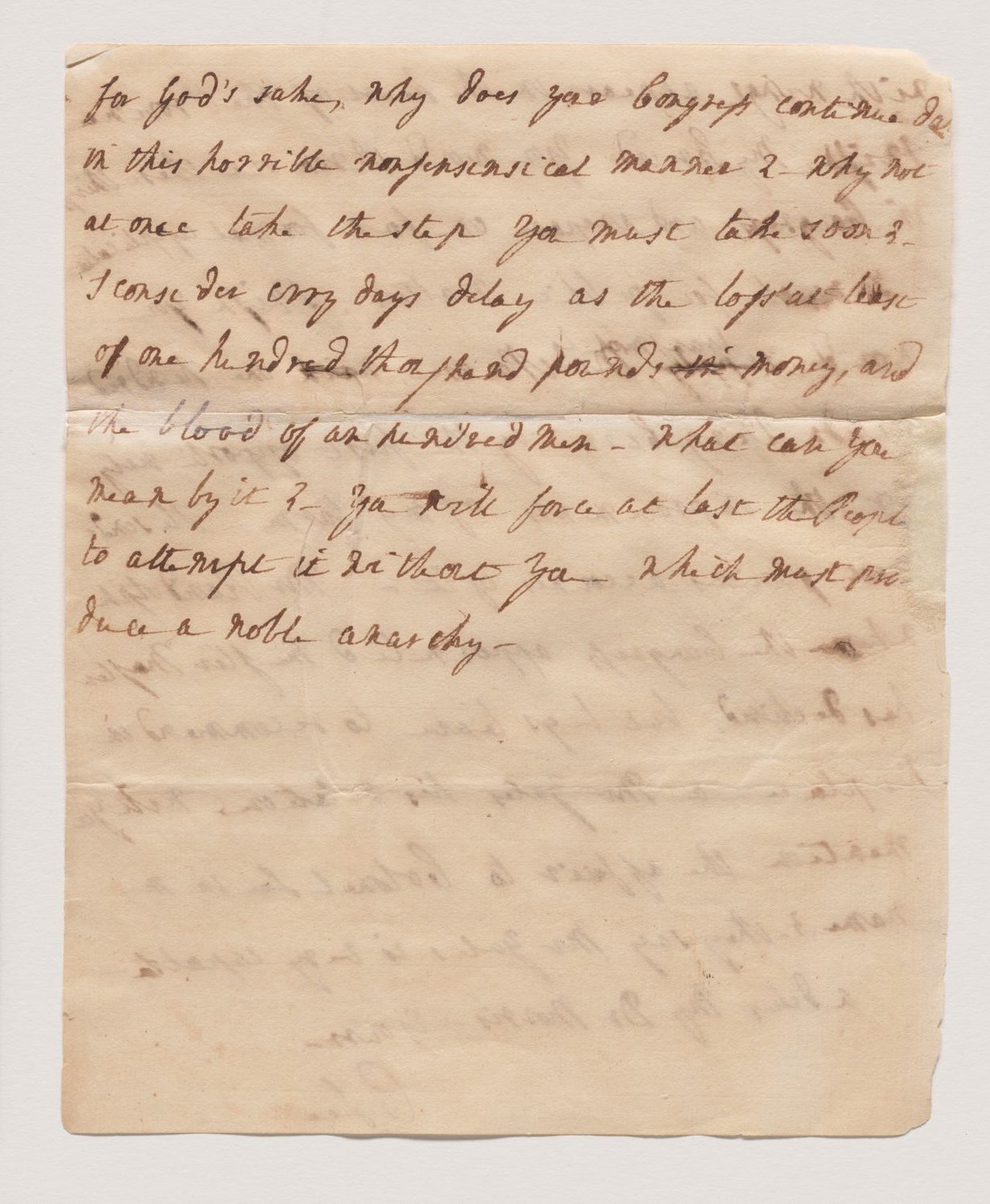
Major General Charles Lee (1732–82), second in command to George Washington during the American Revolutionary War, wrote this letter from Williamsburg, Virginia, on April 10, 1776. The recipient was his close friend Robert Morris, in Philadelphia, who was soon to become one of the signers of the Declaration of Independence.
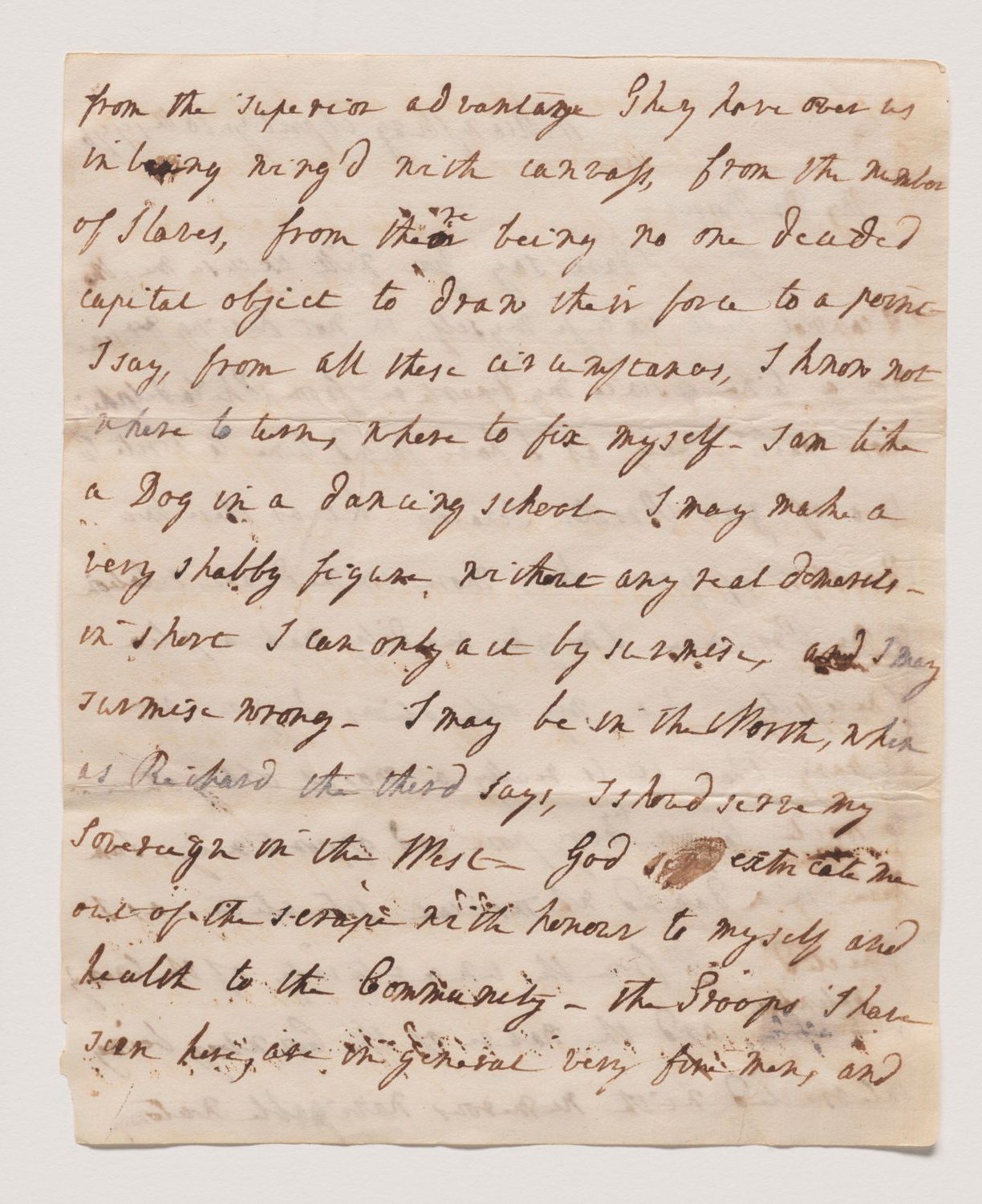
Lee needed to decide where to send his forces—the British fleet had recently landed in North Carolina at Cape Fear but found it unsuitable—and Lee didn’t know if they were going to head north to Virginia or south to Charleston, South Carolina.
Lee wrote to Morris, “I am here in a damn’d whimsical situation … from the uncertainty of the enemy’s intention.” He then equated his situation to a scene from act 4, scene 4 of Shakespeare’s Richard III:
I may be in the North, when as Richard the third says, I should serve my sovereign in the West.
The analogy resonated strongly with him, and he repeated it in letters to George Washington and others. This is not unusual, since Lee, like his colleagues, penned many letters each day on similar topics. It was inevitable that he would “cut and paste” a section from one letter into another if he particularly liked the way it sounded.
Letters from Major General Charles Lee, Continental Army, 1775–1776

The British arrived in Charleston Harbor six weeks later. Lee’s Continental Army defeated them in the Battle of Sullivan Island on June 28, just days before the signing of the Declaration of Independence. While he could claim victory at Charleston, his career was irreparably tarnished by defying and disrespecting Washington two years later at the Battle of Monmouth. He’s portrayed as a buffoon in Lin–Manuel Miranda’s Broadway musical Hamilton—especially in the song “Stay Alive,” in which he proclaims “I’m a General. Whee!”
Lee was a bundle of contradictions with a complicated legacy: Before he moved to British America in 1773 and joined the Continental Army, he had served in the British Army and the Polish Crown Army. During the French and Indian War in America, he married and then abandoned the daughter (whose name is now unknown) of White Thunder, a Senecan chief of the Bear Clan. He lost two fingers in a duel in Italy. After being court-martialed and surviving a duel against John Laurens, he retired to his Virginian estate. His will records that he had six enslaved people at his death.

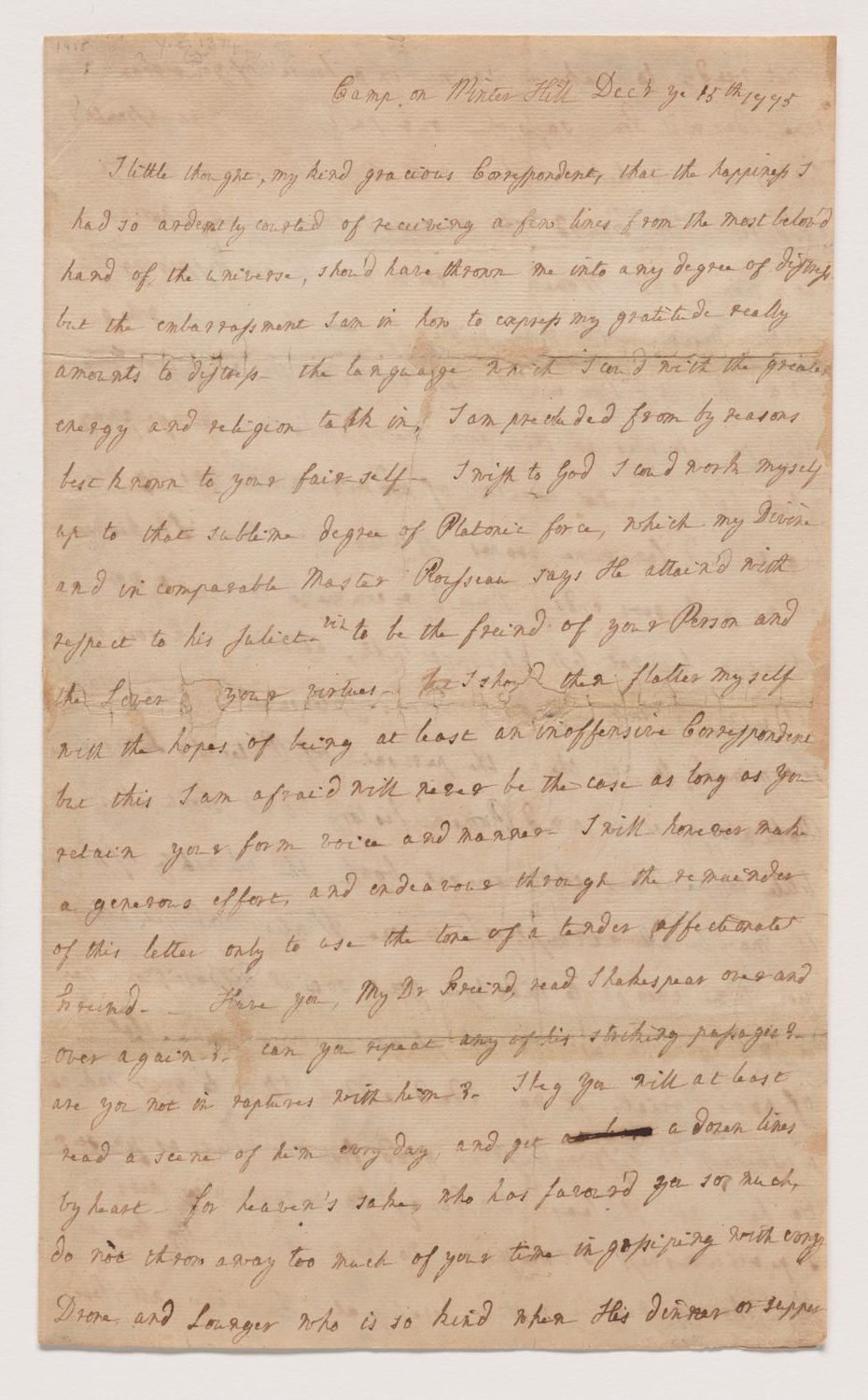
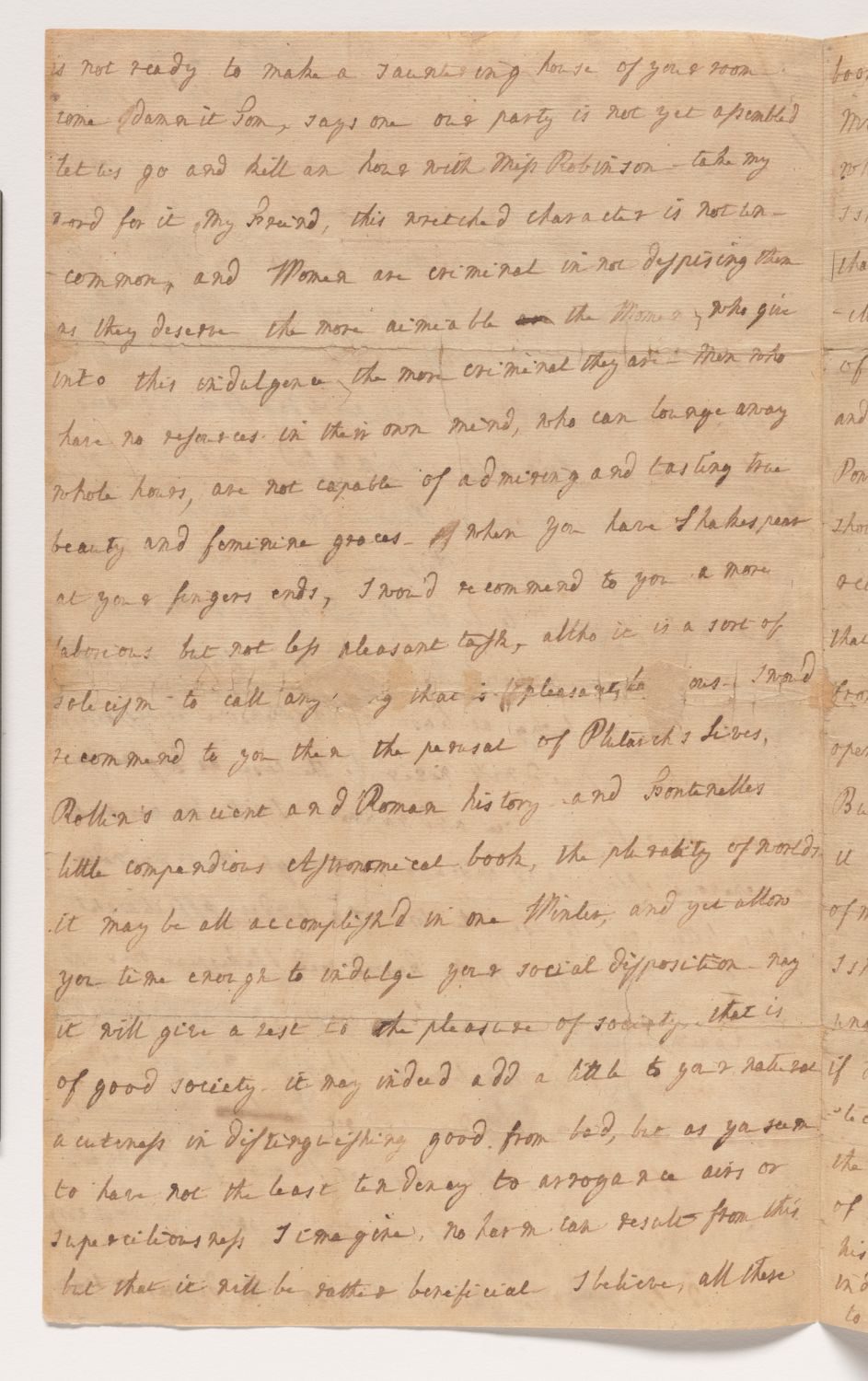
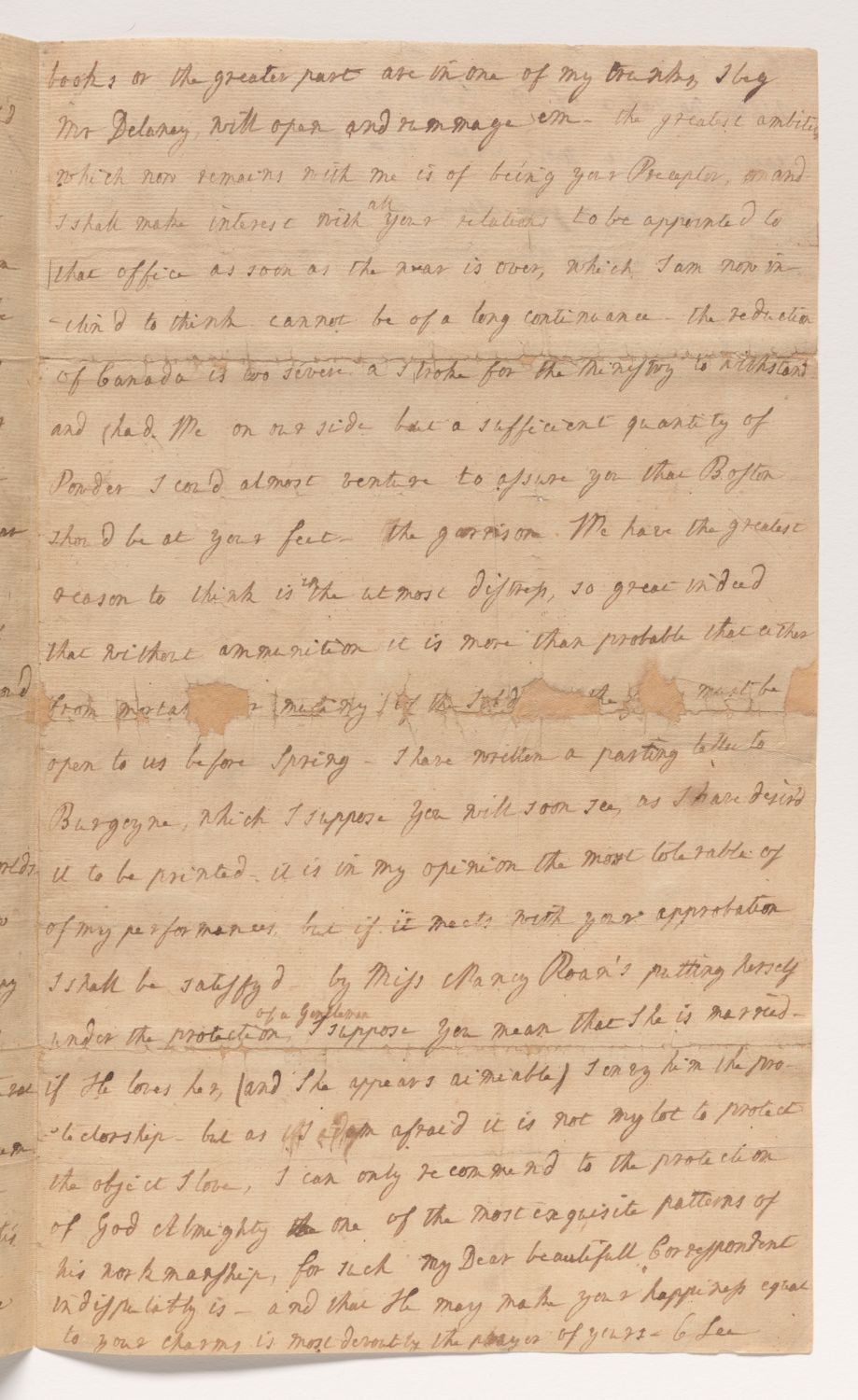
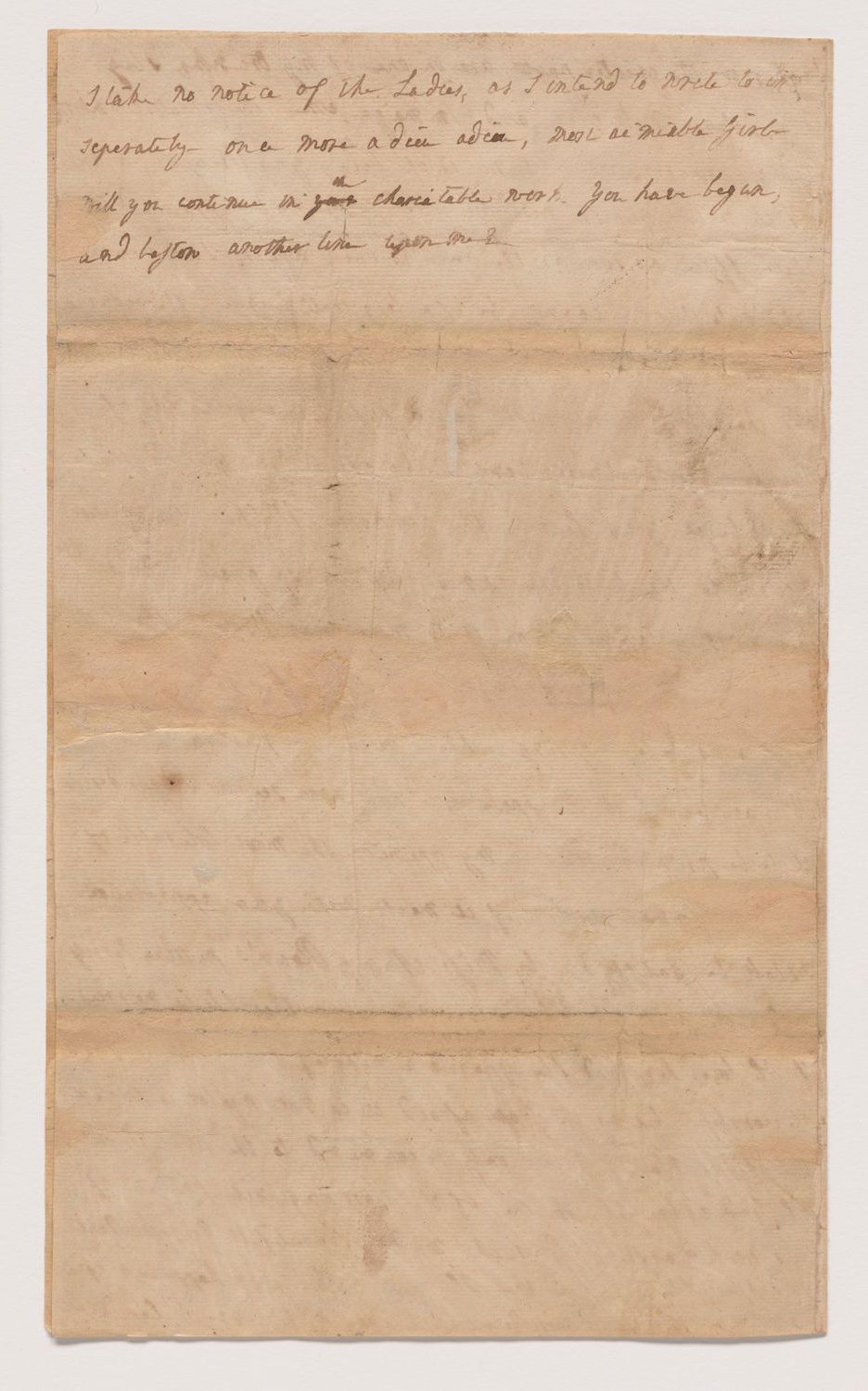
And he loved Shakespeare. We know this because the Folger has another letter from Lee to a Miss Robinson in Philadelphia, dated December 15, 1775 (Y.c.1374 (2)). He wrote from Winter Hill, outside of Boston, while Boston was under siege by the British:
Have you my Dear Friend read Shakespear over and over again? Can you repeat any of his striking passages? Are you not in rapture with him. I beg that at least you will read a scene of him every day and get a dozen lines by heart …. It may indeed add a little to your natural acuteness in distinguishing good from bad.
(Miss Robinson is possibly Sally Robinson (1753–1804) of Philadelphia, who married Richard Peters in August 1776, and with whom George Washington stayed in Philadelphia in May 1776. She was the daughter of Thomas Robinson and Sarah Sharp and sister to Ann Margaret Robinson, who married Sharp Delany, mentioned in this letter.)
And Shakespeare provided the epigraph for the title page of Lee’s Strictures on a Pamphlet (Philadelphia, 1774), in which Lee lambasts an anti-American pamphlet: “Let’s canvas Him in in his broad Cardinal’s Hat.” This is perhaps close enough to Henry VI, Part 1 (Act 1, scene 3)—“I’ll canvass thee in thy broad cardinal’s hat”—to be recognizable? At least it is not as bad as the epigraph on George Washington’s address, below!
1786 | Noah Webster’s Use of Shakespeare to Shape Young Americans

Noah Webster (1758–1843) had a massive influence on the development of American English. Although most famous for his dictionary, he also created the first American textbook. Unlike other American educators at the time, Webster thought American children should learn to read from texts that reflected American patriotism and speech rather than focusing on the Bible and British language and literature.
His popular “reader,” first published in 1785, was part of a three-volume set of textbooks devoted to spelling, grammar, and reading. Webster says in his preface that he included recent Revolutionary-era speeches from Congress for their “noble, just and independent sentiments of liberty and patriotism” that he wants to “transfuse … into the breasts of the rising generation.” Despite Webster’s concern that American children learn to read from American texts, his textbook is full of passages from Shakespeare. Webster argued elsewhere that Shakespeare’s language was surprisingly similar to that of “the New England people,” because “the inhabitants of islands best preserve their native tongue” and “New England has been in the situation of an island; during 160 years” (Webster, Dissertations on the English language (Boston, 1789)).

The Shakespearean excerpts are sometimes hard to spot because with each new edition, Webster tinkered with the curriculum, gradually dialing back the direct citations to Shakespeare and his plays while still including the passages themselves. Turning the pages, however, savvy students might spot quotations from Cymbeline, Macbeth, Julius Caesar, Othello, Richard III, Merchant of Venice, Midsummer Night’s Dream, Hamlet, or As You Like It, to name a few.

For Webster, Shakespeare eventually became yet another anonymous content creator (as Shakespeare was for enterprising publishers in his own lifetime). Readers who were familiar with Shakespeare might recognize his words, but that wasn’t the point. As an American student in 1785, you just needed to study and proclaim bits of dialogue, poetry, and monologues, in the hopes that the process would “establish our language” and “diffuse the principles of virtue and patriotism.”


I really like the juxtaposition in the above example. The opening includes the first part of Act 4, scene 3 from Julius Caesar—in which Brutus and Cassius dramatically argue and reconcile. The selection that directly follows it is a foundational American document from September 1774, the First Continental Congress’s “Address of Congress to the People of Great Britain.”
Would an American child move seamlessly and pointedly from Cassius and Brutus fighting over the future of the Roman Republic to the founding fathers and George III fighting over the future of the American colonies? If they only knew this one dialogue from Julius Caesar, would they recognize the parallel of former allies resorting to armed conflict over what constitutes a just government? I really want to know what Noah Webster was thinking!
1796 | Washington and Shakespeare, A Winning Combination


The Legacy of the Father of His Country (Stockbridge, Mass.: Loring Andrews, 1796) | Folger PS862 .A4 Cage
The final example came as a surprise to me. As I consulted items in our collection connected to George Washington, I came across a copy of his famous “Farewell Address,” in which he announced he would not seek reelection to a third term.
The address first appeared in a newspaper in September 1796, and then was printed immediately after as a pamphlet in dozens of cities up and down the east coast. Henry and Emily Folger acquired this copy because of the epigraph attributed to Shakespeare on the title page.

I didn’t immediately recognize the quote. And neither did the internet, because Shakespeare didn’t write it!
I consulted an online database to look at the title pages of over 40 editions of the Address printed in other cities to see if they had the same epigraph. The only editions to include a Shakespearean epigraph are the Folger copy, printed in Stockton, Massachusetts, and two others that were also printed in Massachusetts—in Boston in 1796 and Northampton in 1797.
Many of Shakespeare’s plays are about the struggles of succession and legacy-making. The three Massachusetts publishers probably thought that a made-up Shakespearean epigraph suitably evoked the historical gravity of Washington’s address (in which Washington announced that he would peacefully step down after two terms as President, setting a precedent that is still in place). The fact that the quotation is the equivalent of AI slop seems not to have mattered.
Come see our other 18th century American Shakespeare items as well! We have copies of the first individual Shakespeare plays to be printed in America (editions of Hamlet and Twelfth Night in Boston, in 1794), the first complete edition of his plays to be printed in America (1795), and playbills for Romeo and Juliet (Baltimore, 1783), Taming of the Shrew (Baltimore, 1785), and Macbeth (Alexandria, Virginia, 1799).
Keep exploring

The American Women Who Transformed Shakespeare Editing
Charlotte Porter and Helen Clarke were outliers in the world of Shakespeare editing and scholarship—female, queer, non-academic, and the first editors to base their edition and analysis on the text of Shakespeare’s First Folio of 1623.

Actress Charlotte Cushman supports the Union troops
19th century superstar Charlotte Cushman’s final performances included benefits for Union troops during the American Civil War. The fundraising organizers thanked her with commemorative albums now in the Folger collection.

Shakespeare and America
As America celebrates its 250th anniversary, we’re exploring the larger-than-life role played by an English playwright from more than 400 years ago in American entertainment, education, and history. Enjoy a round-up of Folger podcasts and blog posts about Shakespeare’s influence in America.
Stay connected
Enter your email address to follow this blog and receive notifications of new posts by email.