

When Hamlet sends Rosencrantz and Guildenstern away and announces, “Now I am alone,” it’s a wonderfully sly joke because, of course, Hamlet’s not alone. He’s surrounded by hundreds of theatergoers with whom he’s about to share his famous “O, what a rogue and peasant slave am I” soliloquy. Shakespeare understood well the power of direct address, where a character speaks directly to, and frequently interacts with, the audience, and many actors have crafted entire shows that explore this intimate and personal dynamic. (The following is just a sampling!)
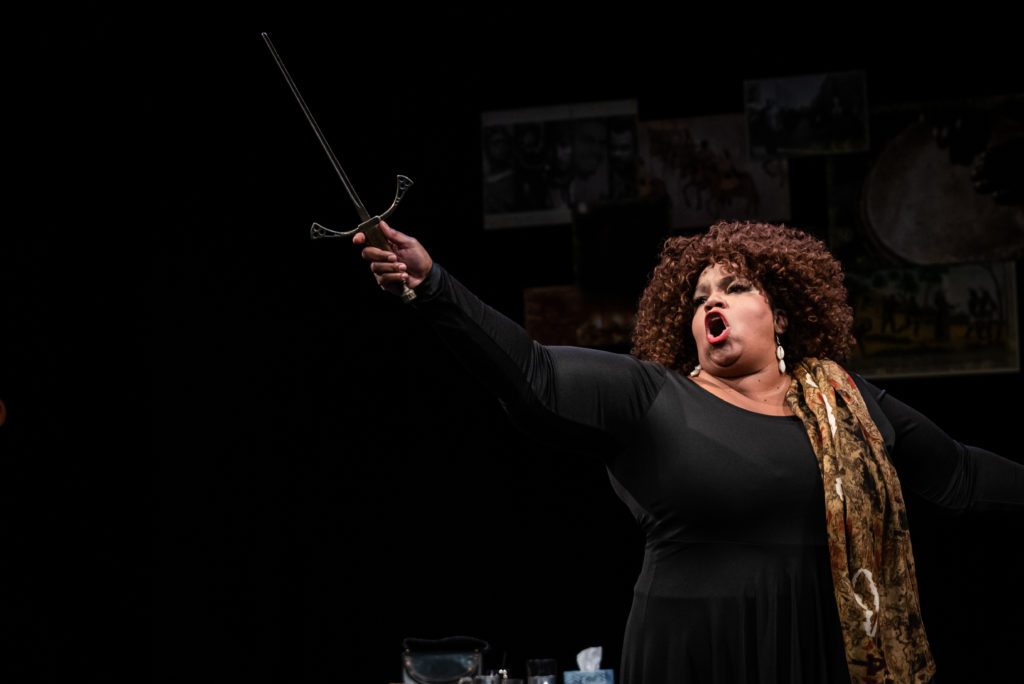
Jacob Ming-Trent’s How Shakespeare Saved My Life (running at Folger Theatre June 9–July 5 and a Red Bull Theater production at the Public Theater in the fall) is the actor’s semi-autobiographical odyssey that dramatizes an adolescence where Shakespeare was his only constant companion. After discovering Shakespeare in an English class he wandered into by mistake, Ming-Trent realizes he has a facility with Shakespeare’s language that becomes a kind of superpower. He tells us, “I’m using the Bard like Popeye used spinach,” and announces to everyone he meets, “I’m a Shakespearean actor,” a manifestation he actualized by becoming the youngest actor ever accepted into the Public Theater’s Shakespeare Lab and American Conservatory Theatre’s MFA acting program. (Indeed, in this decade alone, Ming-Trent has delighted audiences as Bottom in the Folger’s A Midsummer Night’s Dream and Falstaff in the PBS broadcast of the Public Theater’s Merry Wives.) Calling Shakespeare “an urban poet reporting what he saw, like Grandmaster Flash, Chuck D, like Biggie, like Tupac,” How Shakespeare Saved My Life celebrates the transformative power of language and the literary and human heroes Ming-Trent discovers along the way.
Less harrowing but equally powerful is Patrick Page’s All the Devils Are Here: How Shakespeare Invented the Villain, a surprisingly compelling lecture-demonstration of how Shakespeare’s exploration of evil evolved over the course of more than a dozen plays. (British actor-playwright Steven Berkoff did something similar with Shakespeare’s Villains in the 1990s.) Page’s astonishing baritone is its own superpower and, even more than in his recent portrayals of the title roles in Titus Andronicus off-Broadway and King Lear in Washington, DC, this solo showcase allows Page to demonstrate the full range of his vocal and interpretive powers and share his fantastic insight into Shakespeare’s vilest characters.
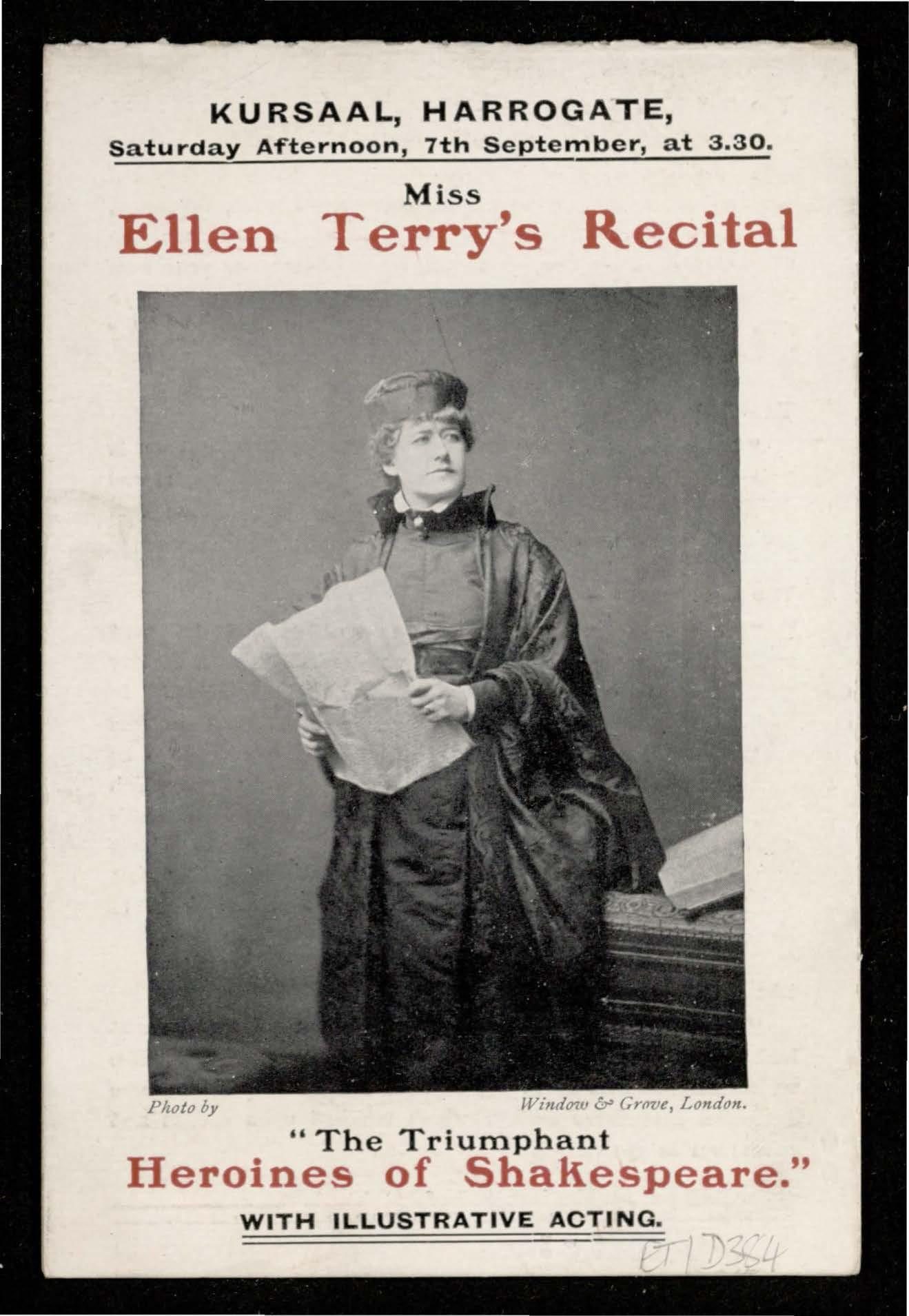
The history of distinguished British actors exploring Shakespeare alone onstage dates back to Ellen Terry in the early 20th century giving lecture-recitals on Shakespeare’s Heroines, which Dame Eileen Atkins dusted off and reshaped in the Sam Wanamaker Playhouse at Shakespeare’s Globe in 2014. In 1959, Sir John Gielgud (Terry’s great-nephew, as it happens) created The Ages of Man (watch), a collection of Shakespearean verse organized around Jaques’s “Seven Ages of Man” speech from As You Like It. The same speech appears at the beginning of both Acting Shakespeare (watch) by Ian McKellen (presenting as theatrically grand in 1980) and 2011’s Being Shakespeare (watch), written by Jonathan Bate and starring Simon Callow, which combines history and performance in an evening that feels like an incredibly well-acted TED Talk. (His solo reenactment of the mechanicals in Midsummer is a delight.)
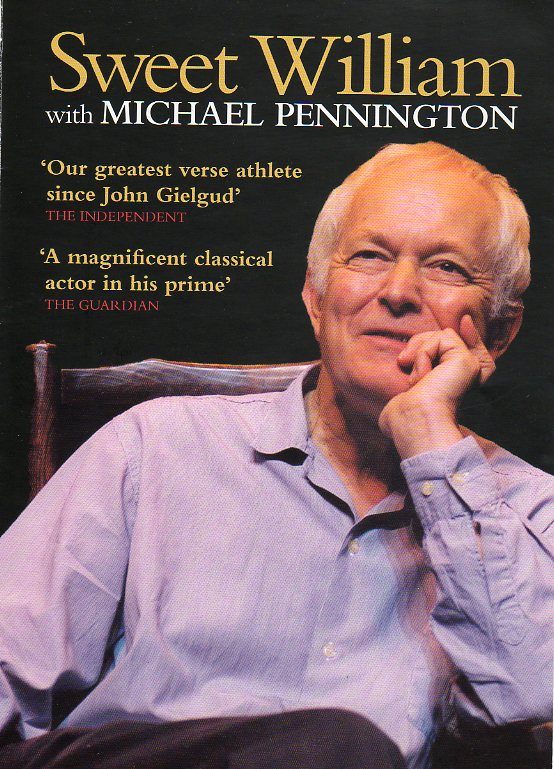
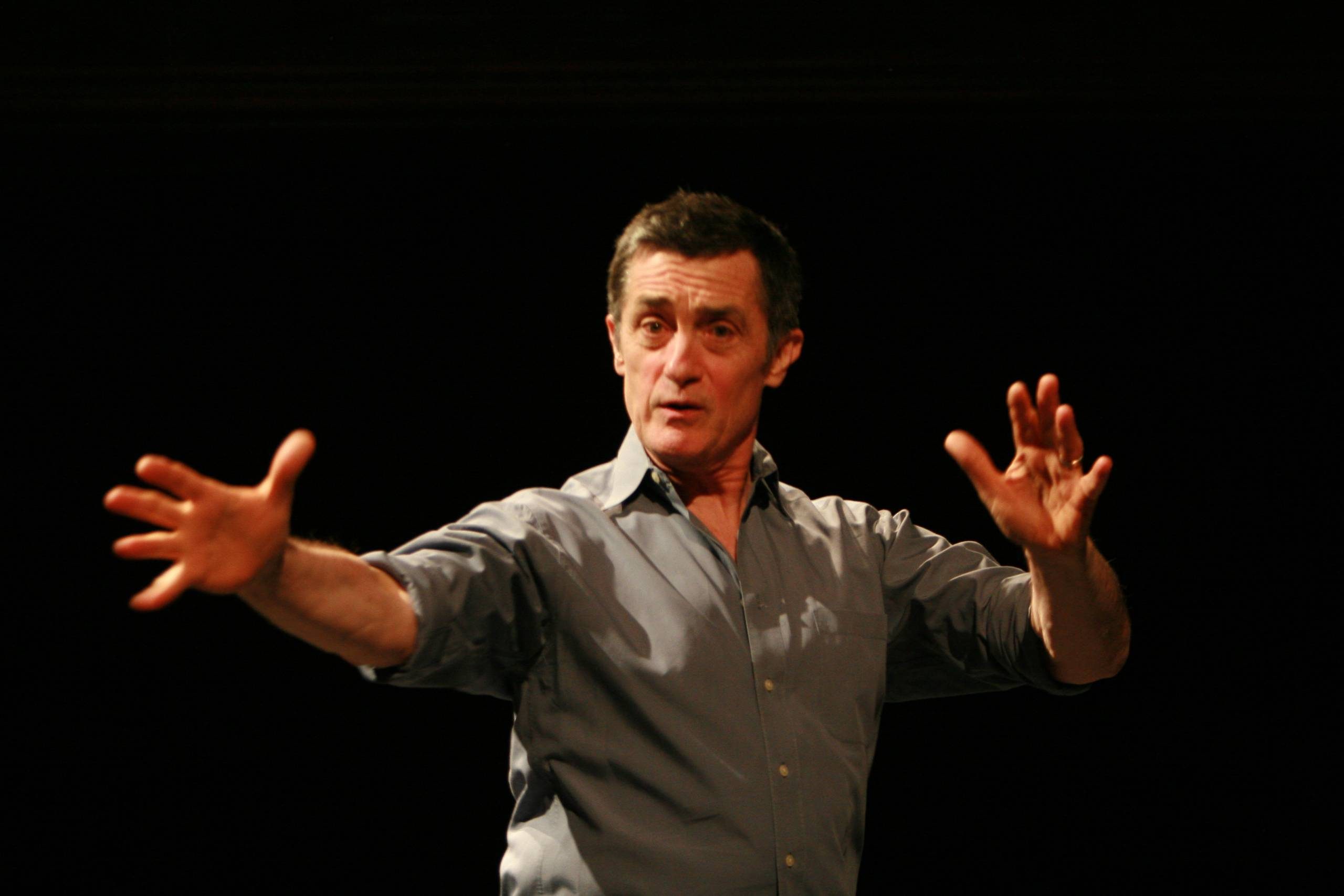
In a similar vein, Roger Rees (who non-theatergoers may remember from Cheers and The West Wing) created What You Will: An Evening By and About the Bard, which combines some of Shakespeare’s most famous speeches with anecdotes about funny onstage mishaps (and had its first performances at the Folger in 2007). The late Michael Pennington is probably the least famous actor of this group, but his Sweet William (watch part 1 and part 2) is possibly the most valuable, combining down-to-earth performances of Shakespeare’s verse with insightful observations about the characters and what the language reveals about the time in which they were written.
Several actors have taken up the challenge of performing entire Shakespeare plays by themselves. Alan Cumming’s solo Macbeth serves to remind audiences who may only know him as the fabulous host of The Traitors that he’s really quite an extraordinary actor. Eddie Izzard’s solo Hamlet continues the gifted comedian’s foray into multi-character literary adaptation after her successful solo adaptation of Charles Dickens’s Great Expectations.
In separate solo plays, actor and playwright Tim Crouch has created monologues for five secondary Shakespeare characters that serve as valuable companions to the plays these characters are from. I, Malvolio; I, Cinna (the Poet) (watch); I, Peaseblossom; I, Banquo, and I, Caliban offer fresh perspectives and new ways to consider their source material (although presumably Crouch won’t be writing a play for Hamlet’s usurping uncle because the title I, Claudius is already taken).
Emily Carding, on the other hand, focuses on three of Shakespeare’s title characters in their Coward Conscience Trilogy, one-person versions of Richard III, Hamlet, and Timon of Athens that, like Crouch’s plays, use the audience as characters in their interactive storytelling. Carding told me in an email that their plays “take direct inspiration from early modern playing conditions of shared light and the connection with an audience that brings.”
Carding also created Quintessence, part of a trend of original solo plays that explore Shakespeare through devised characters. In the post-apocalyptic world of Quintessence, Carding plays an AI being named Ariel that has been programmed to recreate humanity using the complete works of Shakespeare as a guide. Created in collaboration with the London Science Museum, it’s a premise that feels increasingly timely (though, happily, as I wrote over on Substack, AI transcriptions still struggle with Shakespeare names).
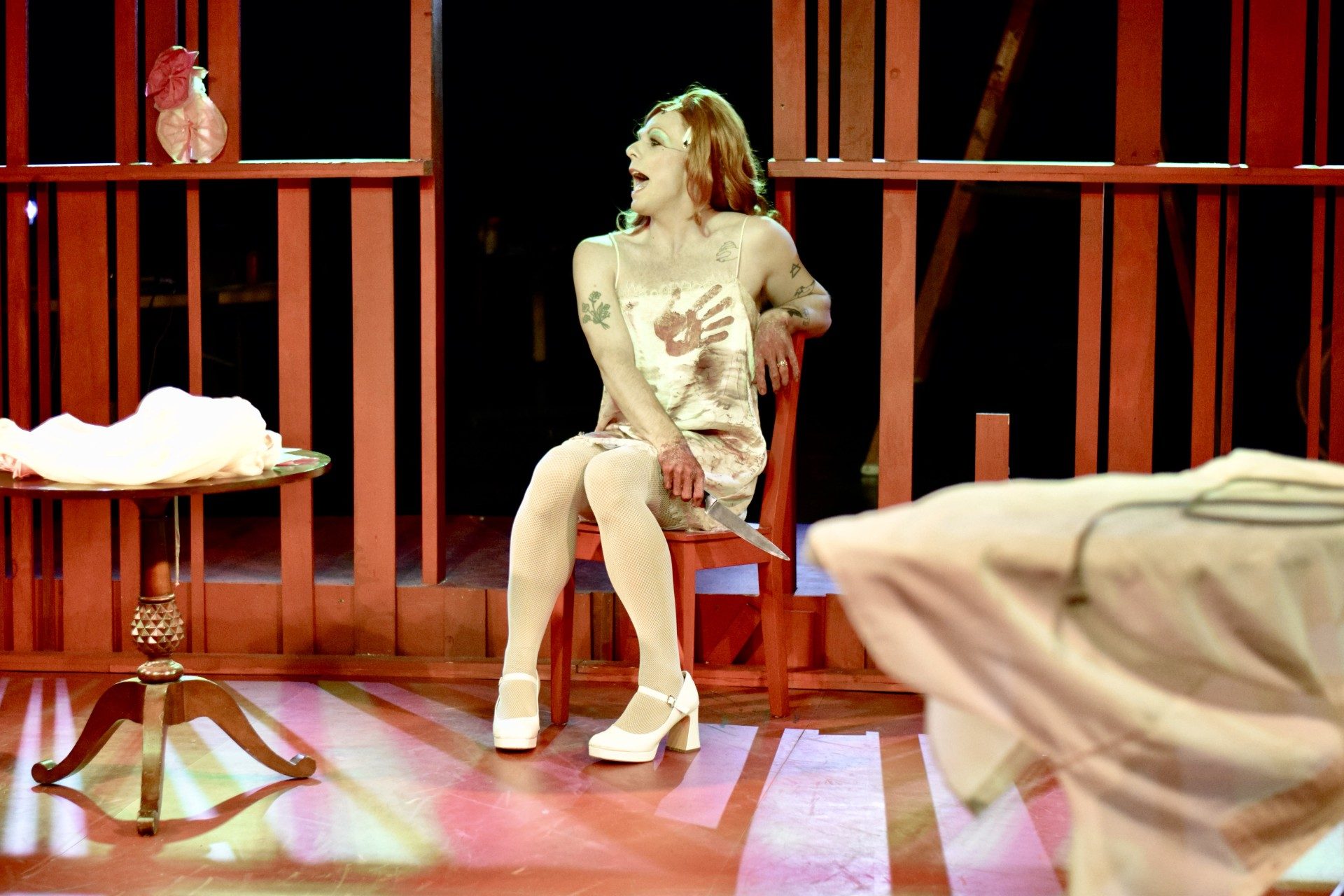
In Tyler Anthony Smith’s solo show Out, Darn Spot!, Lady Marcia Macbeth struggles to host her lifestyle TV program for 1960s housewives while dealing with the repercussions of the events in Shakespeare’s play. Smith plays fair with the character’s Shakespearean origins, and by the end of the one-hour performance, you can glimpse how this campy alternate reality could be something that Shakespeare’s Lady Macbeth might legitimately hallucinate in her final moments.
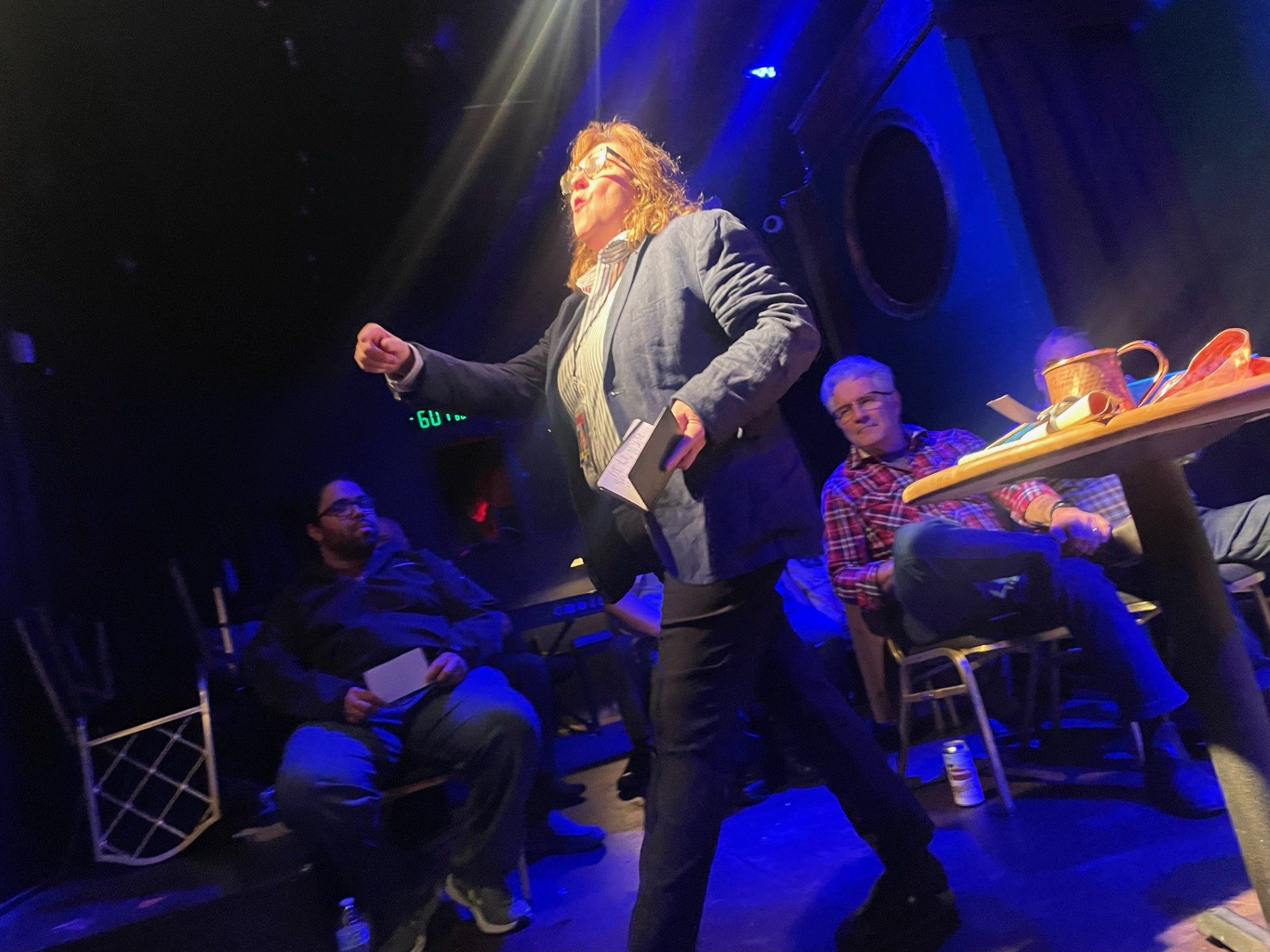
In Broadguess, playwright Dee Ryan plays an Elizabethan detective on the Elsinore beat who gets too close to the truth behind the mysterious deaths amongst the Danish royal family. When she gets transferred to Verona, her discovery there of tragedy from an ancient grudge between two warring families leads her to medieval Scotland and further carnage throughout Europe. A Second City veteran and adjunct professor of improvisation at Northwestern University, Ryan’s improvised interrogation of several “suspects” in the audience takes every performance in unpredictable directions, and as the show’s tagline suggests—“Who is William Shakespeare and why is he getting away with murder?”—Broadguess is a very funny and unexpectedly deep exploration into the curious connections in the Shakespearean canon.
Solo Shakespeare Shows

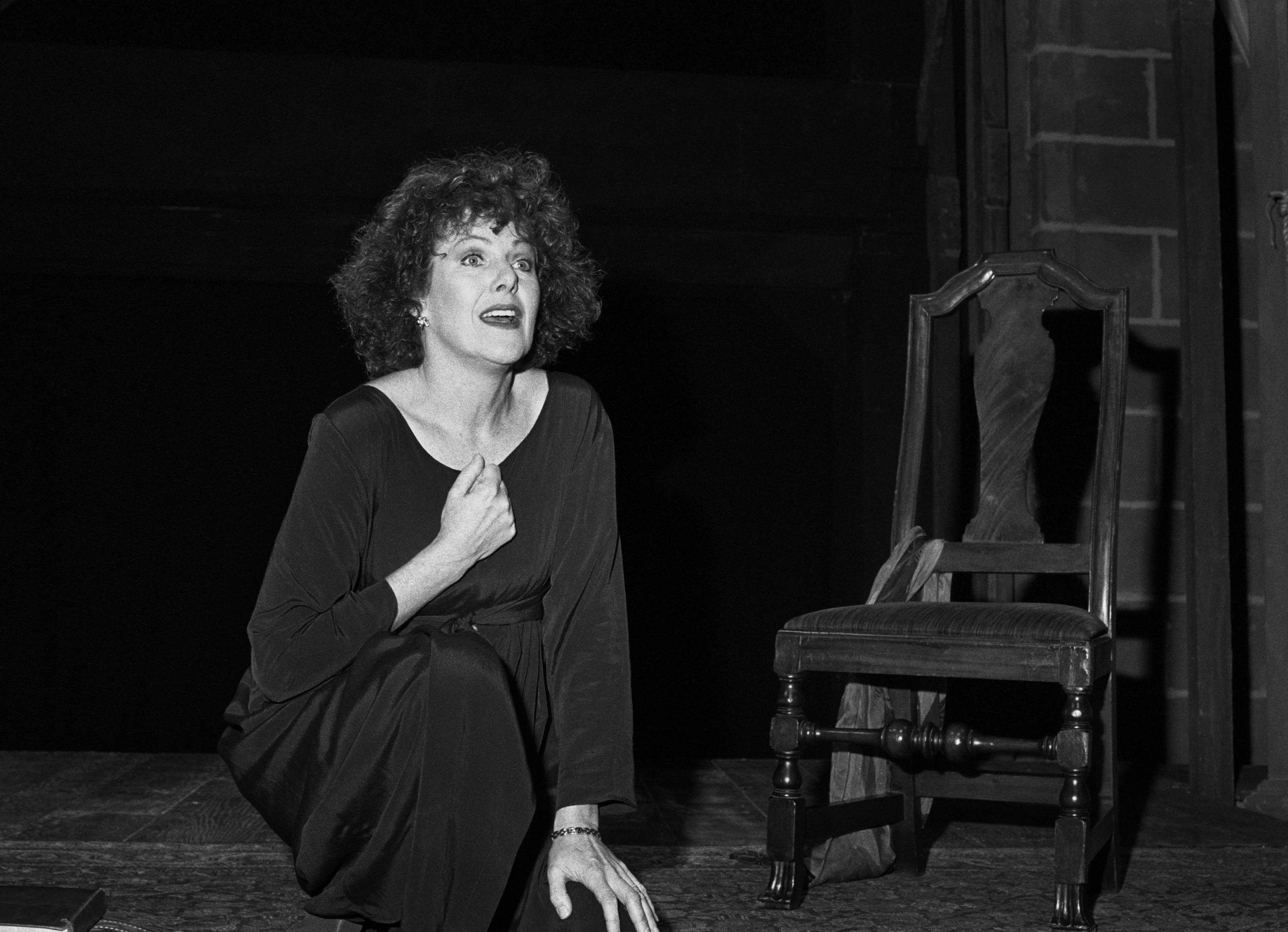


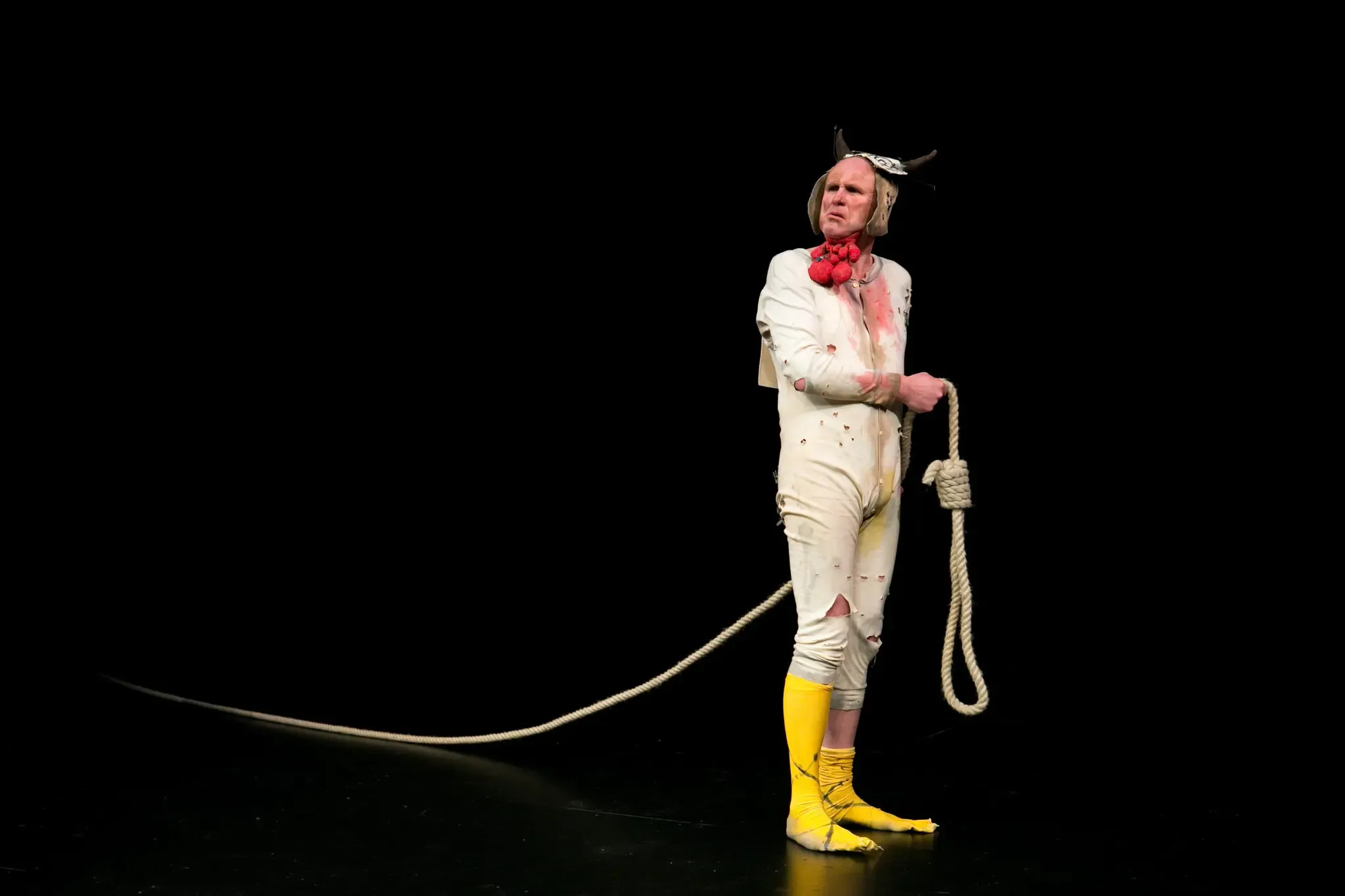
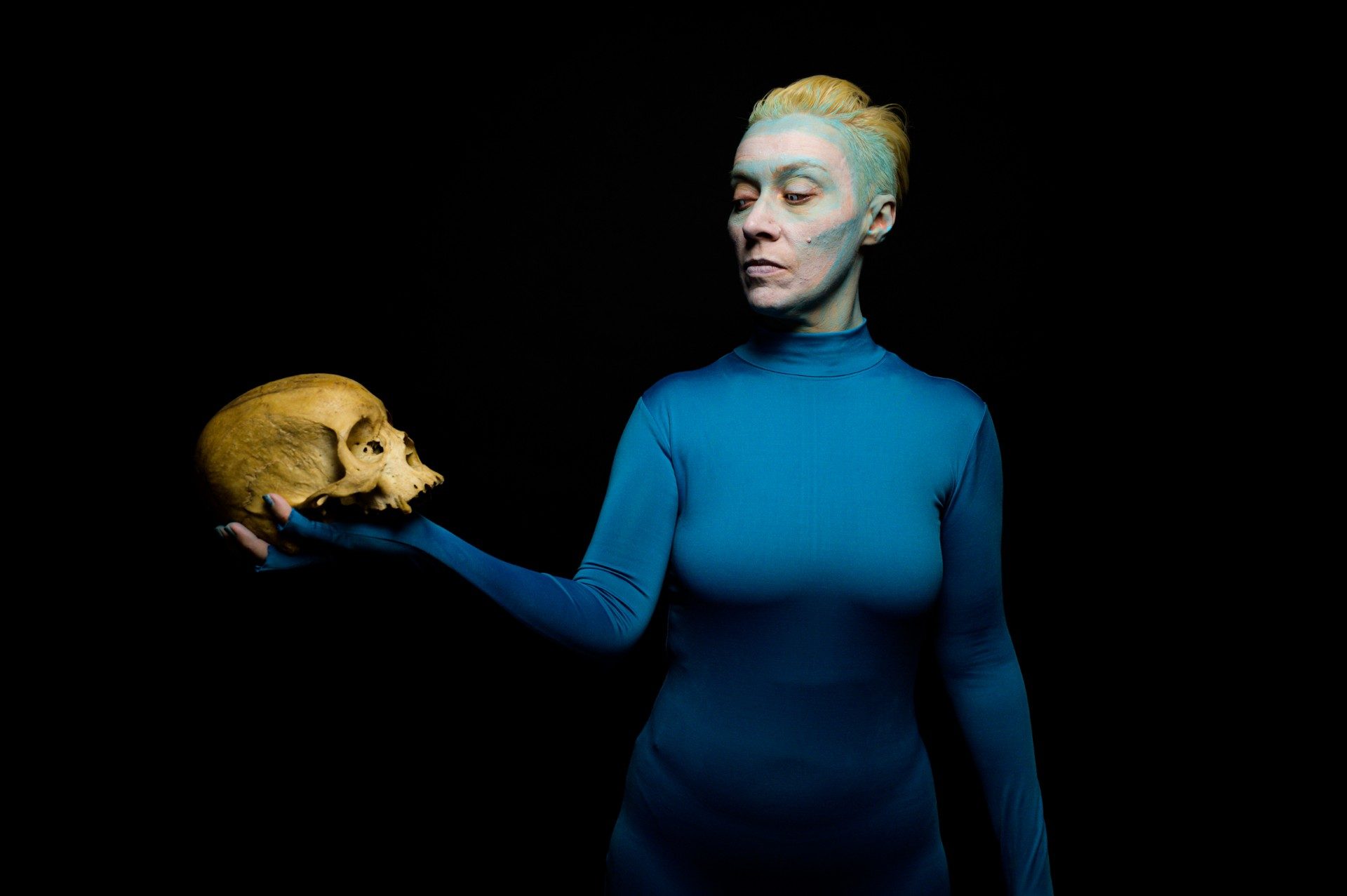
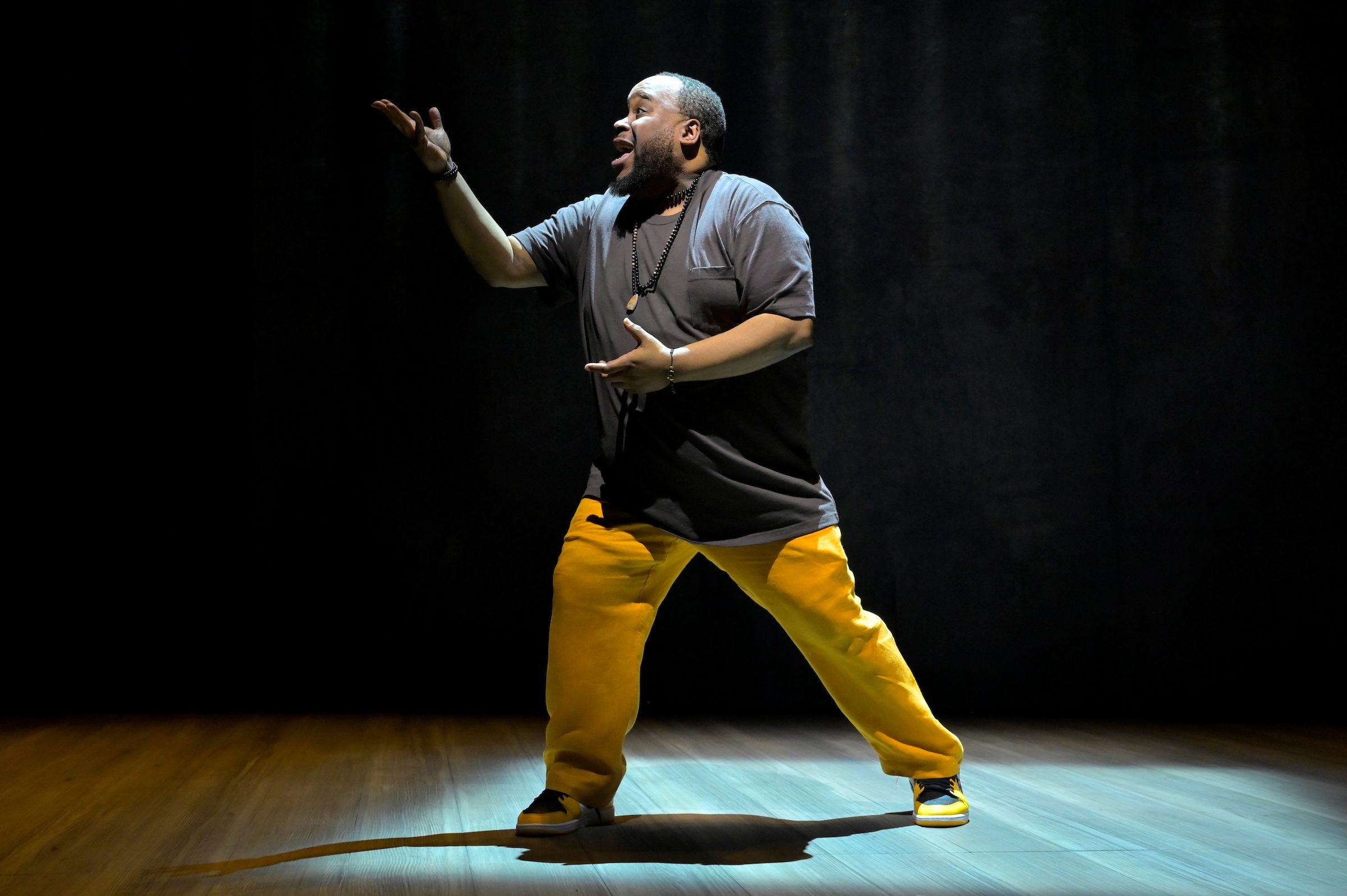
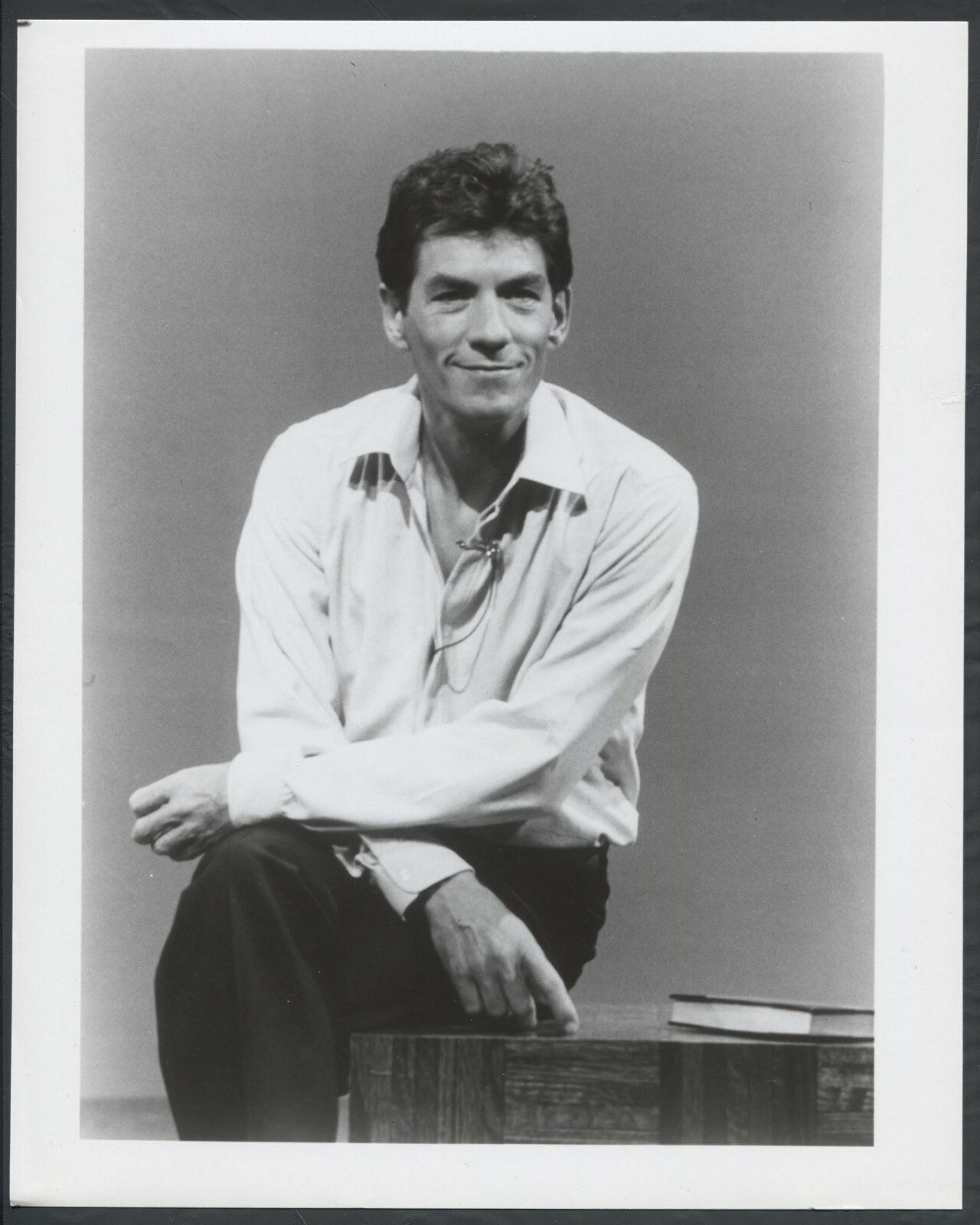
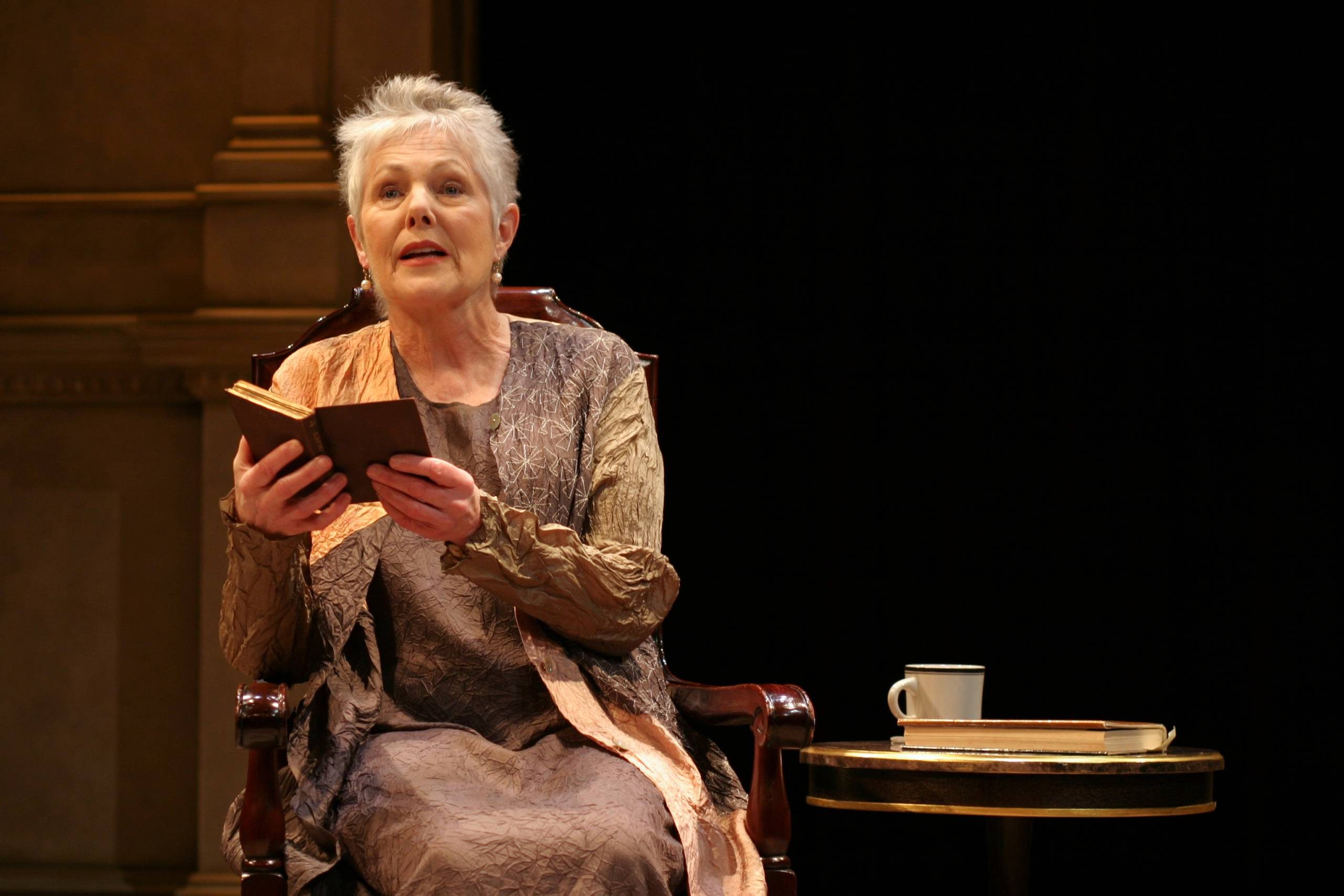
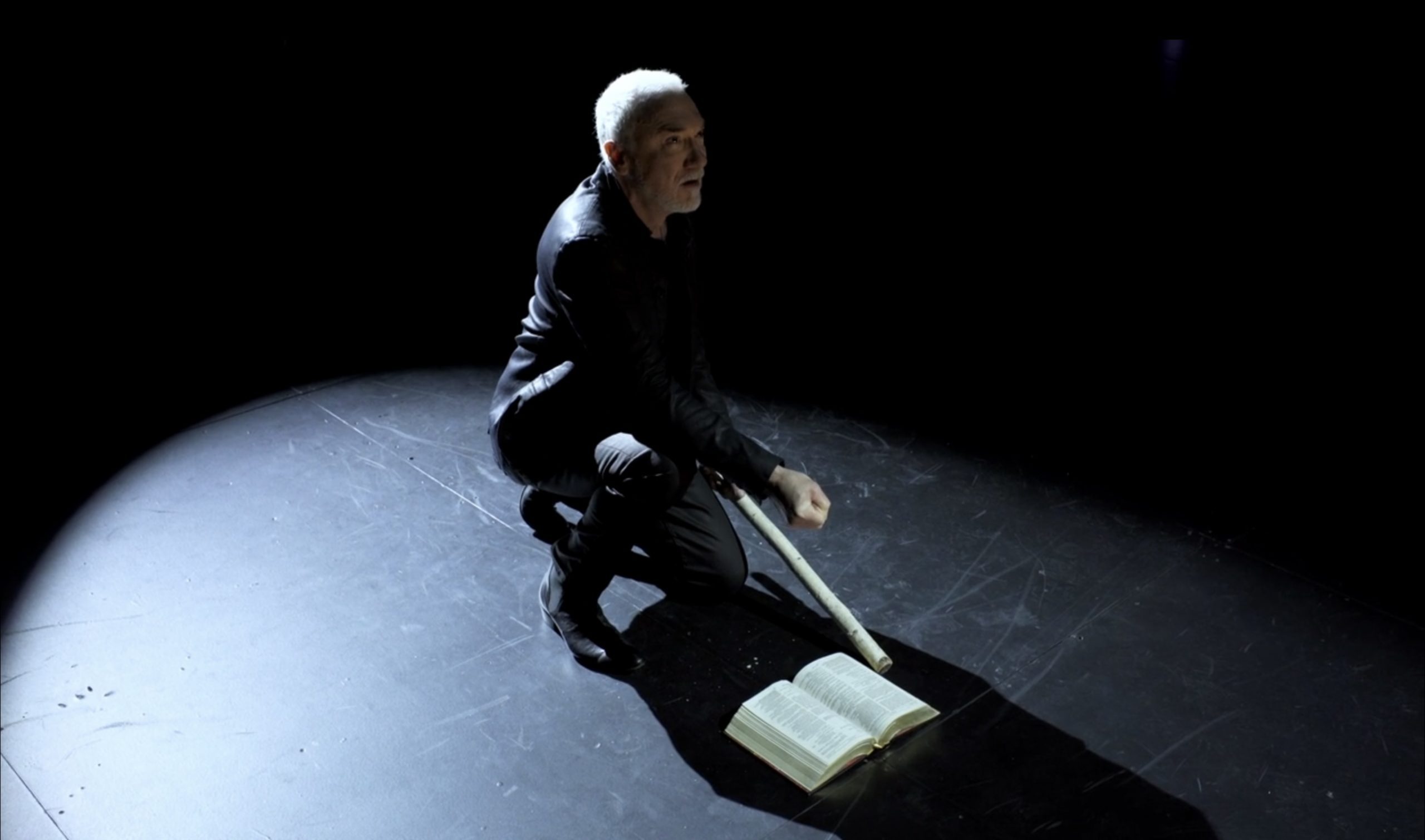
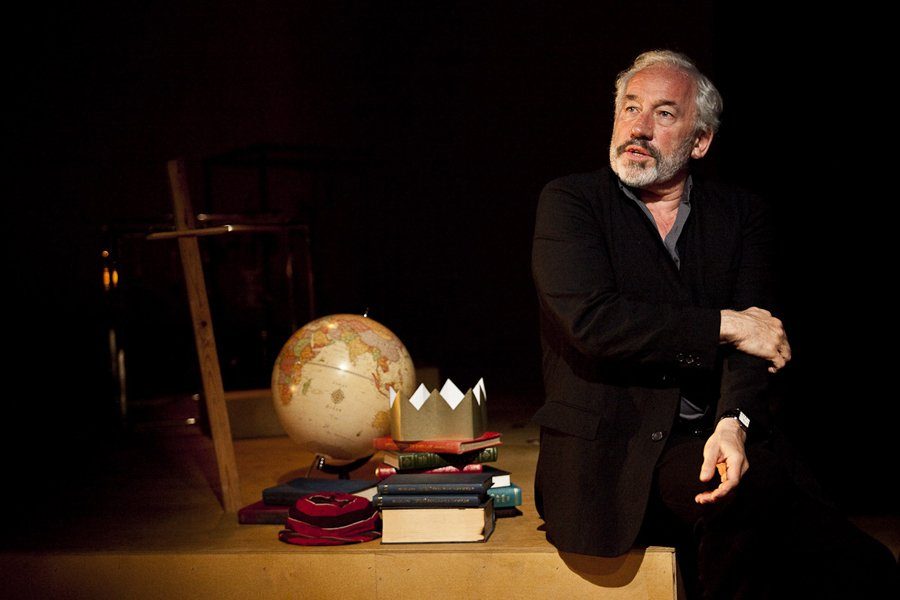
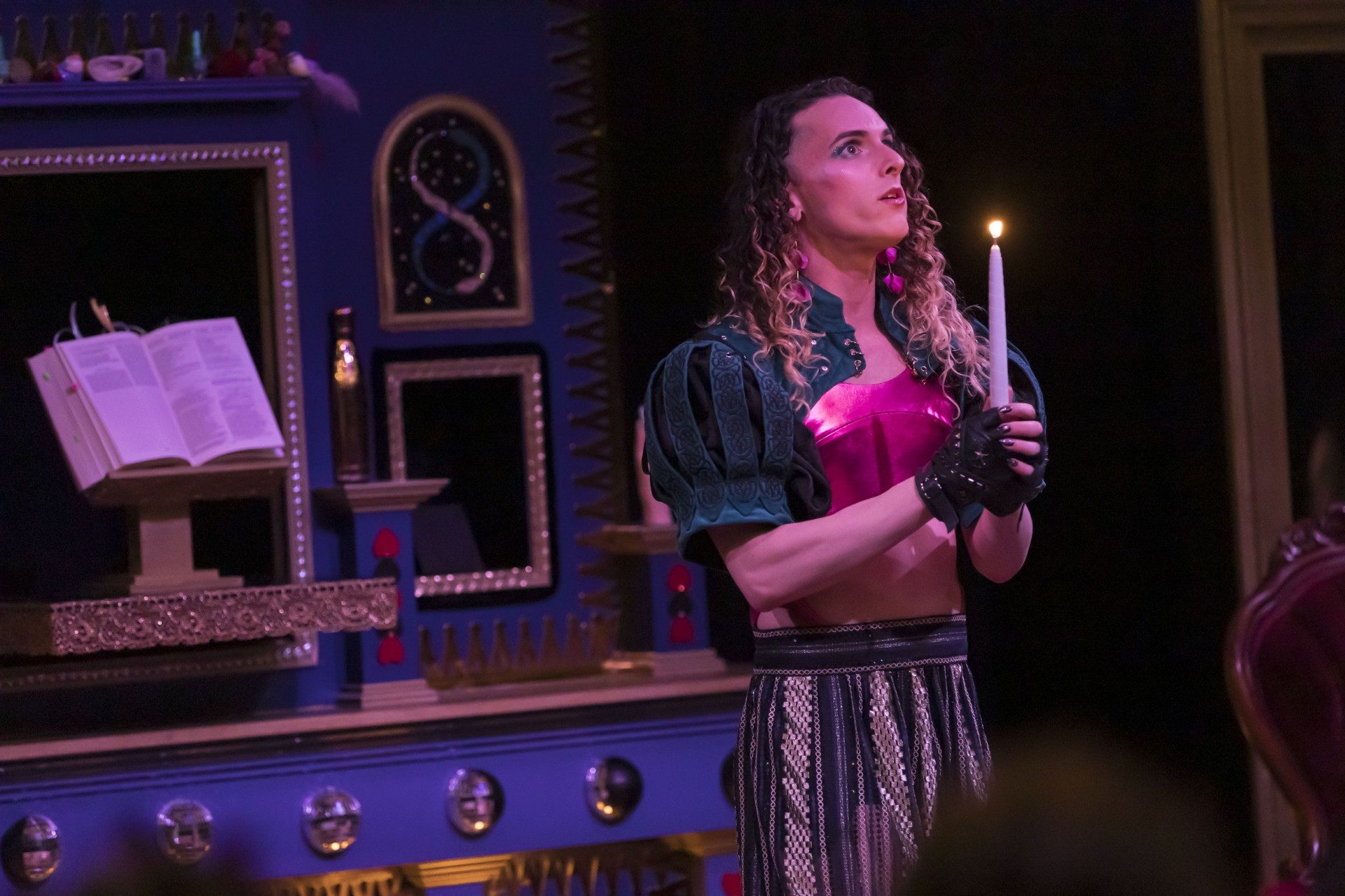

How Shakespeare Saved My Life continues the trend of solo shows as memoir. Lynn Redgrave’s Shakespeare for my Father—which, like How Shakespeare Saved My Life, also began its life at the Folger, as a benefit performance in 1991—brilliantly weaved scenes from Shakespeare into an autobiographical recounting of the distant relationship she had with her Shakespearean actor father Sir Michael Redgrave. She followed that up with Rachel and Juliet, her solo tribute to her actress mother Rachel Kempson’s lifelong passion for the role of Juliet.
Madeline Sayet’s Where We Belong traces her Shakespearean journey from a childhood attending outdoor Shakespeare with her mother and being given a copy of the complete works by her grandfather, to her grownup pursuit of a PhD in Shakespeare and the complicated reasons that didn’t happen. A member of the Mohegan tribe, Sayet is the first Native American playwright to have her work performed at Shakespeare’s Globe, and Where We Belong explores that intricate intersection of culture, de-colonization, and family. Sayet’s play proves it’s possible to engage critically with something you love and, as she told me on my RSC Podcast, continues her work creating “good medicine” in the theatre: “stories that are doing healing work and having a positive impact.”
Debra Ann Byrd’s Becoming Othello: A Black Girl’s Journey reveals the classically-trained actor’s experience tackling this male role and what she discovered about binary gender identities, the history of the first woman who played Othello, and how her childhood in Spanish Harlem led her to found the Harlem Shakespeare Festival to provide more opportunities for classical actors of color.
As their titles imply, both Lisa Wolpe’s Shakespeare and the Alchemy of Gender and Will Wilhelm’s Gender Play, or What You Will, examine Shakespeare’s work through the gender lens of their own experiences. Wolpe, the self-described “Master/Mistress of Shakespeare” who’s played more of Shakespeare’s male characters than any woman in history (and played Iago opposite Byrd’s Othello), traces her “ability to transform into the masculine” to the suicide of her father, a German-Jewish resistance fighter. Playing Shakespeare’s men became a way of understanding her father’s PTSD and rejecting a gender binary, embracing instead “a mystical gender spectrum.” Wilhelm’s play (co-created with Erin Murray) explores the performance of gender in Shakespeare’s time, both onstage and off, and how those characters reflect the modern non-binary identities of Wilhelm and others. Wilhelm hopes, as they explained on my podcast, “that one day this play could be gifted to another trans or non-binary actor for their own tour de force.”

In his incredibly powerful Cry Havoc! (watch), US Army veteran Stephan Wolfert shares how seeing a production of Richard III after returning home from military service revealed to him how well Shakespeare portrayed not only the experience of soldiers, but the loved ones who greet them upon their return. Wolfert also works regularly with other veterans and hopes Cry Havoc! gives “people that aren’t familiar with Shakespeare access to Shakespeare and people who might not be familiar with military veterans’ experience access to that.”
Each of these artists, sharing their intensely personal connections to Shakespeare in intimate solo performances, create a powerful one-on-one connection with their audiences, and reveal just how universal Shakespeare is. As Ryan says in her Detective Broadguess persona, “When you go looking for Shakespeare, you find yourself.”
Keep exploring

Debra Ann Byrd on Becoming Othello
Theater-maker and past Folger Fellow Debra Ann Byrd tells us about her solo show.

Shakespeare and War: Stephan Wolfert
In his one-man show Cry Havoc! actor Stephan Wolfert, a US Army veteran, draws together lines in Shakespeare’s plays spoken by soldiers and former soldiers—including Macbeth, Othello, and Richard III.

Eddie Izzard on Performing Hamlet Solo
Legendary comedian and actor Eddie Izzard tells us about her one-actor performance of Hamlet.
Stay connected
Enter your email address to follow this blog and receive notifications of new posts by email.